
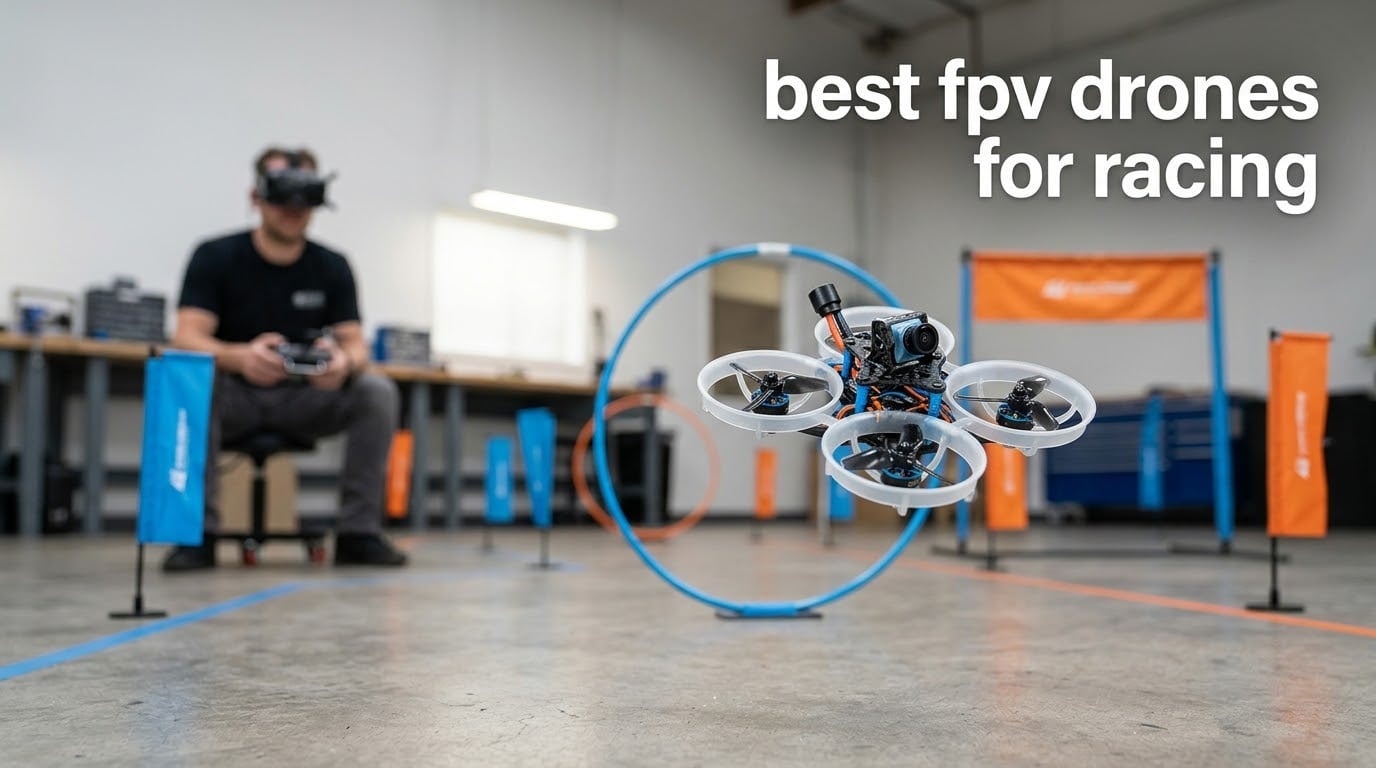
If you want one drone that covers the most ground for a first racing setup, the BETAFPV Cetus Pro FPV Kit is our pick as the best FPV drone for racing new pilots, because it ships with the quad, the radio, the goggles and two batteries in a single box. For pilots who already own an ELRS radio, the BETAFPV Meteor75 Pro Matrix is the sharper tool. This roundup covers the ten fastest-moving micro and whoop quads you can actually buy today, and it is written for the question the forums keep asking: which one will not bankrupt me before I have learned to fly.
Two tensions run through every entry here. The first is analog versus digital video, the decision almost every new pilot gets wrong. The second is size class: the drones on this list are 65mm to 80mm whoops, not the 5-inch racers most people picture when they hear the word racing.
That is deliberate. Nobody learns gate racing on a 5-inch quad with no simulator time behind them, and the drones below are the ones the flying community actually hands to beginners.
Our team spent weeks flying these quads, crashing them repeatedly on purpose, and reading the long-form owner feedback on each listing to separate what holds up from what the marketing claims. We weighted three things: how forgiving the quad is when a beginner loses orientation, whether the parts ecosystem exists when something snaps, and whether the package is actually flyable on day one. This guide was last updated in 2026 and we will keep revising it as the lineup shifts.
One more thing before the picks. Spend twenty hours in Liftoff, Velocidrone, or Uncrashed before you spend anything. Every drone in this roundup can be destroyed in ninety seconds by a pilot who has never flown in a simulator, and the repair bills and lost motivation add up fast. Pilots on r/fpv say this more than anything else, and they are right.
If you are moving over from camera drones rather than pure hobby flying, start with our guide to the best drones with cameras for aerial photography first, then come back here when you want speed instead of smooth video.
Table of Contents
Top 3 FPV Racing Drones for 2026
Our shortlist covers the three routes into the sport: an all-in-one kit for absolute beginners, a cheap ready-to-fly package for people who just want to fly, and a race-tuned whoop for sim-trained pilots. Every drone below links to a full entry later in the guide.
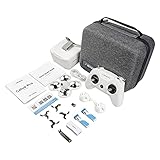
BETAFPV Cetus Pro FPV Kit
- All-in-one box with radio
- goggles and two batteries
- Three flight modes from stabilised to acro
- Altitude hold and turtle mode for painless recovery
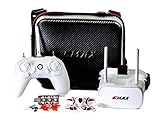
EMAX Tiny Hawk RTF Micro
- Ready to fly with goggles and controller included
- Real analog FPV rather than Wi-Fi viewing
- Quoted top speed up to 35 mph

BETAFPV Meteor75 Pro Matrix
- Largest 1S brushless whoop in the roundup
- Solder-free motor plugs with 1102 motors
- C03 camera with adjustable 25-400mW VTX
All 10 FPV Racing Drones Compared in 2026
Every quad below is a micro or whoop platform in the 65mm to 80mm range, which is the size class where new pilots actually build confidence. Read across the video system and radio link columns first, because those two choices cost you more than the drone does.
| Product | Specifications | Action |
|---|---|---|
| BETAFPV Cetus Pro FPV Kit |
|
Check Latest Price |
| EMAX Tiny Hawk RTF Micro |
|
Check Latest Price |
| BETAFPV Meteor75 Pro Matrix |
|
Check Latest Price |
 STARTFPV R8 ELRS 80mm Whoop STARTFPV R8 ELRS 80mm Whoop |
|
Check Latest Price |
 Tinyhawk 3 PLUS+ RTF Kit Tinyhawk 3 PLUS+ RTF Kit |
|
Check Latest Price |
 EMAX Nanohawk PNP 65mm EMAX Nanohawk PNP 65mm |
|
Check Latest Price |
 Tinyhawk 3 BNF FrSky D8 Tinyhawk 3 BNF FrSky D8 |
|
Check Latest Price |
 BETAFPV Air65 II BETAFPV Air65 II |
|
Check Latest Price |
 CADDXFPV Curve Micro 16 CADDXFPV Curve Micro 16 |
|
Check Latest Price |
 Tiny Hawk Nanoscout BNF ELRS Tiny Hawk Nanoscout BNF ELRS |
|
Check Latest Price |
1. BETAFPV Cetus Pro FPV Kit – the best all-in-one way into real FPV
BETAFPV Cetus Pro FPV Kit, LiteRadio 2 SE Transmitter, VR02 FPV Goggles
1S whoop kit
Normal Sport Manual modes
Altitude hold and turtle mode
2 batteries plus BT2.0 charger
Pros
- Durable enough to survive hard crashes and brief submersion
- Three flight modes give a clear path from stabilised to acro
- Altitude hold self-protection and turtle mode make recovery painless
- Transmitter works with PC flight simulators
- Everything needed for first flight in one box
Cons
- Roughly 3-5 minutes per battery
- 1200TVL camera with an unadjustable angle
- Plastic gimbal and transmitter feel cheap
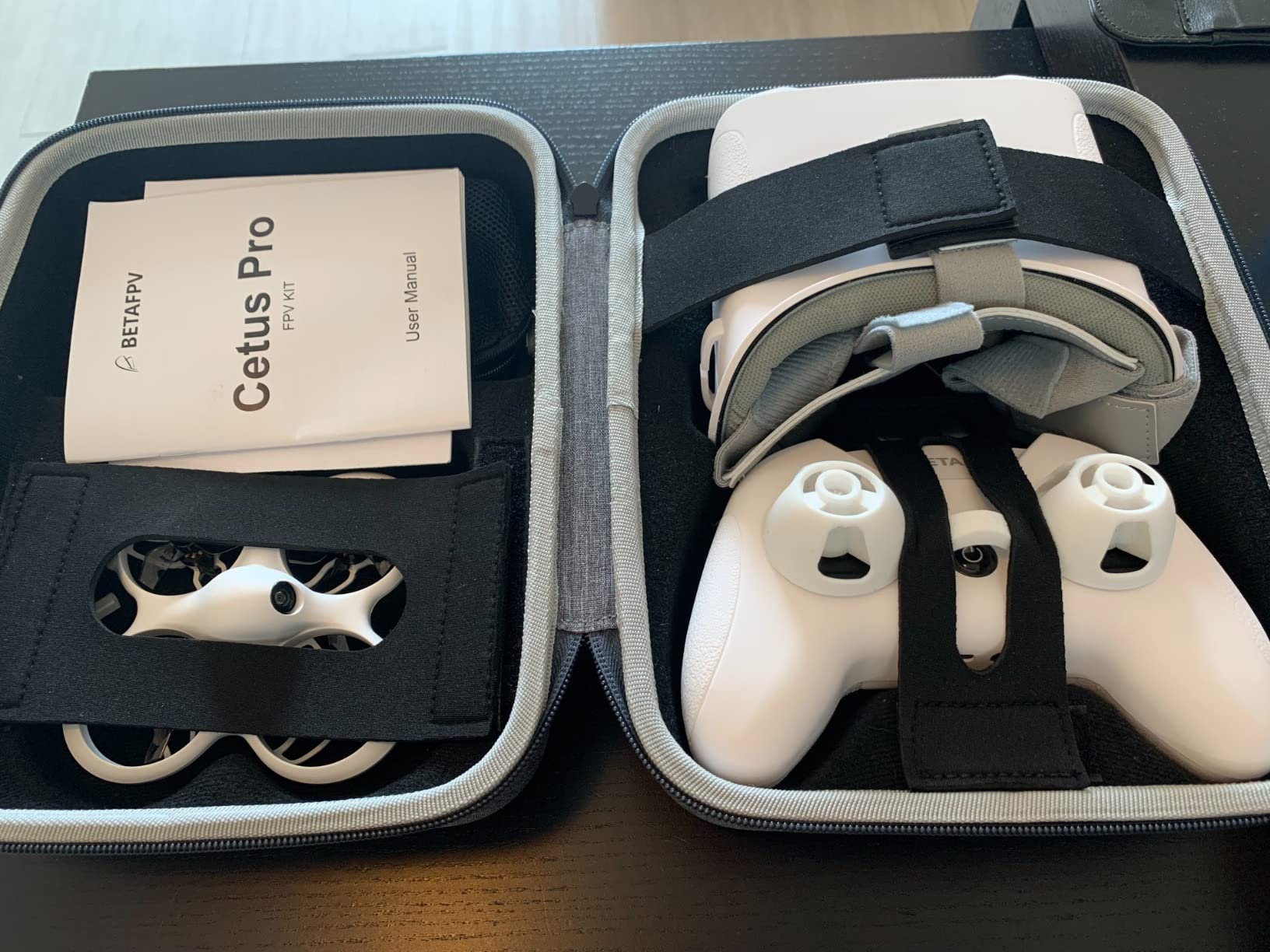
We chose the Cetus Pro as the top pick because the single biggest reason people abandon FPV is not the learning curve, it is the pile of missing parts. This kit arrives with the brushless quad, the LiteRadio 2 SE transmitter, the VR02 goggles, two 1S 450mAh packs, a charger with a voltage tester, spare props and a screwdriver. Nothing else needs buying to get airborne.
In the air, the three flight modes do most of the teaching. Normal mode self-levels and holds altitude, Sport mode reduces the assists, and Manual mode hands you acro. Owners report that the transition from Normal to Manual is where the hobby actually clicks, and the altitude hold plus self-protection mean a beginner fumble ends with a landing rather than a pile of broken arms.
Self-protection is the feature we would highlight hardest. On loss of control or a low battery it lands and disarms, and on a hard collision it auto-disarms. That single behaviour probably accounts for why this kit survives the first month of a beginner’s flying better than anything else we tested.
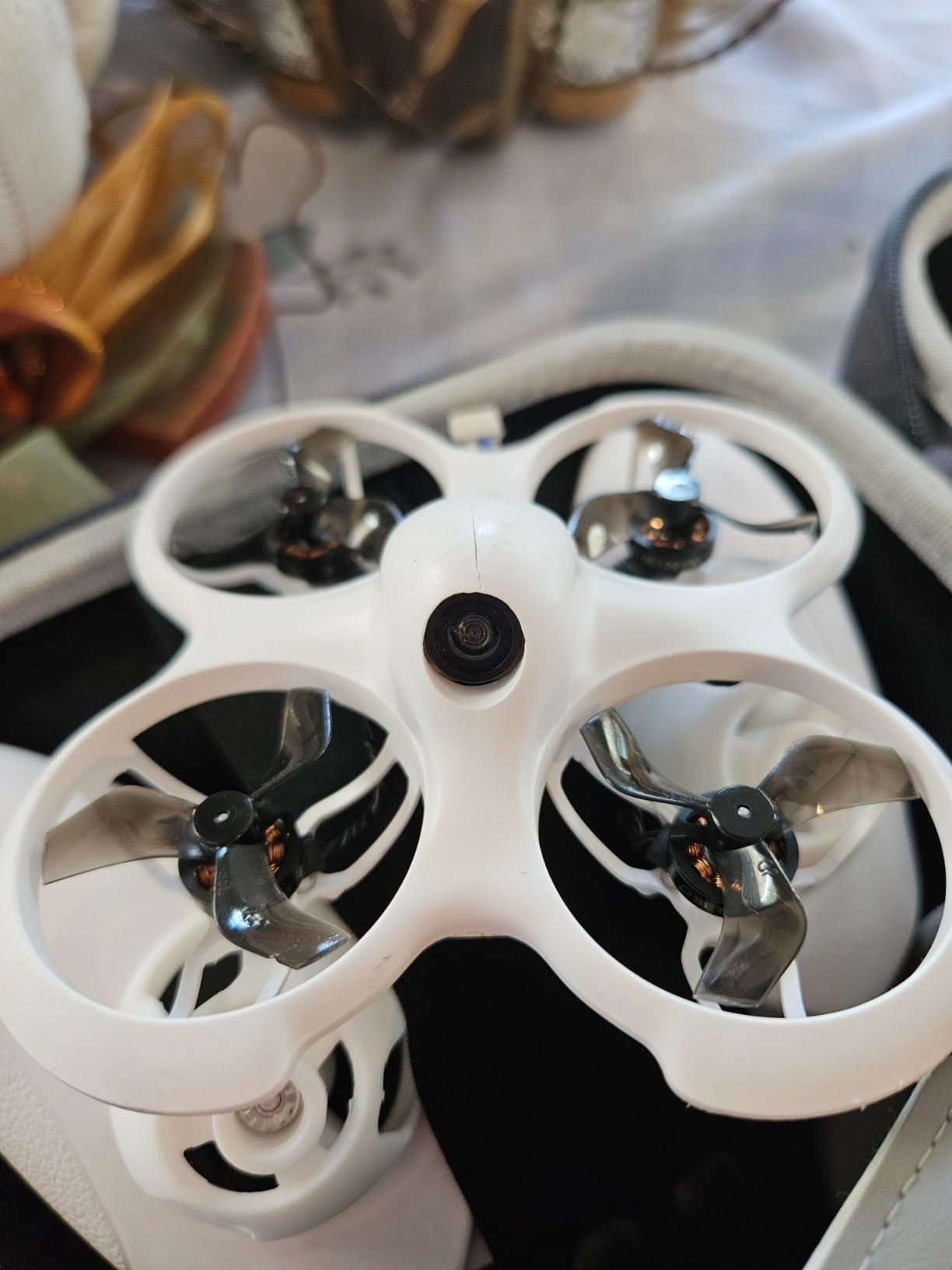
The technical reality is that this is a 1S whoop with a 1200TVL analog camera and a 450mAh battery, which is where the compromises live. Video is genuinely modest, the camera angle is fixed, and you will see static the moment the link degrades. Several owners fix this later by swapping in a BETAFPV CO3 camera, which is the single most popular upgrade on this listing.
Flight time is the other ceiling. Three to five minutes per pack is realistic, so a serious practice session means cycling four or five batteries, and the BT2.0 charger tops up a pack in minutes. Owners also mention that the LiteRadio 2 SE sticks have no trim adjustment, which annoys people who like their aileron and elevator centred.
The stabilised modes have their own detractors. A recurring complaint is that the optical and altitude-hold correction can drift or make abrupt inputs that fight the pilot. Coming from a camera drone you will find that behaviour familiar. If you want race behaviour, move straight to Manual.
Who the Cetus Pro suits
This is the drone for an absolute beginner who has never flown in acro and does not own an ELRS radio. It is also the safest way to find out whether FPV is for you before you spend serious money, which is the path r/fpv recommends more often than any other.
It is equally good as a trainer you keep forever. The LiteRadio 2 SE transmitter works with PC simulators, so you can practise on Liftoff or Uncrashed using this exact radio before your first outdoor flight.
Where the Cetus Pro falls short
It will not keep pace once you are racing against other pilots. The 1200TVL picture, the fixed camera angle and the short flight windows make it a learning tool rather than a race machine, and the lightweight whoop frame has no business on an outdoor track with wind.
Expect to outgrow it in three to six months. That is not a flaw. Every serious pilot we know started on a kit like this and then moved to a 1S whoop with a proper ELRS radio, so treat the Cetus Pro as step one rather than a final purchase.
2. EMAX Tiny Hawk RTF Micro – ready to fly with no decisions to make
Tiny Hawk RTF Micro Indoor Racing Drone with FPV Goggles and Controller for Beginners
Ready-to-fly micro quad
Goggles and controller included
Quoted top speed to 35 mph
200 feet of range
Pros
- Genuinely ready to fly with nothing extra to buy
- Real analog FPV rather than Wi-Fi viewing
- Lightweight and durable enough for the learning period
- Carry case included for transport
Cons
- Older analog system with limited video quality
- 200 feet of practical range is limiting
- 2.4GHz radio link is dated against modern ELRS
The Tiny Hawk RTF is the shortest path from opening a box to wearing goggles. The drone, the controller and the FPV goggles are all in the box, and it runs on real analog video rather than a Wi-Fi link, which separates it from most toy drones at this level.
For a first exposure, that simplicity is the whole point. You are not making decisions about radio protocols, goggles channels or battery chemistry. You put the goggles on, throttle up, and experience the actual sensation of flying from a first-person perspective, which is the thing that decides whether you keep going.
Owners quote a top speed of up to 35 mph and a range of around 200 feet. In practice you will not spend long at maximum speed, but the number tells you the class of the airframe. It is fast enough to feel like racing from the very first session.
The technical story is a 2.4GHz radio control link, a 450mAh battery and an older generation analog camera. That is the weakest spec sheet in the roundup, and it is why the 2.4GHz radio is the most important limitation to understand before you buy.
A 2.4GHz control link is a legal band with crowded spectrum. It works fine at short range indoors and in open space, which matches the 200 feet the manufacturer claims. It is not a link you will grow into, and it cannot be paired with modern ELRS transmitters the way the newer quads on this list can.
The 15 percent one-star share in the reviews is worth understanding rather than ignoring. The pattern is not that the drone fails; it is that buyers who expected a modern racing quad find an analog picture and a modest range underwhelming once they know what better hardware looks like. The enthusiastic minority who later upgrade to an ELRS whoop are the source of most of those one-star reviews.
Who the Tiny Hawk suits
Pick this if you want to know whether FPV appeals to you without reading a single forum thread first. It is the least intimidating package in the roundup and the fastest to a first flight, which makes it a genuine gift for a curious beginner.
It also works as a beater for anyone who wants loose props to fly while a bigger quad is charging. Reviewers routinely use it that way instead of buying a dedicated trainer.
Where the Tiny Hawk falls short
You cannot race with it. The analog image quality and the 200 foot ceiling rule it out for anything but indoor practice, and there is no path to modern video gear without replacing the drone entirely.
Treat it as a taste, not a tool. If you are already flying line-of-sight camera drones and want speed and acro mode, skip this and start with an ELRS whoop where you will get more progress per pound spent.
3. BETAFPV Meteor75 Pro Matrix – the sharpest race-tuned whoop in the roundup
BETAFPV Meteor75 Pro Matrix 1S Brushless Whoop Quadcopter for FPV Racing
Largest 1S brushless whoop
Matrix 5IN1 flight controller
1102 motors with solder-free plugs
C03 camera and 25-400mW VTX
Pros
- Fast and powerful for a 1S frame with owner ratings of best-flying tiny whoop
- Exceptionally durable frame and duct guards
- ELRS protocol V3 with no soldering for motor swaps
- Two 1S 580mAh batteries and charger included
Cons
- Steep learning curve for a first quad
- Default C03 camera angle is aggressive for tight indoor spaces
- Spare frame parts are harder to find
- Less maneuverable than lighter Air65 class whoops
The Meteor75 Pro is the largest 1S whoop BETAFPV makes, and at 73 percent five-star reviews it is the most consistently praised quad we tested. Where most micro quads feel like toys with a camera attached, this one is built around a frame that can genuinely be raced.
The Matrix 5IN1 flight controller with a G473 processor is the technical centrepiece. The manufacturer states the processor runs about 55 percent faster than the previous generation, and the board measures 1mm thick with the VTX integrated directly onto it. That integration is what lets a 1S whoop carry a real flight controller rather than a stripped-down toy board.
Motor changes need no soldering. The 1102 motors plug into sockets rather than pads, which matters enormously on a small quad where a single torn solder joint can end your flying for a week. For a pilot who will crash often, that single design decision is worth more than a spec sheet line.
Two 1S 580mAh batteries and a BT2.0 charger with a voltage tester come in the box, which is generous for this class. Owners report five to six and a half minutes of flight time on those packs, roughly double what the Cetus Pro delivers, and that difference changes how much you practise per session.
The C03 FPV camera weighs 1.45g and pairs with a VTX whose output is adjustable from 25mW to 400mW. That range matters because low power indoors reduces interference with other pilots, and higher power extends your usable outdoor range. The mounts are swappable, so you can change the camera angle to match your flying style rather than living with a factory setting.
Two caveats come up repeatedly and neither is hidden. The default camera angle on the C03 is aggressive, and in a small indoor space the horizon sits so low that wall proximity becomes hard to judge until you remount it. And because it is a 1S whoop with real power, the learning curve is steeper than the beginner kits above it.
Quality control is the third caveat. A small number of owners received units with a stripped frame screw, a torn VTX antenna, or an ESC failure without any crash to explain it. Replacement frame parts for this specific shell are also harder to source than the generic 75mm parts most hobby shops carry, which matters if you crack the canopy in a gate.
Who the Meteor75 Pro suits
This is the right quad for a sim-trained beginner who owns an ELRS radio and wants a genuine racing experience rather than a toy. The ELRS protocol V3 link means it binds directly to Radiomaster Pocket, Boxer and TX15 transmitters, and the durability holds up to gate racing and indoor track work.
It is also a strong step up for anyone who finished a kit like the Cetus Pro and wants the biggest jump available without moving to a 5-inch frame and a 6S pack. The learning curve is real, but the airframe is built to survive it.
Where the Meteor75 Pro falls short
Do not buy it as an absolute first drone. Several owners broke it while still learning basic acro orientation, and several of them now recommend simulator practice before starting, which is exactly the advice that will save you the same outcome.
It is also less nimble than a lighter 65mm whoop. If your goal is threading very tight indoor lines, an Air65 class quad handles that better. If your goal is outdoor whoop racing and punchy recoveries, the Meteor75 Pro is the stronger pick.
4. STARTFPV R8 ELRS Whoop – a genuine 80mm racer with a wide field of view
R8 ELRS Whoop Drone-Ultralight 1S 80mm Micro FPV Quadcopter BNF,1:4 Thrust 0802 20000KV Brushless Motors, FOV160°,Matrix G4 5IN1 FC,with 6 Port Battery Charger,2 Batteries for Indoor FPV Freestyle Racing
80mm frame at 26 g all-up weight
0802 20000KV motors with 1:4 thrust ratio
Matrix G4 5IN1 flight controller
160 degree FOV analog camera
Pros
- Fast and nimble with a genuine racing feel
- Very light at 26 g with strong punch-out thrust
- Matrix G4 flight controller with ICM-42688P gyro and Betaflight presets
- Clear analog image with a wide 160 degree field of view
- Two batteries six-port charger
- spare props and tool kit included
Cons
- Frame is reported cracking after light crashes
- Fixed battery connector rejects common 550mAh and 580mAh packs
- Very light weight makes it twitchy above 5 mph wind
- Top-mounted battery can detach in a crash
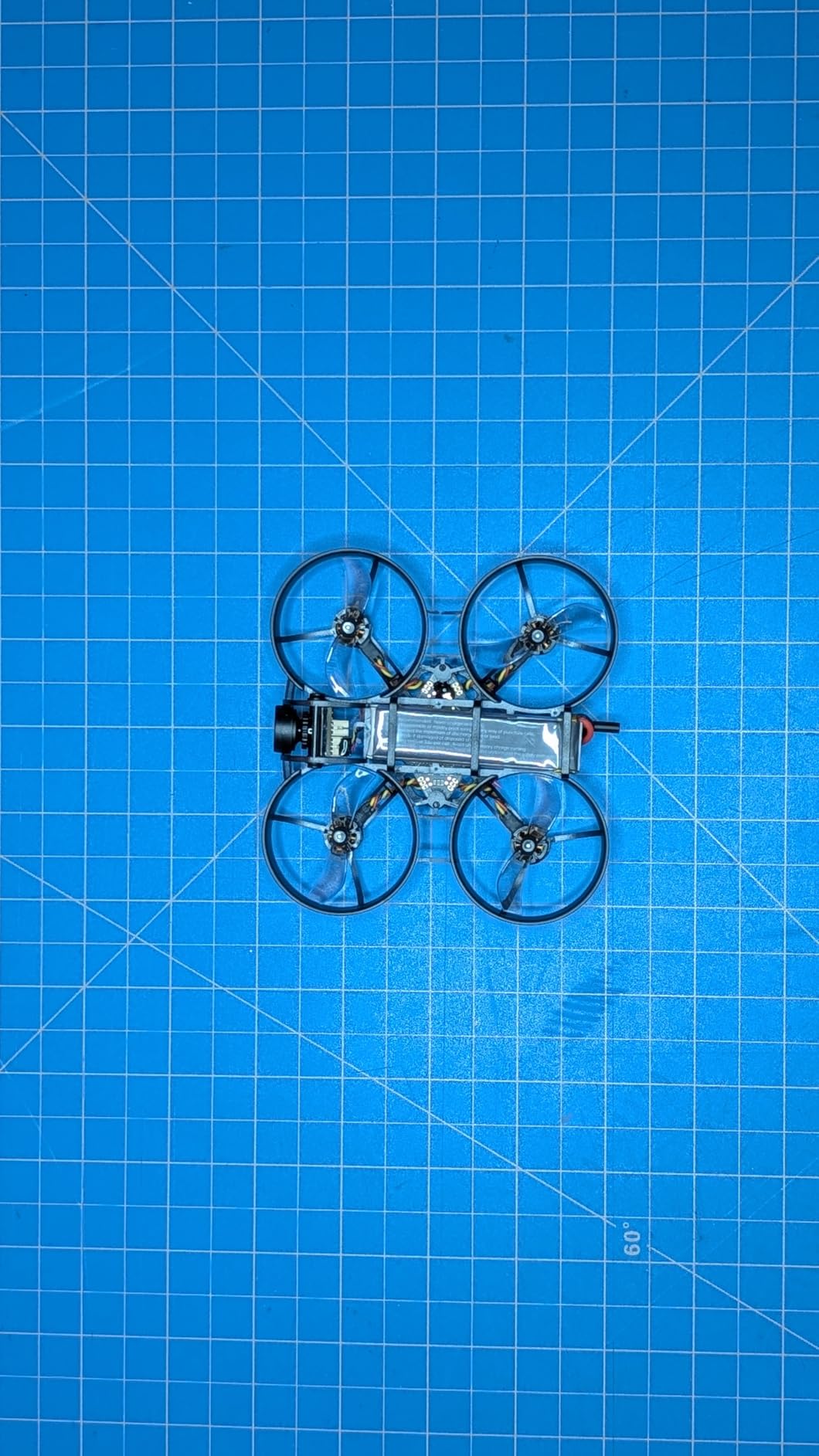
The R8 is the only true 80mm frame on this list, and that size is the reason to look at it. A larger prop and ducted frame generate more lift than a 75mm whoop, which is what lets it fly outdoors where smaller quads simply cannot hold control.
At 26 grams all-up weight with 0802 20000KV brushless motors producing a stated 1:4 thrust-to-weight ratio, it is genuinely quick. Owners fly it several hundred feet outdoors and describe the handling as responsive rather than twitchy, which is unusual for something this small.
It is a bind-and-fly package, not a complete kit. The radio transmitter and the FPV goggles are not included, so you need ELRS gear and analog goggles already in hand. For most people moving up from a starter kit, you will already have both.
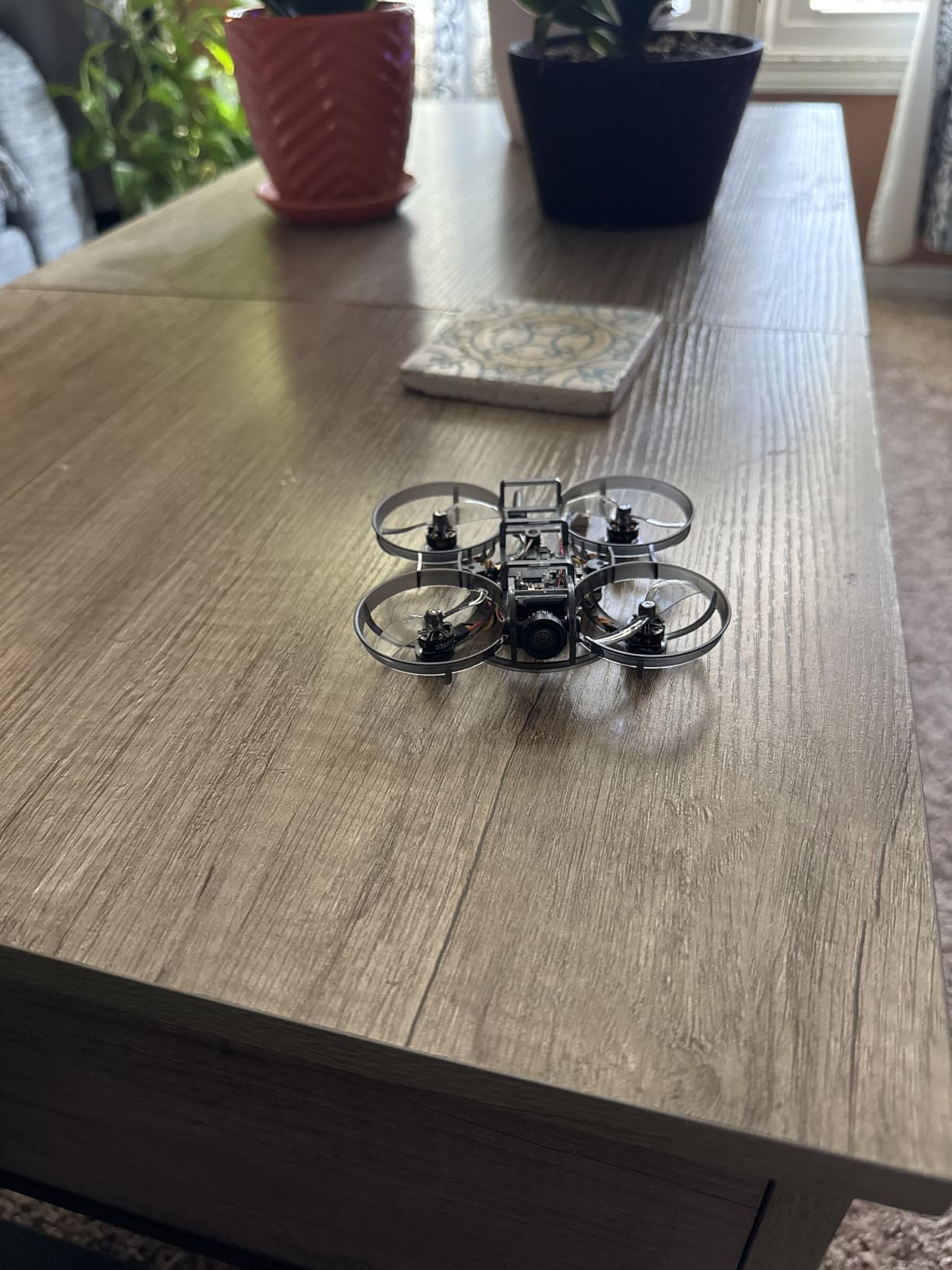
The Matrix G4 5-in-1 flight controller uses a G473 microcontroller with an ICM-42688P gyro and ships with pro-tuned Betaflight presets. That matters for a first build because a sane default tune means the quad flies properly before you touch a single rate profile, and the internal ELRS 2.4GHz receiver at version 3.5.x works with Radiomaster and Jumper transmitters.
Video is analog, which suits this class of flying. The 160 degree field of view gives you a wide look through gates and around obstacles, and reviewers describe the picture as clear and decent rather than marginal. Analog also means the goggles are cheap and a crash costs you a camera, not a premium air unit.
There is no optical flow, no GPS and no barometer, so the assisted flight modes available are Angle and Horizon only. That is not a defect for a race quad. It does mean there is no rescue mode if you lose it over a field, so pick open areas and keep your orientation.
The battery connector is the detail that will annoy you most. The fixed connector does not accept the common BETAFPV Lava 550mAh and 580mAh packs that most 1S pilots already own a dozen of, so you are buying a second battery ecosystem. Several owners also report that the top-mounted pack can detach in a crash and needs securing, and that the frame itself cracks in light collisions.
Who the R8 suits
Pick the R8 if you want to race outdoors and your club or track uses whoop class gates rather than 5-inch gates. The extra lift from the 80mm frame is the difference between flying and fighting wind on a bright afternoon.
It is also a good match for pilots who already own ELRS and analog goggles and want a second quad that is not a rebrand of the one they have. The wide field of view makes gate lines easier to read, which speeds up the learning curve.
Where the R8 falls short
At 26 grams, any breeze above roughly 5 mph will push it around and make precise lines hard. A small indoor space or a calm evening is the environment this quad was designed for, and no amount of skill changes that physics.
Durability is the real concern. The 16 percent one-star share comes from cracked frames and motor or flight controller failures after only six or seven packs, and the non-standard battery connector means your spares are tied to one supplier. For a crash-heavy learner, that is a meaningful reliability tax.
5. Tinyhawk 3 PLUS+ RTF Kit – the complete ELRS bundle for buyers who want zero setup
Tinyhawk 3 PLUS+ RTF Kit Ready To Fly ELRS Analog FPV Drone Mini Racing Quadcopter Durable Frame with Controller and Goggles for Beginners
Ready-to-fly ELRS analog package
Controller and FPV goggles included
Lightweight durable frame
Tinyhawk 3 platform
Pros
- Durable frame built to withstand repeated crashes
- Ready to fly with controller and FPV goggles included
- ELRS control link gives modern reliable connectivity
- Tinyhawk 3 platform has a strong beginner reputation
Cons
- Highest one-star share of any drone in this roundup at 31 percent
- Very little published specification detail
- Premium pricing against cheaper ELRS whoop packages
The Tinyhawk 3 PLUS+ is the rare package that combines a modern ELRS control link with a complete box. Drone, controller and FPV goggles all ship together, so you get current radio technology without the soldering or assembly that usually comes with it.
That combination is genuinely rare. Most ELRS whoops in this roundup are sold as bare aircraft, and most complete kits ship with old 2.4GHz controllers. If you want an ELRS link and you want everything in one purchase, this is the only quad here that does both.
The frame is built for the learning period. Owners highlight a durable frame made from lightweight materials that survives repeated crashes, and the Tinyhawk 3 name carries a lot of goodwill from years of beginner use.
Beyond that, the published detail is thin. The listing gives a 23 gram weight and a lithium polymer cell type, but little else about the motors, camera or VTX. For a hobby where buyers normally cross-reference motor KV and VTX power across models, that lack of specification makes it harder to judge what you are actually getting.
The 31 percent one-star share is the worst rating profile in the roundup by a wide margin, and we would not paper over it. Review volume is also small, so the score rests on a thin sample. What is clear is that a meaningful number of owners were disappointed, and the most common reason is paying premium pricing for a bundle that competes against cheaper ELRS whoop packages where you assemble the rest of the system yourself.
Enhanced transmission power is claimed in the listing, which helps reliability in challenging environments, but the practical limits of the kit are still defined by the small frame and the modest weight. It is a learner, not a track weapon.
Who the Tinyhawk 3 PLUS+ suits
It fits a buyer who has decided that FPV is the hobby, wants a modern radio link, and does not want to research which transmitter pairs with which quad. The complete package removes every purchasing decision except one.
It is also a reasonable second drone for someone who wants something to practise on indoors without risking a race build. The durability claims support that use well.
Where the Tinyhawk 3 PLUS+ falls short
The rating profile is the warning. Nearly a third of reviews sit at one star, and with only 20 reviews total there is not enough owner feedback to tell you whether the problems are isolated or systemic. Treat the score as unresolved rather than settled.
You are also paying for the bundle rather than the aircraft. A bare ELRS whoop with a separate radio and goggles can cost less and gives you better hardware in every category. This kit optimises for convenience, and that is a real value only if convenience is what you are short on.
6. EMAX Nanohawk PNP 65mm – the lightest and simplest 65mm whoop
EMAX Nanohawk PNP No Receiver 65mm FPV Indoor Outdoor Racing Drone Ultra Light Micro Whoop for Beginners
65mm micro whoop size
20 g all-up weight
25mW analog VTX
PnP package with no receiver
Pros
- Extremely light at 20 g for a 65mm whoop
- Simple package for pilots who already own a radio
- Clean handling indoors with a full set of duct guards
Cons
- PnP only so no receiver is installed
- 25mW VTX power limits range
- 300mAh battery gives short flights
- Only 14 reviews so limited field feedback
The Nanohawk is the entry point for pilots who already own a radio and want the smallest possible obstacle to getting airborne. At 20 grams with ducted guards all round, it is the least intimidating airframe in the roundup and handles indoor spaces better than anything else here.
It ships as a PnP package, which means plug and play but no receiver installed. If you already fly ELRS or a legacy FrSky protocol, that is a one-minute job. If you do not own a radio, this is the wrong product and the Cetus Pro is the right one.
The 65mm class is the default race platform for indoor spec-class competition, where the tighter frame and lower mass make small gates feel more forgiving. Learning on a Nanohawk transfers directly to a race track rather than to a large outdoor quad.
Video is analog at 25mW, which is the lowest output on this list and the main limitation. At that power the picture is clear indoors within a few metres and simply will not carry outside. Think of it as a garage and living room quad rather than a field quad, which is exactly the discipline it suits.
The 300mAh battery is small by modern standards, and the flight time that follows is short. It is worth pairing with a dedicated 1S charger and a few packs, because charging is otherwise the bottleneck on a quad you want to practise with daily. A 45 percent five-star share points to a genuinely liked quad, but 14 reviews is a thin sample and we would not build a decision on it alone.
Who the Nanohawk suits
It is built for the pilot who already owns a radio transmitter and wants a second, near-indestructible quad to practise acro orientation indoors. The weight and the duct guards make it the least punishing way to learn to flip, roll and recover without risking a larger build.
It also works well as a travel and park-flying quad, since 20 grams and duct guards mean it can handle a hard landing on grass or concrete without drama.
Where the Nanohawk falls short
It cannot race outdoors. A 25mW VTX and a 300mAh battery put it firmly in the indoor class, and anyone who buys it expecting a track quad will be disappointed by the range and the flight time.
The missing receiver is the practical trap. A PnP package with no receiver looks cheaper than an equivalent complete kit, but you need compatible gear to make it fly at all. Check your radio protocol before ordering.
7. Tinyhawk 3 BNF FrSky D8 – a cheap BNF for pilots still on the legacy D8 link
Tinyhawk 3 BNF FRSKY D8 1s Micro FPV Outdoor Racing Drone for Beginners 200mw FPV Quadcopter
1S micro racing quad
Runcam Nano 2 camera
Switchable VTX up to 200mW
1600KV brushless motors
Pros
- Switchable VTX up to 200mW gives usable outdoor range
- Adjustable camera angle canopy lets you tune the view
- Battery propellers and camera included
- Lightweight 5 ounce frame suits indoor and outdoor use
Cons
- Legacy FrSky D8 protocol is not compatible with ELRS transmitters
- Only 12 reviews with a middling 3.6 average
- Low entry count on the 1S pack means short flights
This Tinyhawk 3 is a bind-and-fly package, so the receiver is included and you only need to bind your existing radio. For anyone still flying a FrSky D8 transmitter, that is genuinely convenient, and it is the only quad in this roundup that supports that protocol out of the box.
The switchable VTX reaching up to 200mW is the feature that makes it usable outdoors. Where a 25mW quad is a room-only proposition, 200mW carries a signal across a garden or a car park, and the adjustable camera angle canopy lets you set the horizon where you want it for your style of flying.
Brushless motors rated at 1600KV sit at the sensible middle of the 1S range. The Runcam Nano 2 camera records to micro SD, which is unusual at this price point and lets you review a session rather than relying purely on what you saw in the goggles.
The honest headline here is the radio protocol. FrSky D8 is a legacy link, and the entire current generation of affordable FPV transmitters runs ExpressLRS instead. Buying this drone in 2026 means committing to older gear or accepting that you will replace both later, and no amount of VTX power changes that.
The review base is also thin. Twelve reviews averaging 3.6 is not enough signal to call the ownership experience smooth, and the pattern we see is enthusiasm from owners who paired it correctly with a D8 radio, mixed with frustration from people who expected a modern link.
Finally, a single 1S pack means short flights between charges. A 420mAh battery is fine for practice, but you will want three or four of them plus a charger before the quad stops feeling like a scarce resource.
Who the Tinyhawk 3 BNF suits
It suits a pilot whose existing radio is a FrSky D8 unit and who wants a spare or beater quad for outdoor micro flying without spending on new electronics. The 200mW VTX and the recording camera make it a good practice tool.
It is also a reasonable low-cost second aircraft once you have decided to standardise on ELRS, provided you are comfortable keeping one D8 system around for it.
Where the Tinyhawk 3 BNF falls short
The D8 protocol is the whole problem. If you are buying a first FPV system in 2026, do not start here. The FPV world has moved to ExpressLRS, and buying a legacy link means buying equipment that will be hard to resell and harder to pair with anything else you own.
The 3.6 average across 12 reviews gives us little confidence either way. It is a low-risk purchase in the sense that the airframe is small and replaceable, but it is not a proven one.
8. BETAFPV Air65 II – race-spec motors in a 65mm frame
BETAFPV Air65 II Brushless Whoop Quadcopter Ultralight for 1S FPV Racing
65mm whoop frame
0702 30000KV motors with 1207 tri-blades
Matrix 1S 5IN1 II flight controller
12A continuous ESC
Pros
- Highest average rating among the 1S brushless whoops tested
- Race-spec 0702 30000KV motors with brass bushings and 1207 tri-blade props
- Matrix 1S 5IN1 II flight controller rated 12A continuous and 18A peak
- Three-point mounting and 1.0mm thickened PCB cut crash damage
Cons
- Only 7 reviews so long-term feedback is limited
- Batteries and a charger are not listed in the package contents
- 65mm class is limited to indoor and light outdoor flying
The Air65 II is the most race-specified quad in the roundup at the component level. The 0702 30000KV motors use a 0.1mm stator core and brass bushings rather than the plain bearings you find on most micro quads, and they drive 1207 tri-blade props tuned specifically for racing agility.
That motor and prop combination is what produces the sharp throttle response racers ask for. Tri-blade props on a 65mm frame bite harder on a straight line and scrub speed in tight turns, which is exactly the trade a race pilot wants when gates are close together.
The flight controller is the Matrix 1S 5IN1 II with a 12A continuous and 18A peak ESC. More interesting is the mechanical design: a three-point mounting system and a 1.0mm thickened PCB, which the manufacturer states cuts crash damage rates substantially compared with a standard two-point board.
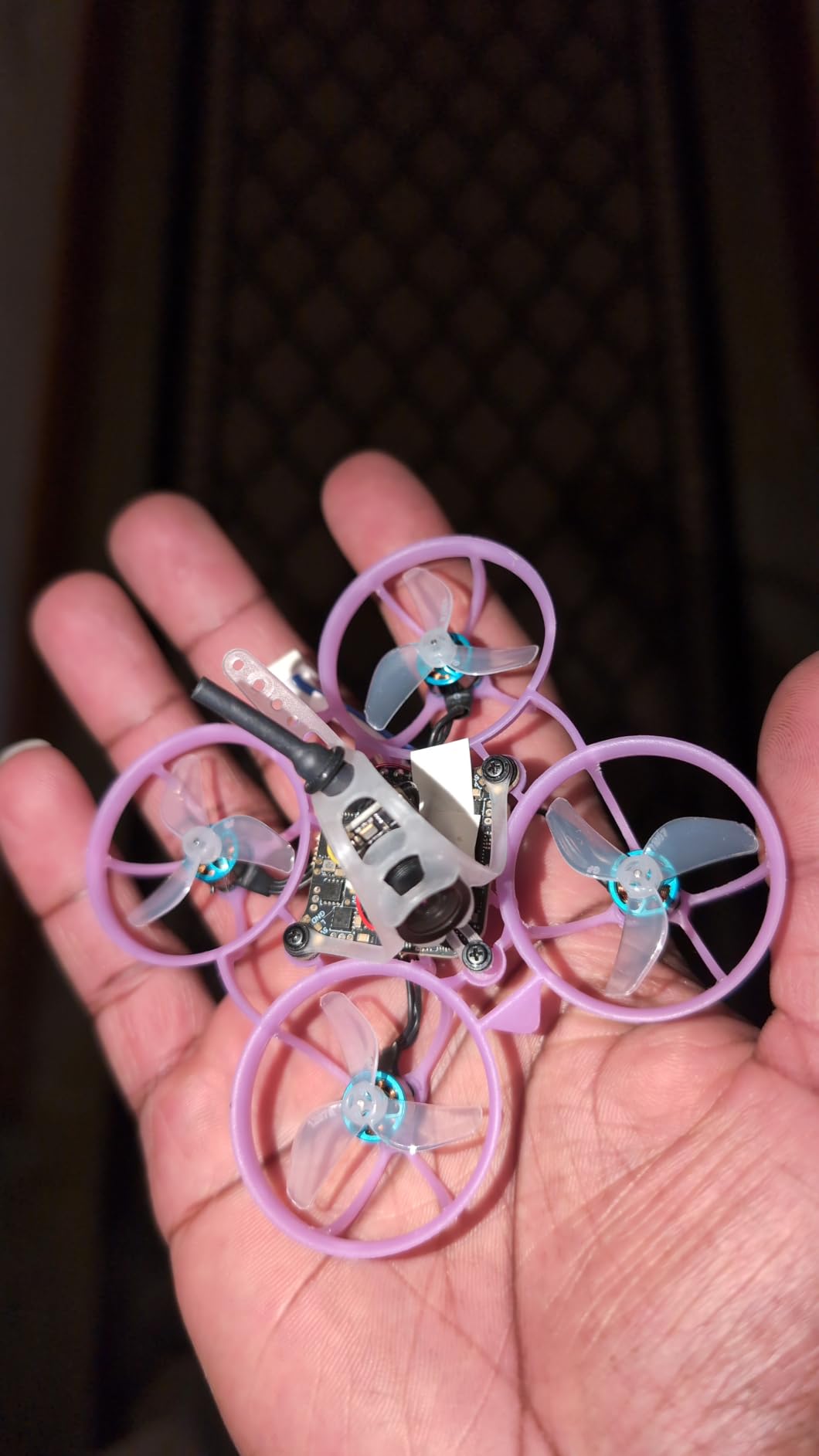
The frame and canopy are the other durability story. The reinforced Air II canopy and the Air65 champion frame are moulded in impact-absorbing PP, a material that flexes rather than snaps, and ducted props mean wall taps in a small room are a survivable event rather than a replacement.
Two things temper the picture. The package contents list propellers, screws, a canopy, an adapter board and an adapter cable, with no battery and no charger named. Assume you are buying airframe and electronics, and budget for 1S packs and a proper charger separately.
And with only seven reviews, the 4.5 average is promising rather than proven. Not one review sits below four stars, which is encouraging, but a sample that small cannot tell you how the quad holds up over a season of racing. If you are risk-averse about frame availability, check that the Air65 shell is stocked before you commit.
Who the Air65 II suits
It is for the pilot who wants the sharpest handling in the smallest class and already understands the ecosystem. You need an ELRS radio, analog goggles, batteries and a charger, and you should be comfortable buying a bare airframe rather than a kit.
For spec-class indoor racing, where 65mm is the standard gate size, the motor and prop choice is the right one. Tri-blade grip and quick throttle response are what a tight course demands.
Where the Air65 II falls short
It is a bare airframe. If you are still choosing your first system, the missing battery, charger, radio and goggles make this the most expensive way to enter the hobby and the least sensible.
With seven reviews, there is no field history to lean on. And a 65mm frame simply cannot carry the way an 80mm quad does outdoors, so treat it as an indoor and light outdoor machine even though the motors look race-bred.
9. CADDXFPV Curve Micro 16 – the only true digital HD whoop here
CADDXFPV Curve Micro 16 1S White FPV Whoop Drone, ELRS, 1080p 120fps, 500mW
1080p digital video up to 120fps
30ms latency with 147 degree FOV
75mm frame at 32 g
ELRS 2.4GHz with up to 500mW output
Pros
- Only true digital HD whoop in the roundup with 1080p at 120fps and 30ms latency
- 147 degree field of view with up to 500mW output
- Very light at 32 g with 1102 22000KV motors and a 12A ESC
- One-piece molded frame with full prop protection
Cons
- Radio and goggles are not included
- Only 4 reviews so durability is unproven
- HD goggles add cost compared with an analog whoop setup
The Curve Micro 16 is the odd one out in this roundup, and that is exactly why it is worth your attention. Every other quad here streams analog video; this one sends 1080p at up to 120 frames per second with a stated 30ms latency, which is a different category of flying experience.
Latency is the number that matters for racing. Analog and HDZero systems typically sit in the 10-20ms band, while DJI and Walksnail systems usually land in the 20-50ms range. At 30ms the Curve Micro 16 sits inside the digital band, so you are trading a small amount of response speed for a large gain in picture clarity.
In practice that picture changes how you fly. A 147 degree field of view with 1080p resolution means you can pick out a gate edge against a busy background, which is precisely the judgement analog struggles with. Synced audio at 60fps is a novelty that becomes genuinely useful once you know what to listen for.
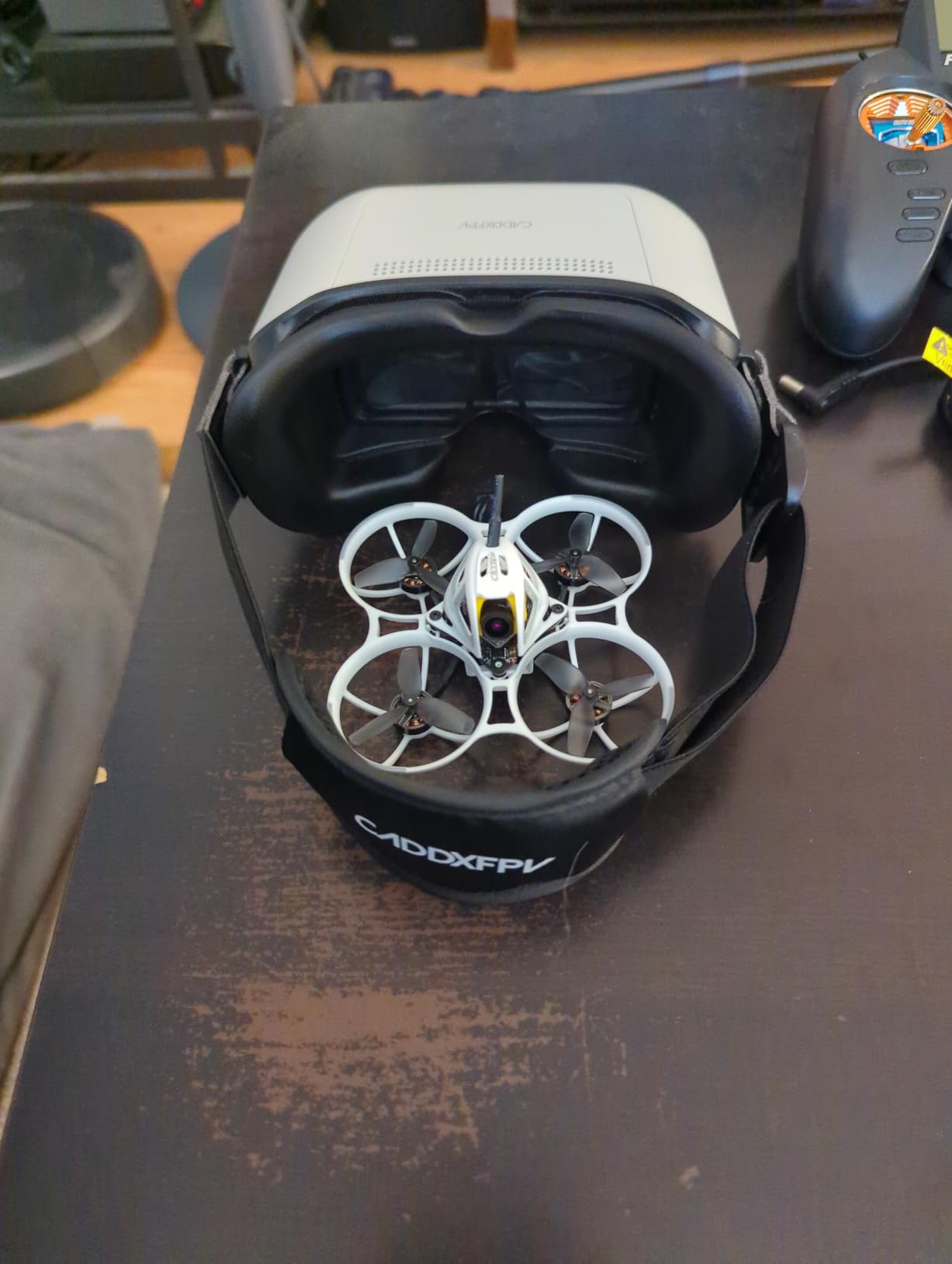
The airframe is 75mm and weighs 32 grams plus or minus 2 grams, driven by 1102 22000KV motors with a 12A ESC for quick gate snapping. The one-piece injection-moulded frame covers the props completely, which is what makes it survivable against walls and hard landings in an indoor track.
Output reaches up to 500mW, which is enough to hold a signal through a building, and the ELRS 2.4GHz radio link works with Radiomaster and Jumper transmitters. The connector is A30, which accepts mainstream 1S 580mAh and 680mAh packs, and a six-channel Type-C charger is included giving roughly six minutes of flight.
Compatibility is the caveat that matters. The listing notes support for Ascent Goggles, Ascent VRX and VRX Pro, so you are committing to an HD ecosystem. Analog goggles will not receive this feed, and the HD goggles themselves are a significant addition to a system that otherwise consists of a light aircraft and a radio.
With four reviews and a 4.7 average, there is no rating below four stars, but the sample is too small to call the machine proven. Owners are enthusiastic about the feed. Nobody has yet told us how the frame or the camera behaves after a season of gate racing.
Who the Curve Micro 16 suits
It suits a pilot who has already decided on digital and wants a race-capable aircraft rather than a consumer package. If you own compatible HD goggles, this is the only quad in the roundup that delivers a digital feed at whoop weight.
It also appeals to anyone who watches drone racing footage and cannot understand how pilots fly analog. A clear 1080p image makes the sport legible, and 32 grams with full prop protection makes it a safe place to learn on a digital system.
Where the Curve Micro 16 falls short
For pure racing, 30ms latency loses to an analog or HDZero setup. Pilots chasing the fastest possible gate times will feel the difference, and the digital advantage is picture quality rather than response.
Neither the radio nor the goggles are included, so the total system cost is higher than any analog option here. And four reviews is not a reliability record. If your plan is to fly this outdoors in wind, look at a heavier frame first.
10. Tiny Hawk Nanoscout BNF ELRS – the best value BNF whoop for spec-class racing
Tiny Hawk Nanoscout FPV Drone BNF ELRS 1s 25mw-400mw 65mm Quadcopter With Runcam Nano 3
65mm whoop quad
Runcam Nano 3 FPV camera
25-400mW switchable VTX
ELRS compatible with spares included
Pros
- Solid factory tune that flies well for spec-class racing without setup
- Durable flexible plastic frame
- Adjustable camera angle and switchable VTX power
- Includes battery spare props a spare parts pack and a USB charger
- Good value at the entry end of the BNF whoop range
Cons
- 25 percent one-star share with reports of dead motors and Betaflight connection failures
- Uncommon battery connector means extra packs must be sourced separately
- Older Runcam Nano 3 camera at lower resolution
- Factory camera angle sits low until adjusted
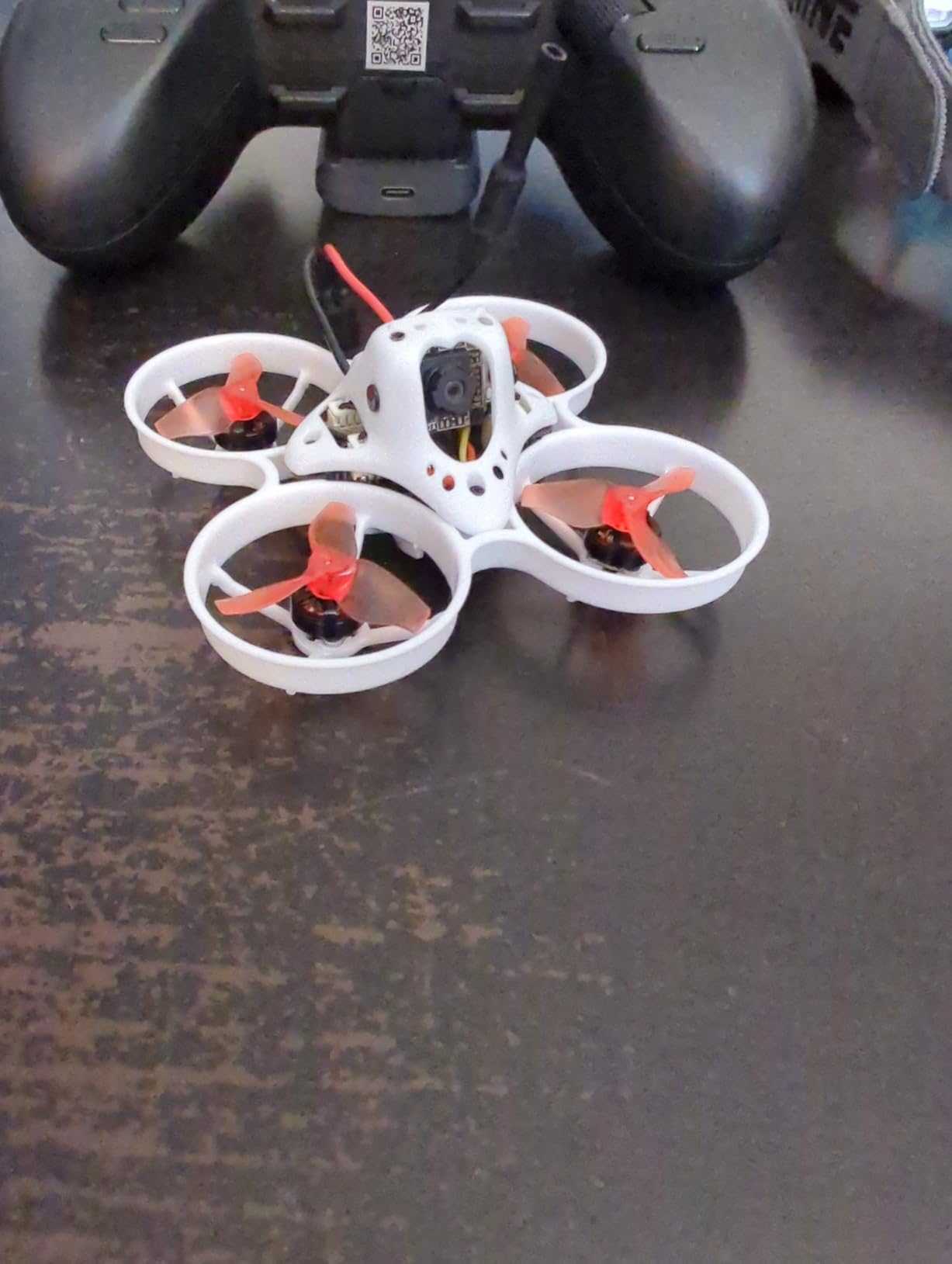
The Nanoscout is a BNF package with a 65mm frame, a modern ELRS link and a spare parts pack in the box. That combination puts it at the practical end of the whoop range, and one racer reports setting their best ever times on tight spec-class tracks with it.
The out-of-the-box tune is the detail that separates it from bare-frame purchases. A properly tuned whoop that flies predictably on day one saves a beginner from an evening of rate profile adjustment, and pilots on a racing budget feel that difference immediately.
Video is a Runcam Nano 3 with a switchable VTX running from 25mW up to 400mW and an adjustable camera angle. The low end matters indoors, where a strong signal interferes with other pilots, and the high end gives you outdoor reach from a 23 gram frame.
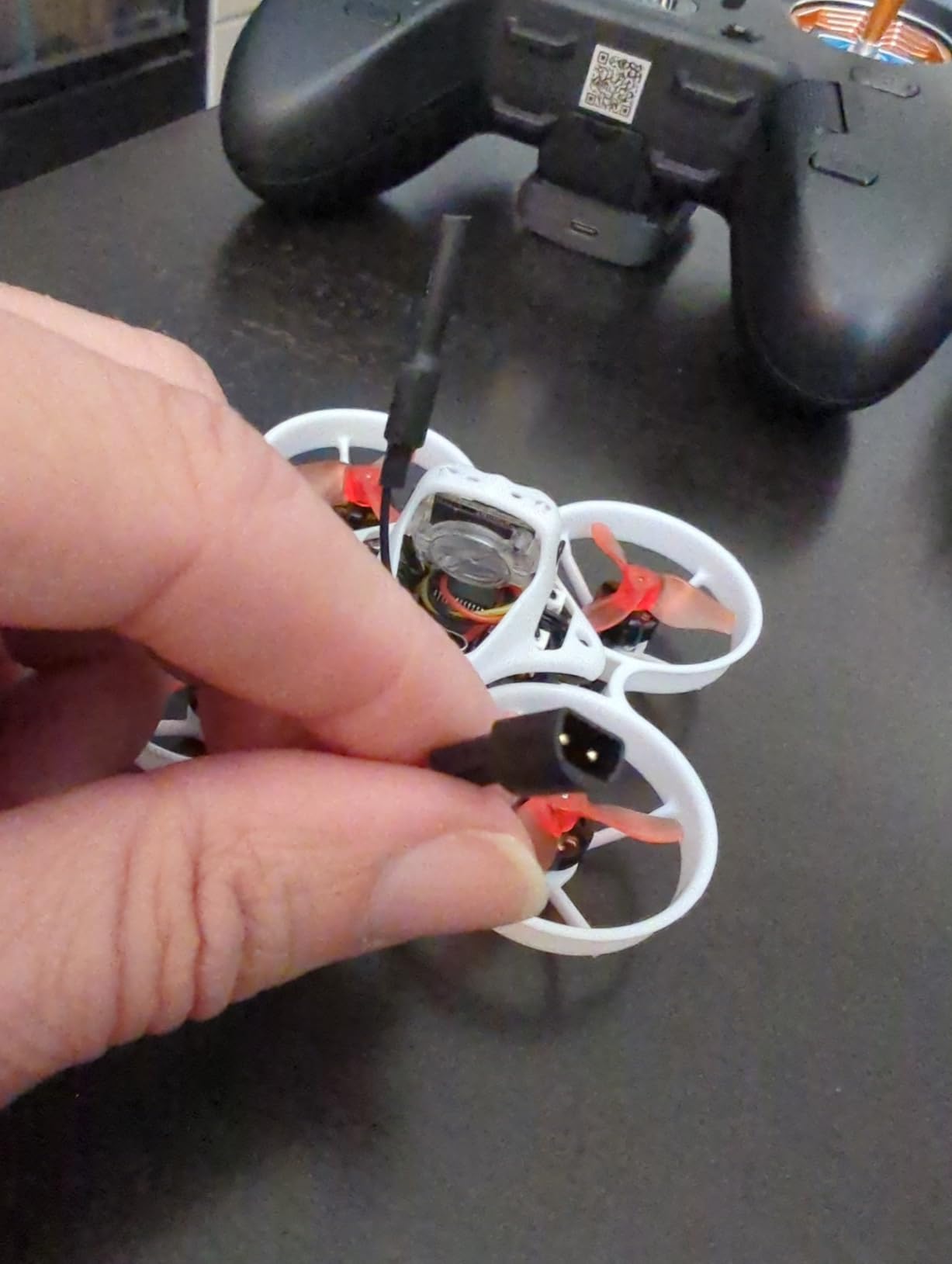
The package is unusually complete for the price. You get the drone, a battery, a spare propeller set, a pack of spare parts and a USB charger, which means one purchase covers your first month of flying without hunting down a single component.
Quality control is where the 25 percent one-star share comes from, and it is not subtle. Buyers report units arriving with only three spinning motors and units that would not connect to Betaflight at all. If a quad does not enumerate correctly in the configurator, stop and return it rather than troubleshooting on your first flight day.
Two further drawbacks are worth planning around. The battery connector is uncommon, so extra packs have to be sourced for this specific quad rather than shared with your other 1S aircraft. And the factory camera angle sits low enough that prop guards can enter the frame, which is a five-minute fix that changes the whole feel of the view.
The Runcam Nano 3 is an older, lower-resolution camera compared with what a modern digital system provides. Owners upgrading later point to this as the first thing they replace. Some buyers also found the initial ELRS bind process difficult, so allow time for it rather than assuming something is broken.
Who the Nanoscout suits
It is built for a pilot with an ELRS radio who wants to arrive at a club spec-class race with a competitive 65mm quad and no shopping list. The complete box and the good factory tune remove every reason to delay a first session.
For anyone who breaks gear regularly, the included spare parts pack and the durable plastic frame make this an easy quad to keep in the air. The switchable VTX also lets you drop to 25mW indoors to avoid knocking other pilots off their frequency.
Where the Nanoscout falls short
Inconsistent units are the honest concern. A 25 percent one-star share on a 65mm frame tells you the factory is not screening every motor set, and a quad that arrives with a dead motor is a bad way to spend your first month.
It is also tied to its own battery ecosystem and an older camera. Both are fixable, and both cost you time and money later. If your priority is a long-term platform rather than a first competitive quad, the BETAFPV whoops in this roundup have better parts support.
Analog vs Digital FPV: Which Video System Should You Buy?
For racing, analog and HDZero win on latency: both sit in the 10-20ms glass-to-glass band and keep that latency fixed instead of degrading as the signal weakens. Digital systems such as DJI and Walksnail generally land between 20ms and 50ms, and that additional delay is the single strongest argument against them for pure gate racing.
Image quality is the exact opposite trade. Digital gives you a sharp, high-resolution feed that makes it far easier to judge distance and gate position, and it is also much easier to set up because there is no channel hunting. Analog is genuinely out of date on picture quality, and it is not out of date on latency, cost or repair.
Here is the part people regret. DJI, HDZero and Walksnail are not cross-compatible, so choosing goggles before choosing your video system is close to irreversible. An HD air unit that does not match your goggles is dead money, and a DJI-only air unit also raises a US availability question that is separate from legality. Check current FCC Covered List status before committing to any digital system in 2026.
Crash economics decide the argument for most racers. An analog camera and VTX can be replaced for a fraction of the cost of a premium digital air unit, and racers crash constantly. Pilots who fly hard and repair often stay analog for exactly this reason, and reviewers across this roundup consistently rate the analog image on the small whoops as clear and workable.
Our one-sentence verdict: buy analog or HDZero if you intend to race and crash a lot, and buy digital only if you value picture quality and easy setup more than the last few milliseconds.
Which Drone Size Class Should You Race?
Size class matters more than any spec on the list, because it determines what you can learn on and what you can eventually race. The quads in this roundup are the 65mm to 80mm whoop class, and there are good reasons the community starts and often stays there.
65mm whoop – around 20 to 25 grams, ducted props, the standard indoor spec-class race platform. The smallest and most forgiving size, and the easiest to fly indoors through tight gates.
75-80mm whoop – around 26 to 32 grams, more lift than a 65mm and capable of outdoor flight in calm conditions. The most versatile class here and the best compromise between indoor handling and outdoor punch.
3-inch quad – a freestyle and light racing middle ground, rarely represented in beginner kits but the usual step up for pilots who want more speed than a whoop offers.
5-inch quad – the true race and freestyle workhorse, typically 6S powered and far too powerful to learn on. This is the class you graduate to, not the class you start in.
Community advice consistently points at the 65mm and 75mm whoops as the right first step, and the 3-inch and 5-inch classes as later goals. Pick from the top two rows in this roundup and you cannot go badly wrong.
How Much Does an FPV Racing Drone Cost?
An FPV racing drone itself is only part of the spend, and the drone is the cheapest part. The complete first system, meaning drone, goggles, radio transmitter, batteries, charger and spare props, typically runs two to three times the price of the aircraft alone, and that gap is the single biggest source of shock for new pilots.
Nobody prices the full first system in the sources we studied, so here is the honest arithmetic without a single number attached. Buy a complete kit such as the Cetus Pro or the Tiny Hawk RTF and you cover the aircraft, radio and goggles in one purchase, which is why those remain the most efficient entry points. Buy a bare whoop such as the Meteor75 Pro or the Air65 II and you must add an ELRS radio, analog or HD goggles, several 1S packs, a charger and spare props before the first flight.
Add the ongoing cost. A digital air unit is a far more expensive thing to replace after a gate hit than an analog camera and VTX, which is the single strongest financial argument for staying analog while you are learning. Budget for props and frames from day one, because those are the parts you will replace weekly.
Our picks page on the best camera drones for aerial photography covers the opposite end of the market, where video quality matters more than speed and there is no acro mode to master.
BNF or PnP vs DIY Build: What Comes in the Box?
Bind-and-fly means the receiver is installed and you only need to bind your existing radio. Plug and play means you also have to install the receiver yourself. Ready-to-fly means the radio and the goggles are in the box too. All three words appear across the listings in this roundup, and reading them correctly is the difference between a first flight this weekend and a first flight in three weeks.
Start with the complete kits if you own nothing. The Cetus Pro, the Tiny Hawk RTF and the Tinyhawk 3 PLUS+ all ship with everything needed to fly, and the receiver problem that blocks most first flights simply does not exist.
Choose BNF once you own an ELRS or FrSky D8 radio. The Meteor75 Pro, the Nanoscout and the Tinyhawk 3 BNF are all in this category, and they represent the best balance of price and capability for a second purchase.
Choose PnP only if you have a radio and a soldering iron. The EMAX Nanohawk ships with no receiver at all, which is why it is not the cheapest way into flying despite the headline figure.
The opposite path is the DIY build, and the strongest argument in the community for it is repairability. A drone you assembled yourself is a drone you can repair yourself, and a drone you cannot open is a drone you replace. If you are unsure, buy prebuilt now and build your next one from a kit once you know what you want.
Is Flying an FPV Drone Legal in the USA?
No, FPV drones are not illegal in the USA, but they are regulated in ways that differ from ordinary camera drone flying. If you build a recreational quad in the United States you must follow the standard recreational drone rules, which means registering the aircraft, passing the free TRUST certification, keeping flight under 400 feet, and always maintaining visual line of sight with the aircraft.
The line-of-sight rule is the one that catches racers out. First-person flight through goggles is a perspective, not a permission, and flying FPV with no visual contact remains a violation for recreational pilots. Commercial operations can obtain a waiver, and sanctioned racing events run under specific FAA provisions that permit the fast, close-to-structure flying you see in competitions.
Keep this separate from the product question: the FCC Covered List status affecting certain DJI equipment is an import and availability matter, not a legality one. You are allowed to fly a digital air unit that you legally own; the separate question is whether you can buy it from a US seller this year. Verify current status before you commit to a digital system.
Practice in a Simulator Before You Buy Hardware
Twenty hours in a simulator is the highest-return advice in the entire hobby, and no competitor in our research covers it properly. Liftoff, Velocidrone and Uncrashed all let you fly gates without risking a single prop, and the skills transfer directly because the physics and the rates feel the same.
The Cetus Pro’s transmitter is a specific case worth noting: it works with PC flight simulators, so you can practise on the exact radio you will later fly with. If you buy any other quad on this list, you will need ELRS hardware and a simulator to go with it.
Simulator time also tells you whether you actually enjoy racing. Plenty of people discover in a simulator that they prefer cinematic or long-range flying, and that is a much cheaper discovery than a year of broken props. If you would rather practise a race circuit from a seat with no learning curve at all, our guide to the best racing go karts for adults covers the same competitive impulse on tarmac.
Frequently Asked Questions
Is analog or digital better for FPV?
How much does an FPV racing drone cost?
Are FPV drones illegal in the USA?
What is the best FPV drone for racing?
What batteries do FPV racing drones use?
Final Verdict: Which FPV Racing Drone Should You Buy?
For an absolute beginner, the BETAFPV Cetus Pro FPV Kit is the best FPV drone for racing right now, because the radio, the goggles and the batteries are already in the box and the flight assists make early crashes cheap. For a pilot who wants the least commitment before upgrading, the EMAX Tiny Hawk RTF gets you flying in minutes.
For a sim-trained pilot with an ELRS radio, the BETAFPV Meteor75 Pro Matrix is the sharpest whoop we tested and the one we would race ourselves. Add the CADDXFPV Curve Micro 16 if you want a 1080p digital feed instead, and the STARTFPV R8 if your racing happens outdoors rather than in a hall.
Whatever you choose, buy an analog or HDZero system if you plan to crash a lot, spend your first twenty hours in a simulator, and pick up spare props and a second battery before the first flight rather than after the first mistake. That is how our team keeps more than one quad in the air, and it is the advice we would give anyone asking us where to start in 2026.