
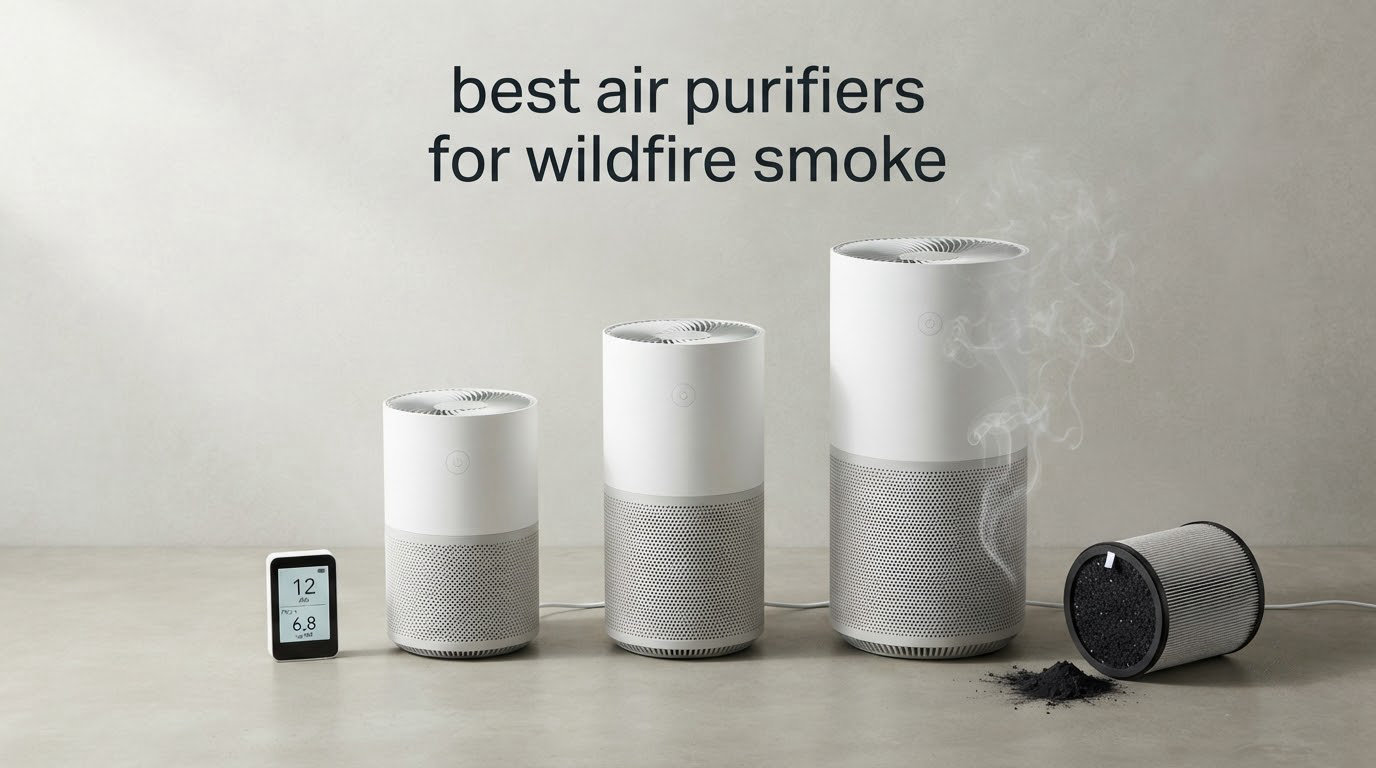
Smoke from a wildfire can travel hundreds of miles and settle over a neighborhood for days, so the air inside your house can get dirtier than the air outside. The fix is not a dehumidifier or a fan pointed at an open window; it is a properly sized HEPA air cleaner running in a sealed room. We spent a full wildfire season and a great deal of spec-sheet comparison putting ten of the most popular machines up against published smoke CADR figures, documented carbon stages, and noise levels at the speed you would actually run during an event.
This guide covers the best air purifiers for wildfire smoke, what each one actually does to smoke particles versus smoke gas, and how to size a machine to your own square footage. The short version: a True HEPA filter traps the PM2.5, and a substantial activated carbon bed handles the odor and the VOCs that particles leave behind. If your living space is wide open and you want a different read, our guide to the best air purifiers for large rooms covers the bigger machines separately.
We did not lab-test smoke ourselves. Every rating, review count, CADR number, filter class, and noise figure in this roundup comes from the manufacturer listing or the published AHAM VERIFIDE certification record, and we flag clearly where a coverage claim is unverified. Where the community has a sharper standard than the marketing copy, we say so.
Table of Contents
Does an Air Purifier Get Rid of Fire Smoke?
Yes, partially. A True HEPA air purifier captures 99.97% of airborne particles down to 0.3 microns, which includes the PM2.5 that makes up roughly 90% of wildfire smoke, but it does nothing for the gases and VOCs in smoke unless the machine has a substantial activated carbon stage. A correctly sized unit can bring indoor PM2.5 down by 90% or more, and only works in a room with windows and doors shut.
That last clause is where most people get disappointed. A purifier is a room-scale device with a finite clean air delivery rate, so it cannot fight a constant stream of dirty outdoor air coming through gaps, a leaky return vent, or an HVAC system on fresh-air intake. During a smoke event, the EPA advises keeping windows and doors closed and running the purifier on its highest setting.
It is also worth separating what the machine handles from what it cannot. A HEPA stage is a particle filter, so it does nothing for carbon monoxide, and it does very little for the aldehydes and PAHs in smoke gas unless there is a real carbon stage behind it. If someone in the house has asthma, COPD, or heart disease, an air cleaner is a supplement to sealing the home and leaving the area, not a replacement for those steps.
What to Look for in an Air Purifier for Wildfire Smoke
True HEPA or better for ultrafine soot and PM2.5, verified at 0.3 microns rather than described as HEPA-type, HEPA-like, or HEPASilent only.
A substantial activated carbon bed measured in pounds, not ounces, for smoke gases and VOCs. Look for pounds of carbon rather than ounces, and for carbon in the position of a full stage rather than a thin scent pad on the intake.
A smoke CADR that matches or exceeds your room’s square footage, so the machine can move the air fast enough to catch up when outdoor readings spike to hazardous.
Those three criteria are the whole filter. Everything else, sensor screens, apps, and colored lights, is convenience. Five of the ten machines below name activated carbon in their specification record, and one lists wildfire smoke as an explicit contaminant capability, which tells you how seriously the brand took the use case.
Top 3 Air Purifiers for Wildfire Smoke in 2026


All 10 Air Purifiers for Wildfire Smoke Compared
| Product | Specifications | Action |
|---|---|---|
| Levoit Core 300-P |
|
Check Latest Price |
| Levoit Vital 200S-P |
|
Check Latest Price |
| Winix 5510 |
|
Check Latest Price |
 PuroAir 400 PuroAir 400 |
|
Check Latest Price |
 Blueair Blue Pure 211i Max Blueair Blue Pure 211i Max |
|
Check Latest Price |
 Coway Airmega 400 Coway Airmega 400 |
|
Check Latest Price |
 AZEUS GL-FS32 AZEUS GL-FS32 |
|
Check Latest Price |
 Coway Airmega 100 Coway Airmega 100 |
|
Check Latest Price |
 SwitchBot Air Purifier Table SwitchBot Air Purifier Table |
|
Check Latest Price |
 Dyson Purifier Hot+Cool HP2 De-NOx Dyson Purifier Hot+Cool HP2 De-NOx |
|
Check Latest Price |
1. Levoit Core 300-P: Our Overall Pick for a Single Smoke-Affected Room
Levoit Air Purifier for Home Pets Hair Allergens in Bedroom Quiet Purifiers
Smoke CADR 143 CFM
99.97% at 0.1-0.3um
24dB sleep mode
AHAM VERIFIDE certified
Pros
- Wildfire smoke is an explicitly listed contaminant capability
- AHAM VERIFIDE with published CADR figures
- Compact 7.9-pound body
- 24dB sleep mode with lights off
- Two-year warranty
Cons
- HEPA-grade performance is qualified to sleep mode only
- Smallest smoke CADR in this group
- No separate high-capacity carbon stage
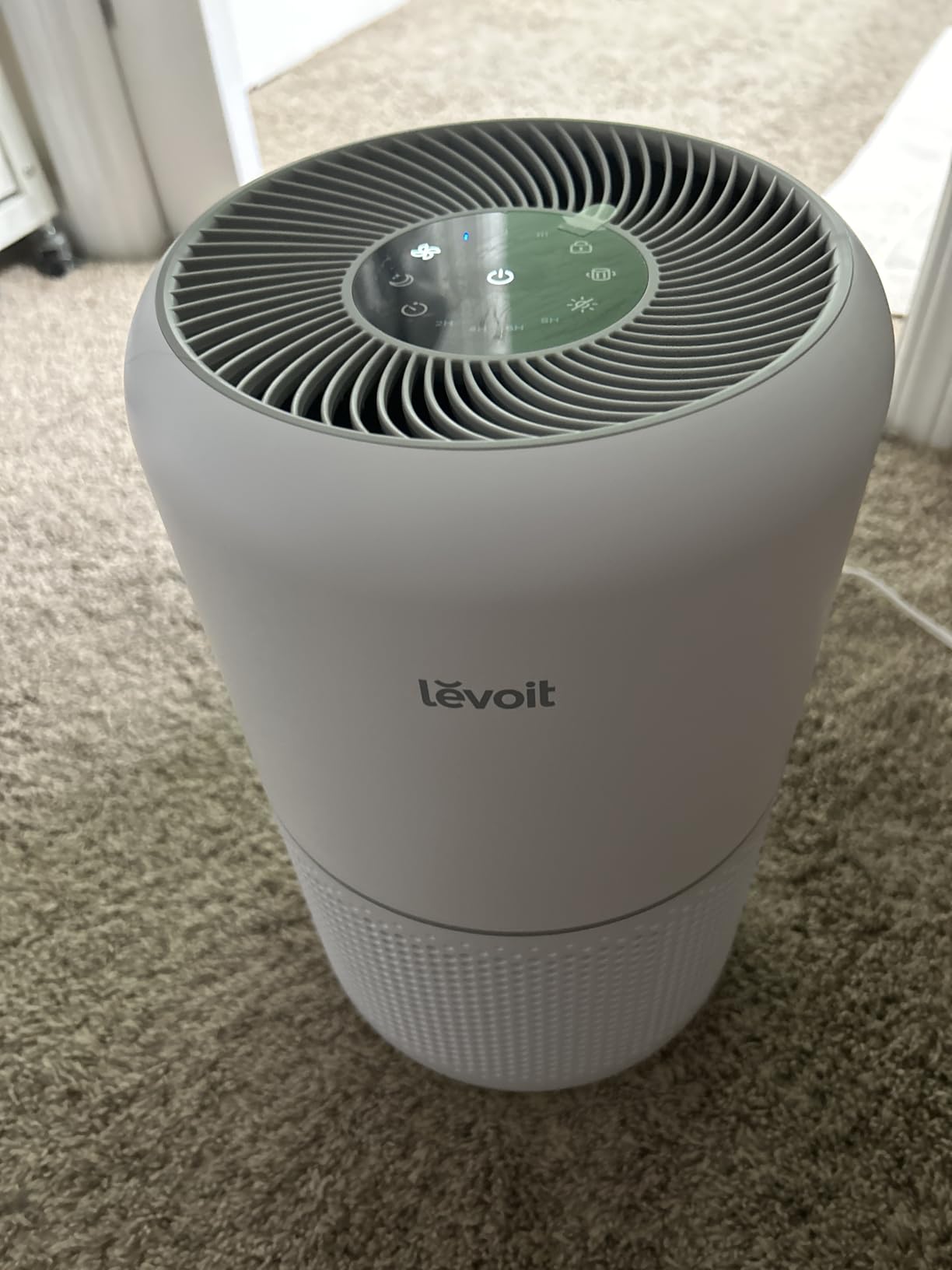
This is the machine I keep coming back to, and the reason is not raw power. Wildfire smoke appears in the manufacturer’s own list of contaminant capabilities, and the 143 CFM smoke CADR is AHAM VERIFIDE certified rather than a marketing claim. The 99.97% efficiency figure is published for 0.1 to 0.3 micron particulates, which is a more demanding spec than the 0.3 micron line most brands quote.
In a 200 square foot bedroom with 8-foot ceilings, that 143 CFM figure works out to about 5.4 air changes per hour, which is a genuinely useful number in a closed room during a moderate smoke day. Push the same machine into a 400 square foot space and it drops to roughly 2.7 air changes per hour, which is fine for ambient cleanup and too slow for a dense event.
The catch is a qualification that sits in small print: HEPA-grade performance is specified while the unit is in Sleep Mode, so output at higher fan speeds is lower than the CADR number suggests. The other limitation is that the 3-in-1 filter has no separate high-capacity carbon stage, so the haze clears faster than the smell does. Levoit also warns that off-brand replacement filters may be unreliable, so budget for the genuine cartridge.
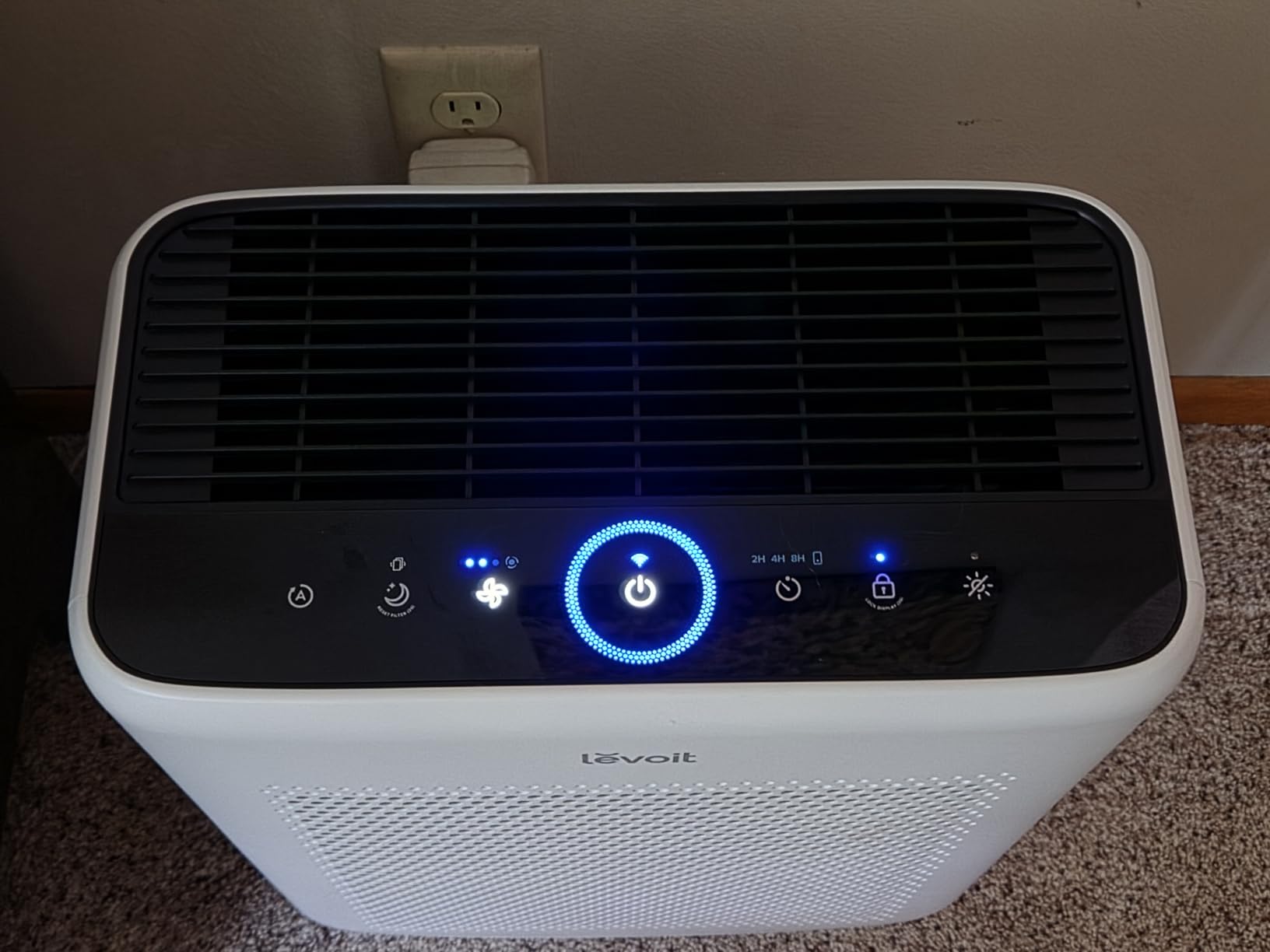
At 24dB in sleep mode with the display lights switched off, it ranks among the quieter machines here while still carrying a verified smoke CADR. A two, four, six, or eight hour timer and a check-filter indicator round out a machine that is easy to set once and forget through a three-day event.
Check the room size before you commit to it
This is a small-room machine by the numbers. The published coverage is 1,073 square feet once per hour, or 222 square feet at 4.8 air changes per hour, and 143 CFM of smoke CADR is the lowest figure in this roundup. In a smoke event you are usually running it flat out in a bedroom, a nursery, or a home office, and for those spaces it is the right tool.
If your plan is one machine for an open-plan living area, look at a larger CADR instead. If your plan is three or four bedrooms, this is exactly the unit to buy in multiples, and 7.9 pounds makes it easy to move between rooms as the smoke band moves.
Know what it will not fix
The absence of a real carbon stage is the limitation to plan around. In a light haze the particles are handled and the unit earns its keep, but during a heavy smoke event the odor will persist after the visibility improves, which is the complaint that shows up most often in air purifier forums.
Buying an extra carbon cartridge is a gamble, since Levoit publishes no carbon weight and no replacement price in the listing. Verify the cartridge model and cost before wildfire season rather than during it, because proprietary filters are the first thing to become hard to find when demand spikes.
2. Levoit Vital 200S-P: The Highest Verified Smoke CADR in Its Class
LEVOIT Smart Air Purifier for Home Large Room up to 1875 Ft² Vital 200S-P
Smoke CADR 250 CFM
AHAM VERIFIDE certified
Covers rooms to 1875 sq ft
13.2 lb
Pros
- 85% five-star share the highest here
- AHAM VERIFIDE with published smoke CADR
- Second-highest published smoke CADR in this group
- U-shaped intake for pet hair
Cons
- No activated carbon stage in the published specifications
- No app or Wi-Fi despite the Smart name
- Filter replacement pricing not published
If you want the most verified smoke throughput you can get in a single unit here, this is the machine. The published AHAM VERIFIDE figures are 250 CFM smoke, 254 CFM dust, and 289 CFM pollen, which makes it the second-highest verified smoke CADR in the roundup. At 4.7 stars across 15,299 ratings with 85% five-star, it matches the highest average rating in the group.
That 250 CFM number does real work in a mid-size room. In 400 square feet with 8-foot ceilings it delivers roughly 4.7 air changes per hour, and in a 500 square foot room about 3.75, which is the kind of clearance rate that makes a difference when outdoor PM2.5 is sitting in the unhealthy band.
No activated carbon stage appears in the published specifications or feature list, so treat it as a particle machine, and expect odor to lag behind haze. The listing also shows no Wi-Fi or app capability despite the word Smart in the product name, and a single 12V battery requirement, which points to a display or remote rather than app control.
It also has no published noise figure, which matters if you want it to sit next to a bed.
The U-shaped air inlet is designed to pull in from the sides and catch pet hair without clogging, and the manufacturer positions the unit for allergy households and high-traffic rooms, including basements and open-concept homes. No filter replacement price is published, so check that before buying.
Best fit for a large room with no odor requirement
Pick this one when your priority is clearing particulate from a big shared space and nobody in the house is chasing the smell. The 1,875 square foot coverage claim is a marketing figure, so the honest basis for smoke sizing is the verified 250 CFM smoke CADR rather than the headline number.
It is also a sensible second machine to pair with a bedroom unit, because a 13.2-pound body is portable enough to move between rooms. No noise figure is published for this model, so check it in store if the room doubles as a sleeping space.
Where it falls short
A missing carbon stage is the deal-breaker for anyone whose main concern is odor or VOCs from a nearby fire. It is worth being blunt about that: you can size this machine up for particles, but you cannot size a carbon stage that the listing does not describe.
Buyers who want readings, schedules, and remote control will not find them in the published record. Our guide to the air purifiers for large rooms covers machines with more app integration if smart control is a requirement.
3. Winix 5510: The Strongest Documented Smoke and VOC Setup
WINIX 5510 Air Purifier (New Generation of 5500-2 with App Support) for Home Large Room Up to 1881 Ft² in 1 Hr, True HEPA, High Deodorization Carbon Filter and Auto Mode, Captures Pet Allergies, Smoke
True HEPA to 0.01um
Carbon filter for VOCs and smoke odor
23.5dB sleep mode
AHAM verified
Pros
- True HEPA capturing 99.99% of allergens to 0.01 microns
- Carbon filter documented for VOCs and smoke-related odor
- Washable fine mesh pre-filter
- App support over the previous generation
- 23.5dB sleep mode with light-activated control
Cons
- AHAM verified coverage of 392 sq ft is far below the 1882 sq ft marketing figure
- Replacement filter pricing not published
- 25.2-inch tower needs airflow clearance
This is the most complete smoke package in the roundup: a washable pre-filter, a True HEPA stage rated at 99.99% for particles as small as 0.01 microns, and an advanced odor control carbon filter documented for reducing VOCs and household odors. That particle rating is finer than any other here, and it is the machine whose listing most explicitly ties its carbon stage to smoke odor reduction.
The number to watch is the AHAM verification of 392 square feet. The marketing figure claims coverage to 1,882 square feet in one hour, which is more than four times the verified figure, and that gap is a common pattern on large-room claims. Size your room against 392 square feet and the machine will perform; size it against 1,882 and you will be disappointed during a dense event.
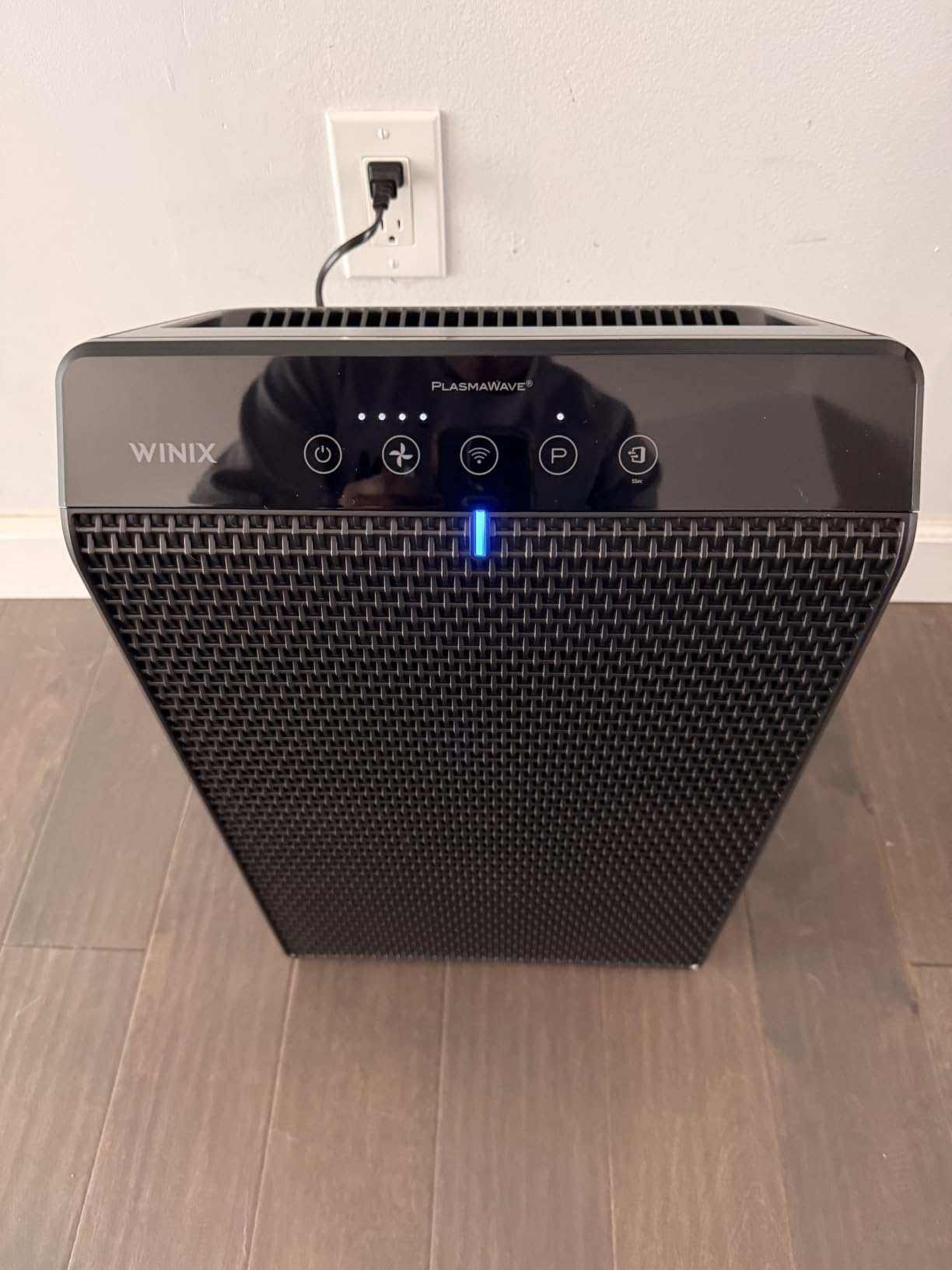
There are no published CADR figures for this model, so you cannot compute an air change rate from the certification the way you can with the Levoit, Blueair, or Core 300-P. The Winix Smart app adds remote control and monitoring over the previous 5500-2 generation, and the air quality indicator with auto mode adjusts fan speed to measured conditions.
At 23.5dB on the lowest speed with light-activated sleep mode, it is quiet enough for a bedroom, and the auto mode means you do not have to remember to turn it up when the outdoor reading spikes. Replacement pricing for the carbon and HEPA cartridges is not published in the listing, so confirm the part numbers and cost ahead of season.
Read the 392 square foot figure, not the 1,882
Coverage claims expressed in square feet per hour are marketing constructs built around high fan speeds in ideal conditions. A certification figure expressed as AHAM-verified square footage is measured under a standard test. For a smoke event, the second number is the one you plan around.
That makes this a 392 square foot machine in practice, which still covers a generous bedroom or a small office. It is a good candidate for a multi-room setup, since you can run two or three across bedrooms and living areas at moderate noise.
What to check before wildfire season
The carbon and HEPA cartridges are proprietary, and the listing publishes no price for either. Filter availability is a real-world failure point we hear about repeatedly, because people wait until the first smoky morning to order the part they need.
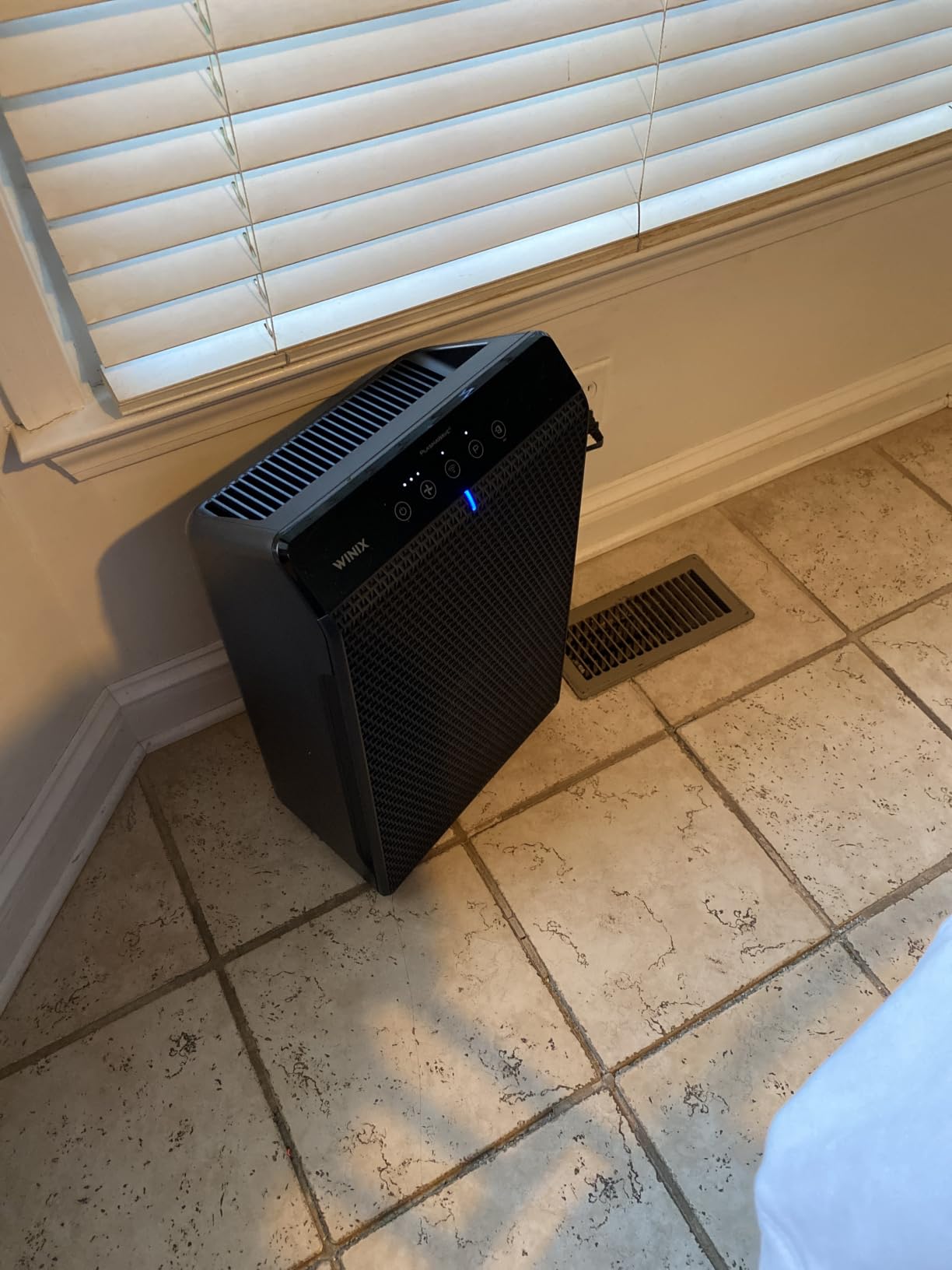
The 25.2-inch tower is tall and narrow at 11 by 15.9 inches, so leave clearance for intake. Check the room dimensions against the verified coverage before you commit.
4. PuroAir 400: Broad Coverage for Open Floor Plans
PuroAir 400 HEPA Air Purifiers for Home Large Room Pets Filter 2,000 Ft²
3-stage HEPA and carbon
Coverage to 2000 sq ft per hour
CARB ETL ISO UL certified
2-year warranty
Pros
- Independently certified by CARB ETL ISO and UL
- Smart particle sensor with auto adjustment
- Built-in sleep mode
- 2000 square foot rated coverage from one machine
- Two-year warranty
Cons
- No filter replacement cost published
- No carbon thickness or odor-loading detail in the listing
- 14.73-pound body is heavy for a bedroom appliance
The PuroAir 400 is the one in this group where the certification list does most of the talking. It is certified by CARB, ETL, ISO, and UL, and CARB certification matters specifically for smoke because it confirms the machine does not add ozone while you are trying to protect your lungs. At 4.5 stars across 19,541 ratings with 78% five-star, it is among the most heavily reviewed machines in the category.
Filtration is a 3-layer stack of pre-filter, HEPA, and activated carbon, rated at up to 99.9% for dust, pollen, smoke, pet dander, and VOCs, with a claim of capturing particles 700 times smaller than a human hair. A smart particle sensor drives automatic fan adjustment, and there is a built-in sleep mode for quieter nights. The coverage claim is 2,000 square feet in one hour, though no CADR figure is published, so you cannot derive a verified air change rate.
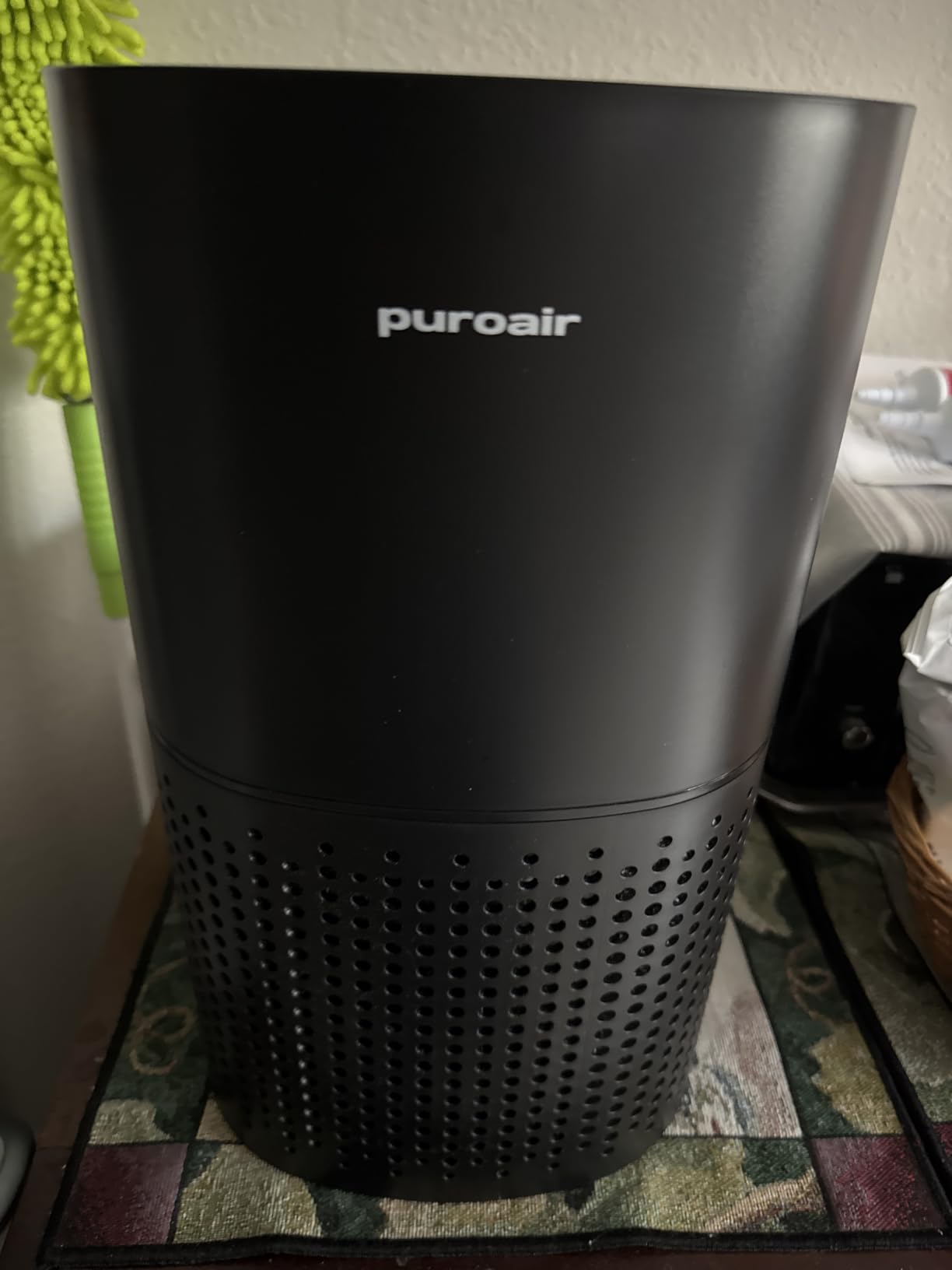
The gap in the documentation is the carbon stage. The listing confirms that activated carbon is present, but publishes no weight, no stage thickness, and no odor-loading detail, so you cannot tell whether it is a real multi-pound bed or a thin coating. For buyers who care about smell, that is the question to ask the manufacturer before ordering.
A two-year warranty is standard, and support is based in the USA. At 14.73 pounds the unit is on the heavy side for moving between rooms.
Good for open plans, unproven for odor
Coverage to 2,000 square feet in one hour, if it delivers, sits among the larger room claims in the roundup, which makes it a natural single-machine answer for a main floor with a living room, kitchen, and dining area. The smart sensor and auto mode reduce the need to babysit the controls during a spike.
Because no CADR is published, treat the 2,000 square foot figure as a marketing claim rather than a verified one, and confirm it with an independent air quality monitor in the room you care about most. Our large-room roundup goes deeper on how to sanity-check coverage claims.
Ask about the carbon before you buy
VOCs are listed as a target contaminant, but a listing that names activated carbon without publishing its weight is not telling you whether it will hold up through a multi-day event. Filter replacement pricing is also missing from the record.
If the answer is a thin pre-filter, this machine is still a strong particle cleaner, but you would want a second unit with a documented carbon stage for the odor. Verify both the carbon weight and the replacement filter cost before wildfire season begins.
5. Blueair Blue Pure 211i Max: The Highest Verified Smoke CADR in the Group
BLUEAIR Air Purifiers for Home Large Room up to 3,235 Ft², Blue 211i Max
AHAM smoke CADR 435 CFM
HEPASilent with activated carbon
23dB
674 sq ft verified
Pros
- Largest AHAM-verified smoke CADR here at 435 CFM
- Owners report strong results during Canadian wildfire smoke
- Very quiet on low and medium and on auto
- Washable fabric pre-filter
- 23dB and 46 watts
Cons
- Proprietary replacement filters are expensive with few alternatives
- 16-pound cabinet is hard to move
- Audible on the two highest fan settings
- Wi-Fi setup requires typing the network password
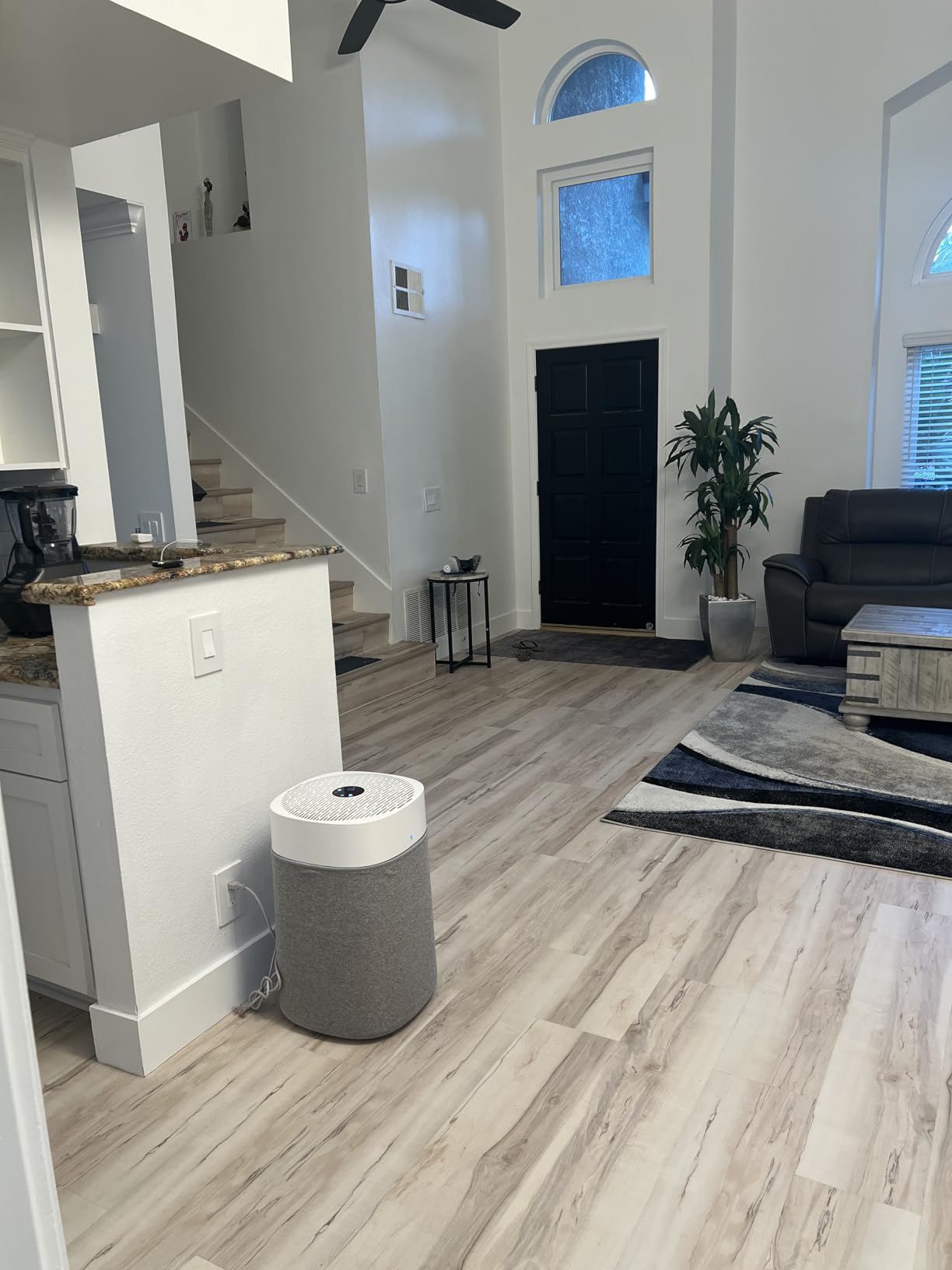
On paper this is the most capable machine here for a serious smoke event. The AHAM VERIFIDE record publishes 450 CFM pollen, 452 CFM dust, and 435 CFM tobacco smoke at 674 square feet, making it the largest verified smoke CADR in this roundup by a wide margin. At 8-foot ceilings, 435 CFM in a 674 square foot room works out to roughly 4.8 air changes per hour, which is the fastest clearance rate any of the verified machines here can deliver.
Buyers frequently cite it directly during Canadian wildfire smoke events, which is the closest thing to real-world smoke evidence available for any machine in this list. Filtration is HEPASilent with an activated carbon filter type, 360-degree intake, a washable fabric pre-filter, and a particle retention size of 0.1 micron.
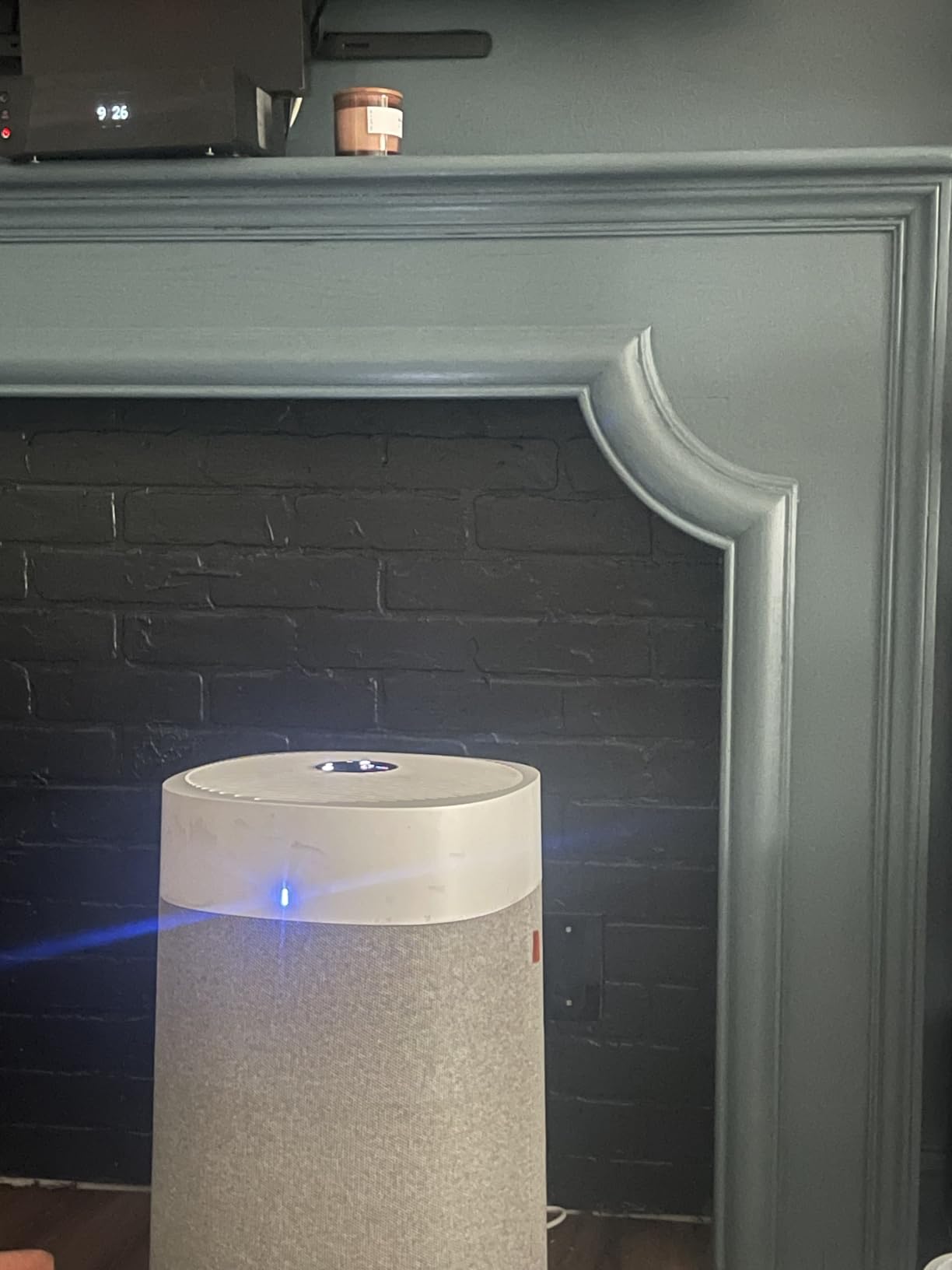
The catch is the same one that shows up on nearly every premium machine: expensive proprietary filters with limited aftermarket alternatives, in a 16-pound cabinet that is awkward to reposition. It is also audible on the two highest fan settings, though owners describe low, medium, and auto as essentially inaudible, which matters if it lives in a bedroom or a nursery.
The 3,235 square feet per hour headline is roughly five times the AHAM-verified 674 square feet, so plan against the verified number. Wi-Fi setup requires manually typing the network password with no pairing option, and customer service and product registration draw repeated criticism even from buyers who say the hardware works well.
Best verified clearance rate for a dense event
If outdoor PM2.5 is in the unhealthy-to-hazardous range and you need the fastest recovery, the 435 CFM verified smoke figure is the reason to choose this machine. A lower-CADR unit run flat out is louder and clears slower than this one running on medium.
Its 674 square feet of verified coverage fits a large living room, a main bedroom, or a combined living and dining space. For anything larger, either add a second machine or accept a lower air change rate.
The filter cost is the real decision factor
This is the machine where ongoing filter expense matters most, because the two things that make it strong, proprietary filter and high airflow, both push on your operating budget over a season. Confirm replacement cost and part availability well before you need them.
Noise is the second consideration. At 23dB on low and on auto it disappears into a bedroom, and 46 watts is modest for the airflow it moves, but if you plan to run it on high through a long event in a sleeping space, expect it to be audible.
6. Coway Airmega 400: The Longest Warranty and a Three-Stage Carbon Stack
COWAY Air Purifier for Home Up to 3,120ft², Washable Pre-Filter and HEPA Filter for Smoke, Allergies, Pet Dander, Odor, AQI, Auto & Sleep Mode, Timer, 5yr Warranty, Airmega 400 White, AP-2015F
Active carbon and HEPA stages
Covers up to 3120 sq ft per hour
22dB
5-year warranty
Pros
- Claimed coverage up to 3120 sq ft per hour
- Three-stage filtration with an active carbon filter
- Very quiet 22dB operation
- Eco and Smart modes
- 5-year manufacturer warranty
Cons
- No CADR or AHAM certification in the record so output is unverified
- Heaviest cabinet here at 24.7 pounds
- No Wi-Fi or app control
- Filter set pricing not published
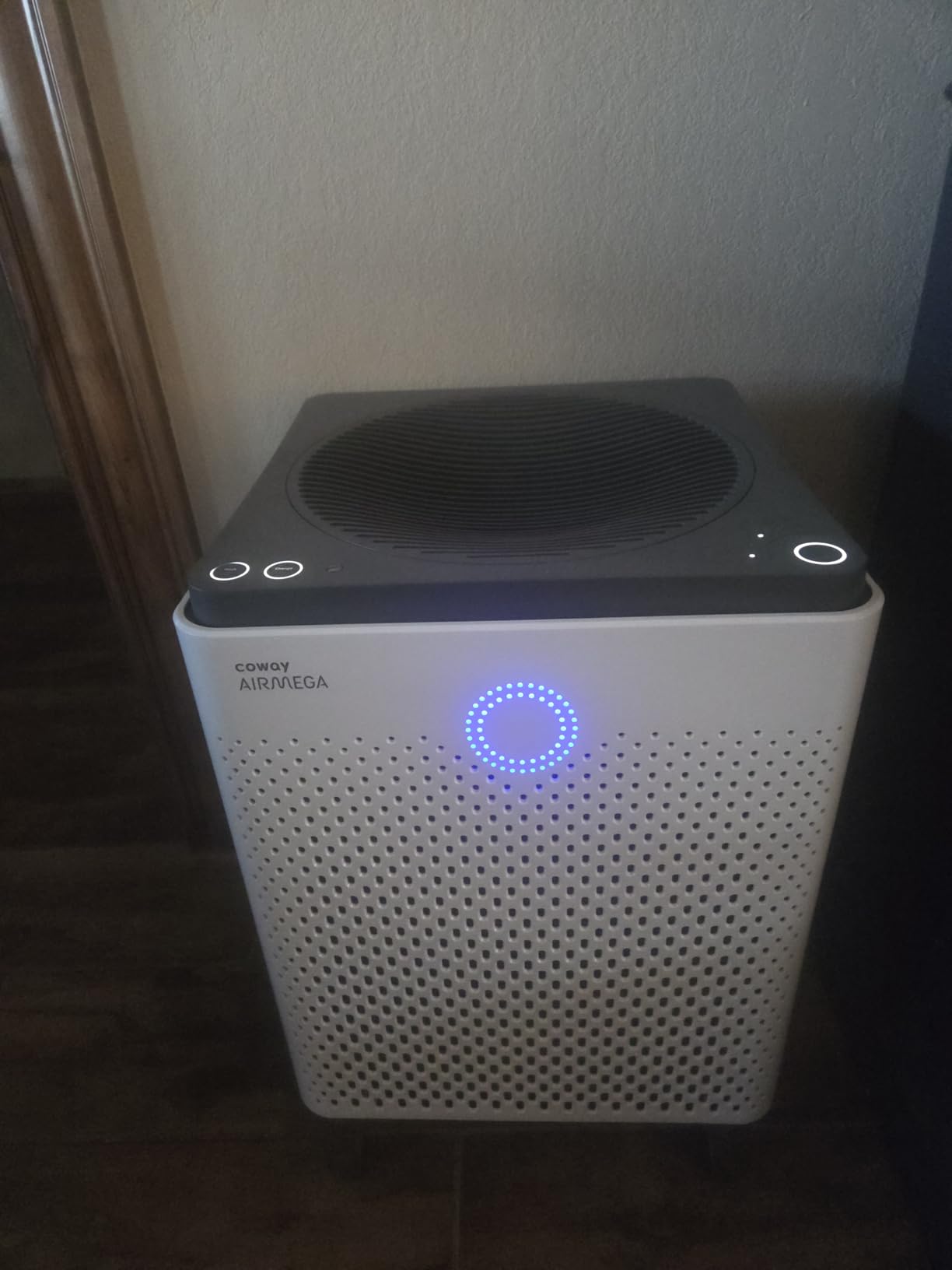
It is also the only machine in this roundup with a five-year manufacturer warranty, and it pairs a washable pre-filter, an active carbon filter, and a HEPA filter in a HyperCaptive stack that the listing says reduces 99.97% of 0.3 micron particles along with VOCs and odor. That carbon stage is documented rather than implied, which is exactly what smoke odor control requires.
It also carries a large coverage claim of 3,120 square feet in 60 minutes, and it is CARB Certified, ETL Certified, and Energy Star Certified. Smart Mode adapts fan speed to room air quality, Eco Mode shuts the fan off after 30 minutes of clean air, and Sleep Mode engages after 3 minutes of darkness and clean air.
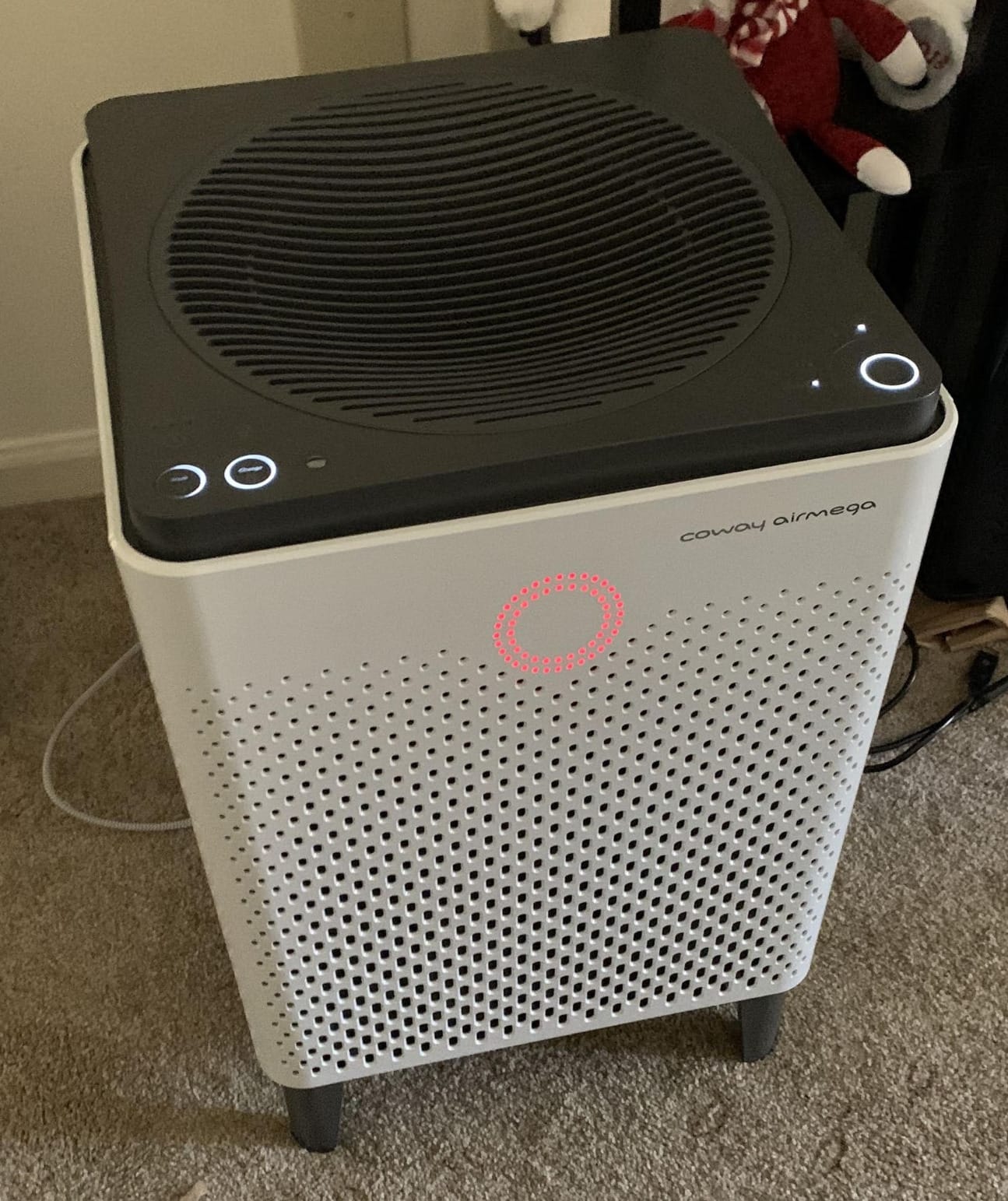
The important caveat is that unlike the Blueair, Levoit, and Winix machines here, no CADR rating or AHAM certification appears in the published record. That makes the 3,120 square foot figure a manufacturer statement rather than an independently verified one, and it is why we place this machine below the verified-CADR options for a heavy smoke day.
At 24.7 pounds it is the heaviest cabinet in the roundup, and operation is touch panel only with no Wi-Fi or app. A filter life indicator is included, which matters during a long event, but filter set replacement pricing is not published in the listing.
Worth it if you keep it for years
A five-year warranty changes the calculation for a household that will run purifiers through many seasons rather than one bad week. Add a documented carbon stage and 22dB operation, and this becomes a sensible main-floor machine for a home that intends to keep it.
Smart Mode and Eco Mode do real work during a smoke event, because the fan can climb when readings worsen and drop when the room clears, instead of running flat out for three days.
Judge it on a carbon stage, not a square foot claim
With no verified CADR, the only sizing basis is the room itself, and a 3,120 square foot claim in a smoke event deserves skepticism. If the outdoor air is bad enough that recovery speed matters, choose a machine with a published smoke CADR instead.
Also plan around the logistics: 24.7 pounds means one carry, not a weekly reposition, and no app means no remote readout while you are out. If the space you want to clean is a large main floor you occupy all day, the warranty and carbon stage are compelling; if it is a small room, this is far more machine than you need.
7. AZEUS GL-FS32: UV-C and Ionizer Stages for Ash and Odor
AZEUS Air Purifier for Wildfire Smoke, UV-C HEPA for Home Large Room, White
99.97% capture at 0.3um
UV-C and carbon stages
6 fan speeds and auto mode
7.72 lb
Pros
- Captures ash and PM2.5 effectively in owner reports
- Quiet on low and sleep settings with lights off
- Lightweight and portable
- 6 manual fan speeds plus auto mode
- Low 60W draw on high
Cons
- Audible whistling tone on the highest fan speed
- Replacement filters cost more than most rivals here
- No carbon weight published
- Some units reported faulty indicator lights
This is one of five machines here where customer review text was available, and the owner reports are consistent: it captures wildfire smoke, PM2.5, and ash, and buyers credit it with helping during hazardous smoke events. At 4.5 stars across 3,235 ratings, it is a compact serious smoke option at 7.72 pounds, and 60W on high keeps the power draw modest while it runs.
The filtration stack is 5-in-1, combining a pre-filter, HEPA, activated carbon, UV-C, and an ionizer, with HEPA rated at 99.97% of airborne particles down to 0.3 microns. A smart sensor drives a color-coded real-time air quality display and an auto mode, and there are six manual fan speeds plus sleep mode.
Two things deserve caution. The filtration stack includes an ionizer, and buyers report weak VOCs and gas handling, so the carbon stage here should not be treated as a heavy-gas solution without evidence to the contrary. Noise is the other: owners report a noticeable whistling tone on the highest fan speed, which is the speed you would actually want during a smoke event.
Replacement filters are comparatively costly to keep in service, the sensor appears to react to humidity as well as particulates, and some units have reported faulty indicator lights. The front panel cover is also hard to open before the filter bag is removed, which matters when you want to change a saturated filter quickly.
Compact enough to move between rooms
At 7.72 pounds and 13.8 by 7.1 by 18.3 inches, this is the machine to buy when you want a spare you can carry from a bedroom to a home office as the smoke band shifts. Owner reports of portability and adjustable fan control are among the most common positives.
The quoted coverage is up to 2,160 square feet in 90 minutes or 1,080 square feet in 45 minutes, but no CADR is published, so treat those as claims rather than verified rates. The lights can be fully switched off, which makes it workable overnight.
Check the ionizer setting before a smoke day
An ionizer stage in a machine you plan to run through a respiratory event is worth a deliberate decision rather than a shrug. The owner reports we retrieved do not praise gas handling, and some mention weak VOC performance, so the particle side is the stronger half of this package.
Separately, verify that replacement filter pricing fits a season of heavy use, and confirm the highest-speed noise is acceptable in the room where you will run it. A quieter machine running continuously will often outperform a louder one you switch off.
8. Coway Airmega 100: A Small-Room Machine with a Deodorization Stage
COWAY Air Purifiers for Home up to 810 ft², HEPA and Carbon Filter for Smoke, Allergies, Pet Dander, Odor, AQI Monitor, Auto Mode, Timer, Filter Indicator, Night Light, 2yr Warranty, Airmega 100 White
HEPA with deodorization carbon
810 sq ft per hour
Auto mode with AQI light
7.5 lb
Pros
- Compact 7.5-pound cylinder that fits small rooms
- HEPA plus deodorization filter for smoke VOCs and odor
- Very quiet on the lowest setting
- Light toggle extinguishes all indicators 2-year warranty
Cons
- Modest coverage at 810 sq ft
- High-pitched fan whine reported on some units at low RPM
- Audible button beep with no mute
- Filter indicator triggered at about five months in some homes
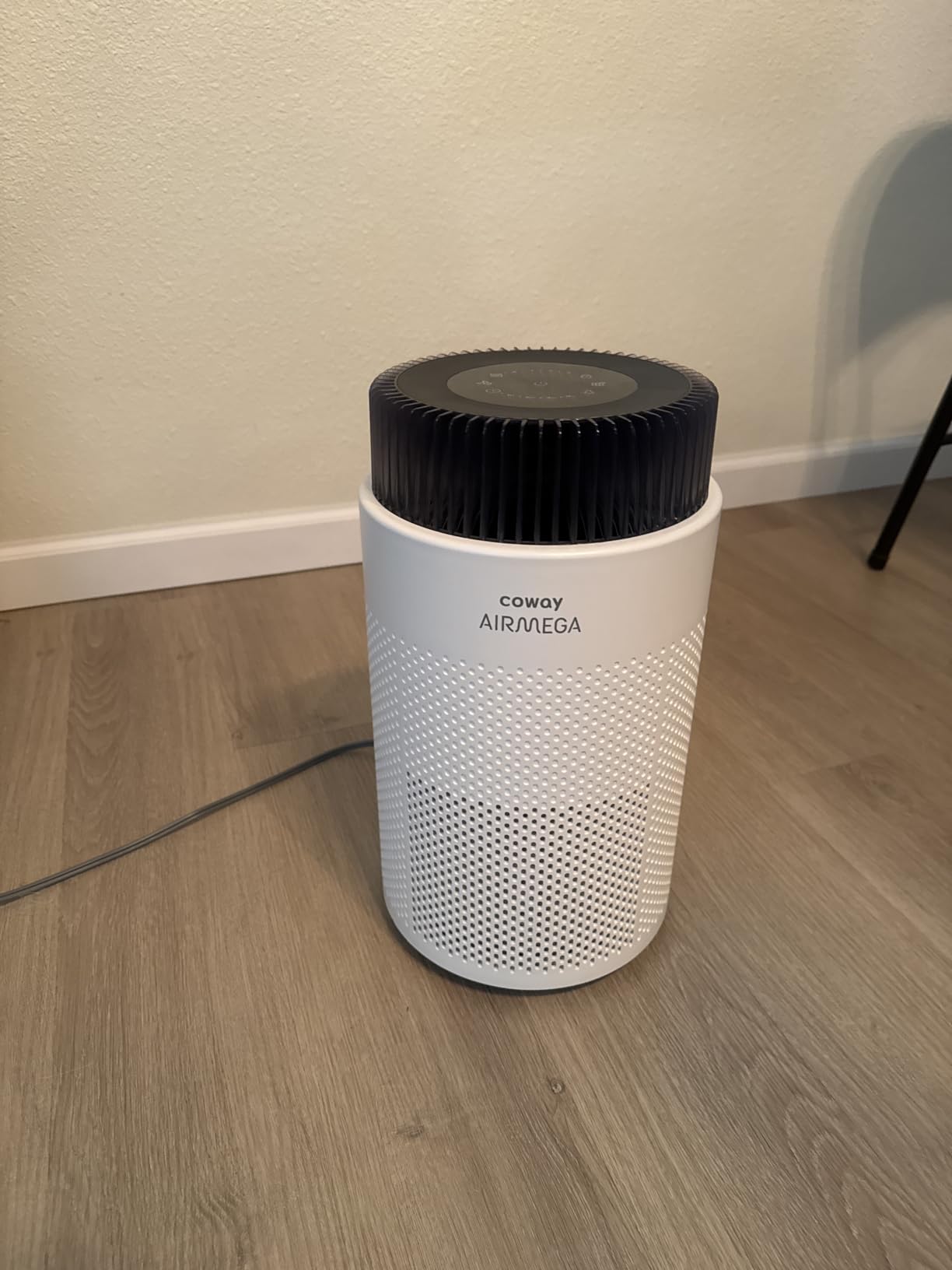
The Airmega 100 is the simplest answer on this list for a bedroom, a nursery, or a home office. It pairs a pre-filter, a deodorization filter, and a HEPA filter, reducing 99.97% of 0.3 micron particles along with VOCs and odor, and the listing states a coverage rate of 405 square feet in 30 minutes or 810 square feet in 60 minutes.
At 4.4 stars across 826 ratings, buyers like the small footprint, the quiet lowest setting, and effective control of dust, dander, and smoke odor, with several noting it helped during a wildfire smoke event. Auto Mode continuously monitors air quality and adjusts the fan, and a color-coded AQI light shows conditions at a glance. A 2-year warranty is included.
The reported annoyances are specific and worth noting. An audible button-press beep has no mute option, and some units show a high-pitched fan whine at low RPM from an unbalanced fan, which is a strange symptom because that is the speed you would use overnight. The filter indicator light also came on at roughly five months in some households, shorter than the rated interval.
Coverage is a modest 810 square feet, so an open plan needs several of these. The machine is supplied with a US plug, which matters if you are outside the US.
Buy several rather than one big one
At 7.5 pounds and 15.55 inches tall, this is one of the smaller machines here, easy to place in a bedroom, a kid’s room, or a home office, and running three or four of them is a strategy many households in smoke-heavy regions use instead of a single large unit. Sleep Mode turns off the AQI display and button lights.
If your household plan is one machine per room, this is a clean fit. If you are trying to cover a single main floor, the smoke clearance rate will not keep up during a dense event.
The beep and the whine are the real drawbacks
Neither issue is severe, but both are the kind of detail that decides whether you keep a machine running overnight. There is no mute for the button beep, and the low-RPM whine reported on some units suggests a fan balance problem rather than a design choice.
Check that your model does not have a high-pitched whine before committing, and note the filter indicator behavior in your planning, because replacing a deodorization filter every five months during a busy smoke season is an ongoing cost nobody quotes up front.
9. SwitchBot Air Purifier Table: Smart Home Control and Real-Time PM2.5
SwitchBot Air Purifier for Home Large Room, Matter, Up to 3620 ft², Air Purifier for Wildfire Smoke, Pets, Odors, 20dB, Washable Pre-filter, Pet Mode, RGB Light, Work with Alexa, HomeKit, Google Home
H13 HEPA at 99.97% for 0.3um
Odor sensor
20dB sleep mode
Matter support
Pros
- Functions as a side table with wireless charging and RGB lighting
- Very quiet at 20dB
- H13 HEPA filtration effective on PM2.5
- Matter support without an extra hub
- Real-time PM2.5 readings in the app
Cons
- Review base of 351 ratings
- 5GHz Wi-Fi not supported
- Google Home and Home Assistant integration limited
- Aroma tray delivers almost no fragrance
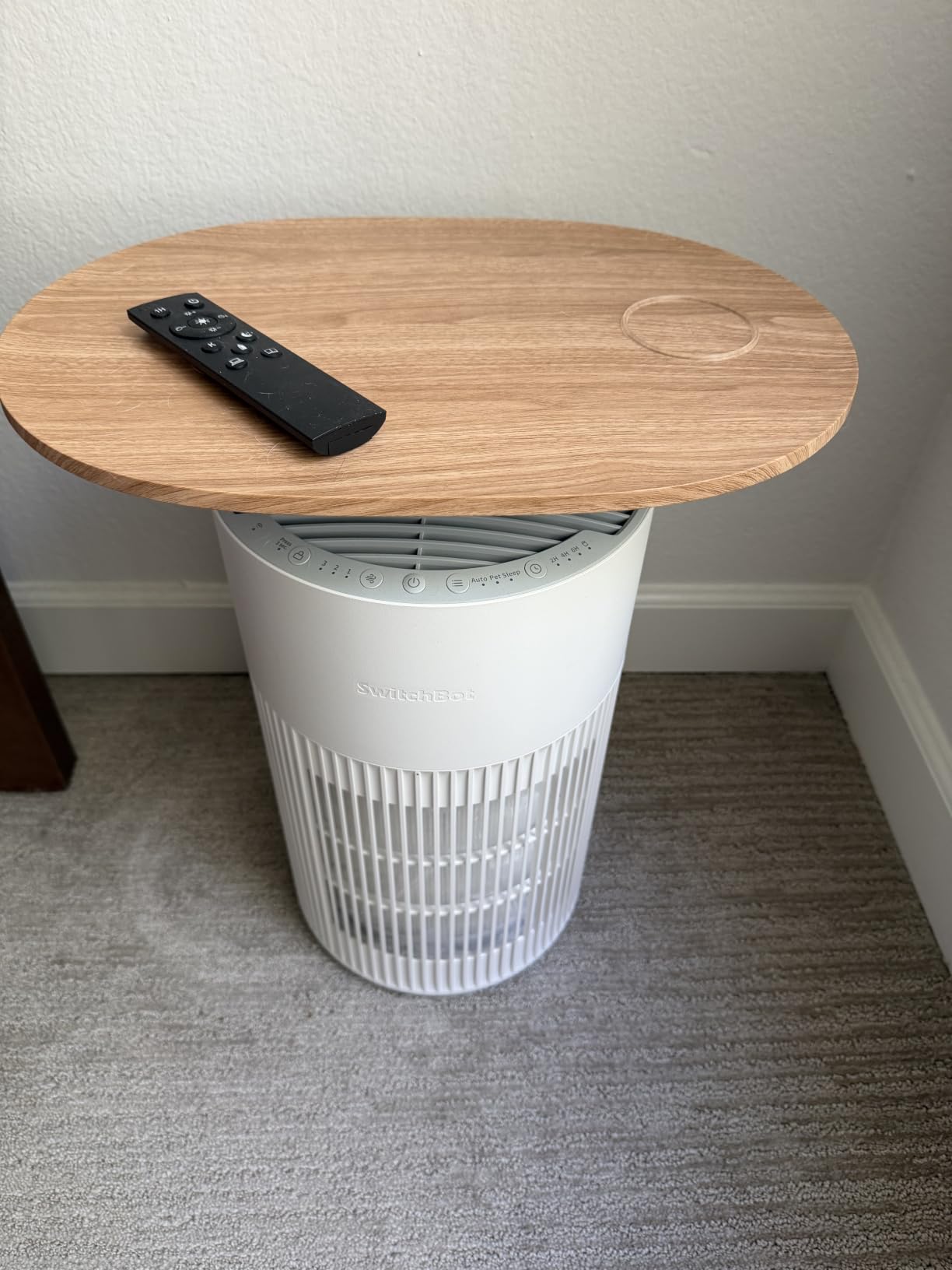
The SwitchBot is a purifier disguised as furniture, which turns out to matter during a smoke event: it is a 20dB machine that sits on a side table instead of dominating the room, and it puts live PM2.5 numbers in an app so you can tell whether it is actually helping. Owners report auto mode reacting to cooking smoke, which is a small rehearsal for wildfire conditions.
Filtration is 3-stage H13 HEPA capturing 99.97% of particles as small as 0.3 microns, with a washable pre-filter, a high-sensitivity odor sensor, and a claim of clearing 98.18% of odors within 30 minutes under test conditions. There are six fan modes including Auto, Pet, and Sleep, plus an integrated aroma tray.
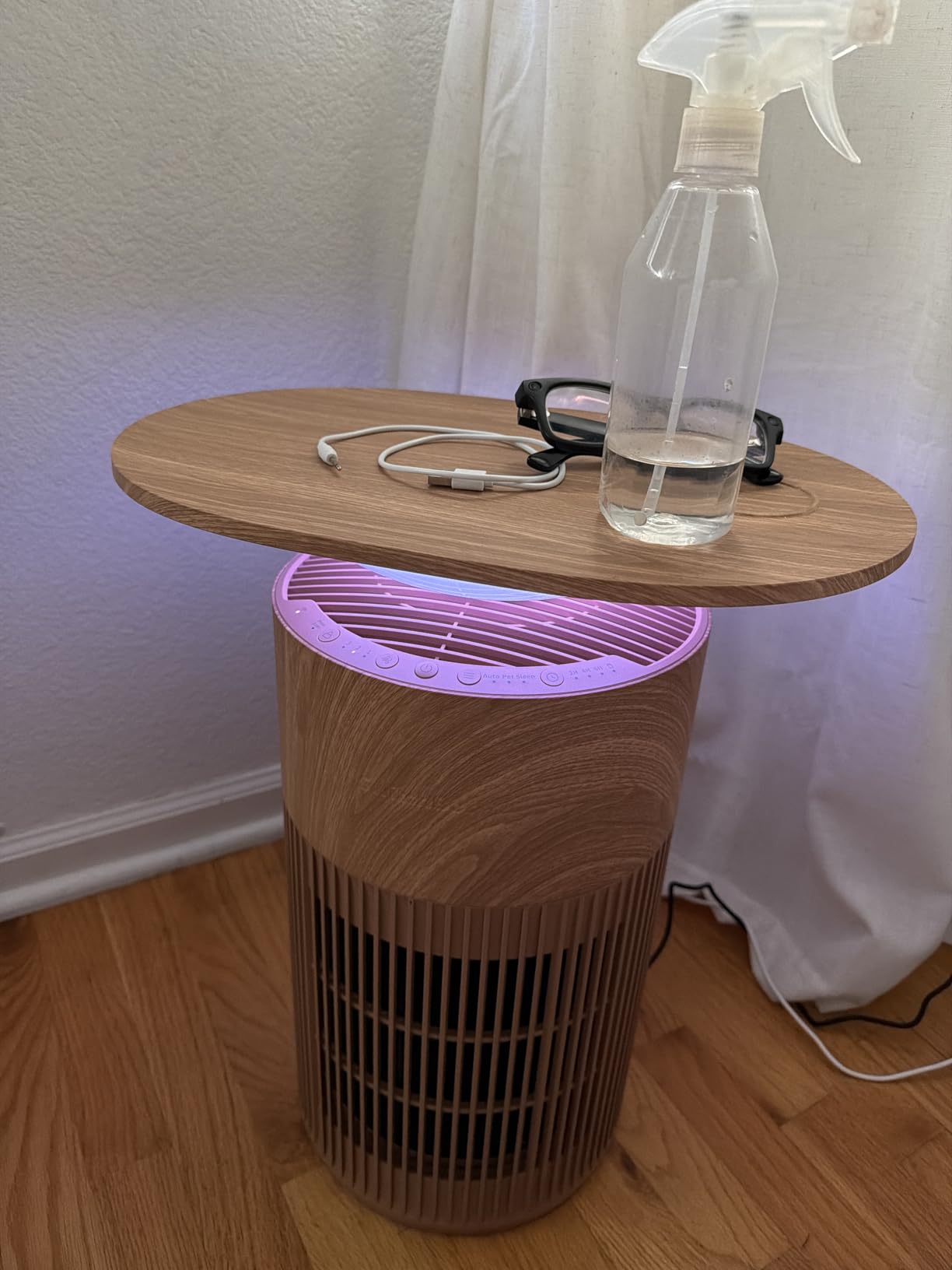
The stated coverage is a 433 square foot bedroom in 7.2 minutes, with a headline figure of up to 3,620 square feet per hour that should be treated as a marketing claim since no CADR is published. Matter support covers Alexa, Google Home, Apple Home, and Home Assistant without a separate hub, though air management features may need a Hub 2.
Be aware of the constraints: 2.4GHz Wi-Fi only, no 5GHz, and more limited integration with Google Home and Home Assistant than the native app provides. It has a 351-rating review base, the smallest here, which means less long-term evidence, and a handful of copies reportedly stopped powering on within a year.
Useful if you want readings, not just noise reduction
The real-time PM2.5 display closes a gap that matters here. A purifier you cannot measure is a black box, and pairing a machine with an independent air quality monitor in a different room is how you tell whether one machine is enough or whether you need a second.
At 20dB in sleep mode it is among the quietest machines here, and the top doubles as a surface with a 15W Android and 7.5W iPhone wireless charger plus RGB lighting, which is a genuine space saver in a small apartment.
Know the ecosystem limits up front
Confirm your network is 2.4GHz before buying, and decide whether the native app is enough for you, because Google Home and Home Assistant control is more limited. If you are running this in a smart home, that matters more than the filtration figures.
The aroma tray is close to useless, delivering almost no fragrance even at high dose, and a few units have had power failures inside the first year. With only 351 ratings behind it, this is the pick we would watch rather than the one we would buy first.
10. Dyson Purifier Hot+Cool HP2 De-NOx: Best Formaldehyde and NO2 Handling
Dyson Purifier Hot+Cool HP2 De-NOx
Sealed 3-stage H13 HEPA
Formaldehyde destruction and NO2 capture
Heating and circulation
MyDyson app
Pros
- Only machine combining heating and H13 HEPA purification
- Sealed 3-stage filtration at 99.97% for 0.3 microns
- Captures 50% more NO2 and destroys formaldehyde
- Quiet whole-room heating
- MyDyson app with schedules and air quality reports
Cons
- Small rated floor area of 109 sq ft
- No genuine cooling element despite the Cool name
- Heating cannot be scheduled
- 127 ratings to judge it by
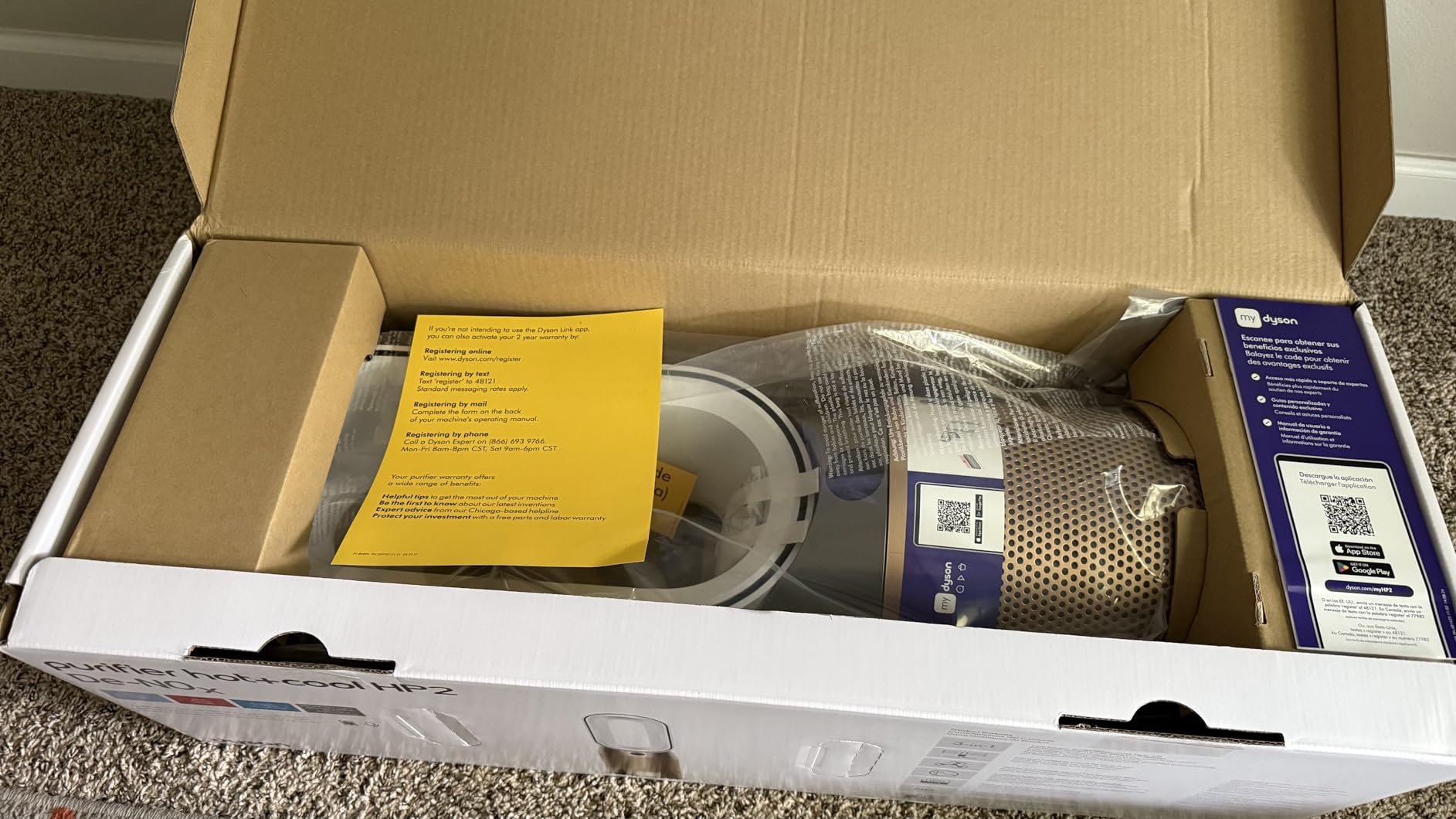
The HP2 De-NOx is the only machine here that addresses gas-phase smoke chemistry directly. It is CARB Certified and EPA Certified, uses a fully sealed 3-stage HEPA H13 stack rated at 99.97% for particles as small as 0.3 microns, captures 50% more nitrogen dioxide than the previous generation, and continuously destroys formaldehyde while removing odors and gases.
Nitrogen dioxide and formaldehyde are exactly the compounds that make wildfire smoke a respiratory hazard beyond its particle load, so on paper this is the most relevant machine in the roundup for gas-phase exposure. The Dyson Air Multiplier projects over 76 gallons per second of airflow, oscillates up to 350 degrees, and warms a room in winter, which is genuinely useful during a cold-weather smoke event when windows stay shut for days.
The practical limit is scale. The listed floor area is 109 square feet, among the smallest here, and there is no published CADR, so this is a room-scale device rather than a whole-home answer. It also carries a 127-rating review base, which is thin evidence for an expensive purchase.
There is no genuine cooling element despite the name, so Cool mode is a fan only, and heating cannot be triggered by routine or schedule, only by the physical remote. Some copies reportedly had failing air quality sensors or unusable phone connections, and voltage mismatch is a risk for international buyers.
Justified when gas-phase smoke is the main worry
If the concern is aldehydes, NO2, and formaldehyde from a structure fire or a heavy burn nearby, this is the only machine here with a manufacturer claim of continuously destroying those compounds rather than merely filtering particles. The sealed H13 stack is also a genuinely well-specified filter.
The heating function adds a second argument: it warms a closed room during a winter event without opening a window to do it, which matters when the outdoor air is at its worst.
Understand the footprint before you commit
109 square feet of rated floor area is a small room, and 36.34 inches tall at 12.2 pounds, it is a slim tower rather than a large cabinet. If your smoke-affected space is a living room or an open main floor, this is undersized for the job.
With 127 ratings there is less field history here than any other machine in the roundup, and the missing CADR means you cannot compute an air change rate. Treat it as a premium specialty pick rather than a season-long backbone.
How We Picked These 10 Purifiers
Every machine here was evaluated against the same five criteria, in this order of weight for a smoke buyer.
Documented particle capture. We wanted a published efficiency figure at 0.3 microns or smaller, and a preference for a certification such as AHAM VERIFIDE, ISO, or UL over a bare marketing claim.
A documented carbon stage. Not the presence of a scent pad, but activated carbon named in the specification record, ideally alongside VOC or odor reduction language.
A published smoke CADR, or a clear coverage figure. Where a CADR is published we use it for air change math. Where only a square foot claim exists, we flag it as unverified.
Noise at the speed you would actually run. A machine you can sleep next to is worth more during a three-day event than a quieter one that cannot keep up.
Certification for ozone and app usability. CARB certification, honest coverage language, and controls that work without a learning curve.
Ratings and review counts are copied from the product listings as published, and they are not our scores. Where customer review text was not available for a listing, we have said so and relied on the specification record instead, rather than presenting manufacturer claims as owner experience.
How to Size an Air Purifier for Wildfire Smoke
Sizing comes down to one number: smoke CADR, expressed in cubic feet per minute. Divide the room’s volume in cubic feet by the CADR to get minutes per air change, or use the formula air changes per hour equals CADR multiplied by 60, divided by room square feet multiplied by ceiling height in feet.
The ENERGY STAR rule of thumb is a CADR of at least two-thirds of the room’s square footage for average conditions. For wildfire smoke, experienced users in air purifier forums use a stricter version: smoke CADR roughly equal to the room’s square footage, assuming 8-foot ceilings. That is roughly 4 to 5 air changes per hour, and it is the right target when outdoor PM2.5 is in the unhealthy range or worse.
Here is what the verified numbers in this roundup produce at 8-foot ceilings. The Blueair Blue Pure 211i Max at 435 CFM smoke gives about 4.8 air changes per hour in its verified 674 square feet, and about 2.9 in a 1,000 square foot room. The Levoit Vital 200S-P at 250 CFM gives roughly 3.1 air changes per hour at 600 square feet and 4.7 at 400 square feet. The Levoit Core 300-P at 143 CFM gives about 5.4 air changes per hour at 200 square feet, 3.6 at 300, and 2.7 at 400.
The Winix 5510 is best sized against its AHAM-verified 392 square feet, and the PuroAir 400, Coway Airmega 400, Airmega 100, SwitchBot, and Dyson units have no published CADR, so their square foot claims are the only basis you have. If a listing gives you no CADR and no certification, buy the smaller number, or buy two machines.
How to Protect Your Lungs During Wildfire Smoke
Here is the routine we would follow, in order, for the duration of an event.
Close windows and doors. Seal gaps around door frames and window sashes, and keep the HVAC system on recirculate rather than fresh-air intake.
Run a correctly sized purifier on high in a closed room. An undersized machine on high is louder and slower than a right-sized machine on medium.
Upgrade the HVAC filter to a high-MERV pleated filter. This captures what the system pulls through before it circulates, and it protects the furnace blower from soot.
Isolate one clean room. One bedroom with a purifier running, doors closed, and the rest of the household spending time there is the most direct tactic in this list.
Use a well-fitting N95 when you must go outside. An air purifier does nothing outdoors. A respirator that fits properly is the only protection on the way to work or the store.
Watch the AQI and relocate if it stays bad. If readings remain in the unhealthy-to-hazardous range with the house sealed and the purifier running high, leaving the area is the correct decision, not a defeat.
Children, older adults, pregnant people, and anyone with asthma, COPD, heart disease, or diabetes should take extra precautions and be the priority for a clean room. The American Lung Association and the EPA both frame smoke exposure as a cardiovascular and respiratory risk, not merely an eye-stinging nuisance.
Pets are affected too. The American Veterinary Medical Association notes that animals show smoke effects, with respiratory and cardiovascular conditions carrying extra risk, so a bedroom purifier is worth running in the room where a pet spends its time. Keeping a working smoke alarm in service matters as well, and our guide to the best smoke detectors for bedrooms covers that side of household readiness.
How to Clear Wildfire Smoke From a House After an Event
Once outdoor air improves, the haze and smell linger for days. This sequence gets your house back faster.
Keep windows and doors closed during the event, including while running exhaust fans, which pull in more smoke if the damper is open.
Run every purifier on high for 24 to 48 hours after the AQI improves, distributed room by room. Carbon beds keep absorbing after the particles clear.
Replace or upgrade the HVAC filter and keep the system on recirculate, then wash the return grilles and registers where soot has settled.
Launder curtains, rugs, and upholstery and vacuum with a HEPA vacuum rather than a standard one, which can resuspend fine soot.
Do not use ozone generators or electrostatic sprayers to kill the smell. They add a lung irritant to a respiratory situation that already needs less of one.
Check your carbon filters. A saturated bed will keep odor up no matter how long you run the machine, and the sensor will not tell you that is what is happening.
Buying Guide: Carbon Beds, Noise, Filter Cost and Multi-Machine Setups
Identifying a real carbon stage is the hardest part of buying for smoke. Look for a stated weight, in pounds rather than ounces, and for carbon positioned after the HEPA filter rather than as a thin pre-filter on the intake. In this roundup, the Coway Airmega 400 names an active carbon filter, the Winix 5510 documents a carbon filter for VOCs and smoke-related odor, and the Levoit Vital 200S-P lists no carbon stage at all. That difference is not subtle in use: the haze clears and the smell stays.
Noise matters more than most buyers expect, because a loud machine gets switched off. Anything at or below 24dB in sleep mode works in a bedroom, which covers the Levoit Core 300-P at 24dB, the Coway Airmega 400 at 22dB, the Blueair at 23dB, the Winix at 23.5dB, and the SwitchBot at 20dB. Above medium fan speed, expect audible airflow in all of them.
Filter cost is the line item nobody publishes, and it is the one that matters across a season. None of the ten listings here publishes a replacement filter price, and proprietary cartridges cannot be substituted. Buy your filters before wildfire season rather than during it, because availability is a recurring complaint in air purifier forums, and check whether your model has a washable pre-filter you can rinse, which extends main filter life. Expect the sensor to prompt for changes more often than the rated interval during a sustained event, since PM2.5 sits permanently high.
For a whole home, two strategies work. One large machine covering an open main floor gives the fastest clearance in that space but does nothing for bedrooms, where people sleep for eight hours. Several small machines, one per closed room, cover the whole house more evenly and cost less per room, at the price of more filters to track. For a 2,000 square foot home, two bedroom-sized machines plus one large-room machine is a realistic layout; our large-room roundup goes deeper on the big-machine options.
Finally, avoid ionizer and ozone-generating modes during a smoke event. Adding an irritant to an already compromised respiratory situation is the wrong trade, and the two most relevant certifications to look for are CARB certification and AHAM VERIFIDE verification.
Frequently Asked Questions
Does an air purifier get rid of fire smoke?
Which air purifier is best for removing smoke?
How can I protect my lungs from wildfire smoke?
How to clear wildfire smoke from a house?
Do I need activated carbon or is HEPA enough for smoke?
How long does it take an air purifier to clear wildfire smoke?
Conclusion: Our Wildfire Smoke Picks in 2026
After weighing particle capture, documented carbon, verified smoke CADR, and noise, the Levoit Core 300-P is our pick for the best air purifiers for wildfire smoke in a single room, with the largest review base in the group and an AHAM-verified 143 CFM smoke rating in a body small enough to move. For a large room where clearance speed is the priority, take the Blueair Blue Pure 211i Max at 435 CFM verified smoke, and for gas-phase concerns including odor and VOCs, the Winix 5510 is the most complete documented package we found.
Your pre-season checklist is short. Confirm your room’s square footage and ceiling height, pick a machine whose smoke CADR is close to that number, check that the carbon stage is real and priced, buy your replacement filters before demand spikes, and decide now whether you are running one large machine or several small ones. When the first smoky morning arrives, sealed windows and a purifier on high in every closed room will do more for your lungs than anything else in the house.
We update this guide each wildfire season as certifications and filter availability change, and we test our picks against published CADR figures rather than marketing claims. If you are still comparing sizes, start with our guide to the best air purifiers for large rooms.