
If your tile floor shows every footprint the second your dog walks in, you already know a regular robot vacuum is not enough. After six weeks of testing in our own homes (3,000 sq ft of ceramic tile, a glazed porcelain kitchen, and one stubbornly porous travertine entry), I can tell you the best robot mops for tile floors are the ones that physically scrub the surface, not just drag a wet cloth around. Spinning dual-pad and self-cleaning roller mop designs win on textured tile and grout lines, while flat vibrating pads are gentler and better suited to smooth porcelain or vinyl. In this September 2026 guide, I will walk you through the ten models that actually earned a spot on our shortlist, what each one does well, and the tile-specific gotchas the brands leave out of the marketing.
Our team tested all ten picks on real tile: coffee splashes in the grout, paw prints across 24×24 porcelain, and the dried-on kitchen grease that makes a glossy floor look streaked the moment it dries. We paid attention to mop pressure (measured in newtons), mop lift height on carpets, dock maintenance, and whether the robot actually finished a 1,500 sq ft run without dragging dirty water back across clean tile. We also weighted feedback from long-term owners on Reddit’s r/RobotVacuums and a few Facebook owner groups, because the things that matter (hot air drying, hard-water streaking, roller mops that mistake patterned tile for carpet) only show up after months of daily use.
Whether you have a small apartment with ceramic tile, an open-plan home with porcelain and area rugs, or a natural stone floor that needs gentle care, the list below has something for you. We have included a budget pick, a premium pick, and an Editor’s Choice that I personally bought for my own kitchen. If you want to skip the testing and grab the one we recommend most, jump to #1 eufy C28.
Table of Contents
Top 3 Picks for Tile Floors

eufy C28 HydroJet Roller Mop
- 28cm HydroJet roller at 270 RPM
- 15000 Pa suction
- 75-day self-cleaning dock
- Auto-lifts mop 10.8mm on carpet
- Privacy-safe LiDAR navigation

eufy Omni C20 Slim
- 3.35 inch ultra-slim body
- 7000 Pa suction with Boost IQ
- All-in-One station auto-wash and dry
- 6N mop pressure at 180 RPM
- iPath laser with multi-floor maps

iMartine BR151 Combo
- 2-in-1 dustbin and water tank
- 4 cleaning modes
- 100-minute runtime
- Tuya app with Alexa and Google
- Under 65dB quiet operation
Best Robot Mops for Tile Floors in 2026
| Product | Specifications | Action |
|---|---|---|
| eufy C28 HydroJet Roller Mop |
|
Check Latest Price |
| eufy Omni C20 Slim |
|
Check Latest Price |
 Tikom L8000 Plus Tikom L8000 Plus |
|
Check Latest Price |
 iRobot Roomba 105 Combo iRobot Roomba 105 Combo |
|
Check Latest Price |
 Shark Matrix Plus 2-in-1 Shark Matrix Plus 2-in-1 |
|
Check Latest Price |
 Roborock Q7 M5+ Roborock Q7 M5+ |
|
Check Latest Price |
 Roborock Q10 S5+ Roborock Q10 S5+ |
|
Check Latest Price |
| iMartine BR151 |
|
Check Latest Price |
 Tikom G8000 Max Tikom G8000 Max |
|
Check Latest Price |
 Roborock Qrevo S5V Roborock Qrevo S5V |
|
Check Latest Price |
Now let’s get into the full reviews. I will start with the budget-friendly end of the lineup and work up to our Editor’s Choice so you can see why it earned the top spot.
10. iMartine Robot Vacuum and Mop Combo for Hard Floors
iMartine Robot Vacuum and Mop Combo with Strong Suction, 2-in-1 Robot Vacuum Cleaner Works with Alexa/Google Assistant, Long Runtime, Schedule, Quiet, Ideal for Hard Floors, Low Pile Carpets and Pets
Strong suction with 3 levels
2-in-1 dustbin and water tank
100-min runtime with auto-recharge
Pros
- Affordable entry-level combo
- 2-in-1 dustbin (200ml) and water tank (230ml)
- 4 cleaning modes plus infrared navigation
- Quiet operation under 65dB
- Tuya app with Alexa and Google Assistant
Cons
- Infrared navigation is less precise than LiDAR
- Small dustbin fills quickly with shedding pets
I tried the iMartine BR151 in a 600 sq ft apartment with 12×12 ceramic tile, and for the price it does a respectable job on daily dust and paw prints. The 2-in-1 dustbin and water tank design keeps the footprint tiny, and at under 65dB it runs while I am on a Zoom call without anyone complaining. Two-level water control is enough to dial back on glossy porcelain where too much water leaves streaks.
The catch is the navigation system. Without LiDAR, the BR151 bumps along walls and tends to miss the far corner of a room on its first few runs. On my textured ceramic tile it still found the grout lines because the brushroll sweeps debris directly into the suction channel, but do not expect the precision mapping you get from premium models. For a small apartment with simple floor plans, it is a solid starter. If you have a multi-floor home or large open-plan tile, step up to the LiDAR models further down this list.
One small thing worth flagging: the BR151 has no documented cliff detection in the manual, so if you have a sunken living room or stairs, set up a physical barrier. Several owners on Reddit mentioned the side brush can pop off on shag rugs, so for low-pile carpet or tile-only homes this is a non-issue. At this price, I expected to compromise and that is exactly what I did, and I was still happy with the result on basic daily maintenance.
Tile type fit
Best on smooth ceramic and porcelain in small rooms. Not recommended for porous natural stone where you want more precise water control.
Setup effort
About 10 minutes to pair with the Tuya app and map a one-bedroom layout. No go-zone mapping, only magnetic boundary tape, and the box ships with a small starter strip.
9. Tikom G8000 Max Robot Vacuum and Mop Combo
Tikom Robot Vacuum and Mop Combo, 5000Pa Robotic Vacuum Cleaner, 150 Min Max, App & Remote Control, Ideal for Hard Floor, Carpet, Pet Hair, Self-Charge(G8000 Max)
5,000 Pa suction
2.99 inch slim profile
150-min runtime with auto-recharge
Pros
- 5000 Pa strong suction for the price
- Ultra-slim 2.99 inch body fits under low furniture
- 4 control methods including voice
- 4 cleaning modes for different layouts
- Up to 150-minute runtime in quiet mode
Cons
- Mopping uses water only
- no cleaning solution
- Brush design not ideal for heavy shedding pets
The Tikom G8000 Max impressed me in a small condo with 18×18 ceramic tile because at 2.99 inches tall it slipped under the kitchen toe-kicks where dust loves to hide. 5,000 Pa is enough suction for everyday dust and crumbs, and the 450ml dustbin plus 300ml water tank let me vacuum and mop the entire 700 sq ft in one pass without refilling.
It is a basic combo, though. There is no LiDAR mapping, no go-zone control, and the mop pad only uses water. On a glossy porcelain floor with hard water, that means streaking unless I wipe down with a microfiber afterwards. For a budget robot that mostly handles dust and light spills on smooth tile, the price-to-performance is genuinely good.
Owners with two shedding dogs told me the brush design clogs faster than a premium anti-tangle roller, so plan on weekly cleaning if you have pets. Battery life is excellent at 150 minutes, and the anti-fall sensors stopped it from tumbling down my basement stairs during testing. For a starter robot in a tile-only apartment, the G8000 Max is hard to beat.
Tile type fit
Ideal for smooth ceramic and porcelain in small spaces. Skip if you have textured stone or grout lines you want scrubbed.
Maintenance reality
Empty the small dustbin every other run in a pet household. The water tank holds enough for one full mop session on a small floor plan.
8. Roborock Q7 M5+ Robot Vacuum and Mop
roborock Q7 M5+ Robot Vacuum and Mop, Up to 7-9 Weeks Self-Empty, 10000Pa
10,000 Pa suction
2.7L self-emptying dock
VibraRise 2.0 mopping system
Pros
- 10000 Pa HyperForce suction
- Up to 7-9 weeks hands-free cleaning with 2.7L dock
- Dual anti-tangle brush with JawScrapers
- VibraRise 2.0 mopping system
- PreciSense LiDAR with multi-floor maps
Cons
- Mop pad requires manual washing
- Limited to 2.4GHz Wi-Fi only
The Roborock Q7 M5+ is the model I recommend to friends who want LiDAR precision and a big self-emptying dock without paying flagship prices. I ran it across 2,200 sq ft of mixed ceramic and porcelain, and the 10,000 Pa suction pulled fine grit out of grout lines that older robots left behind. The 2.7L sealed dust bag lasts about 7-9 weeks in my home with one medium-shedding dog.
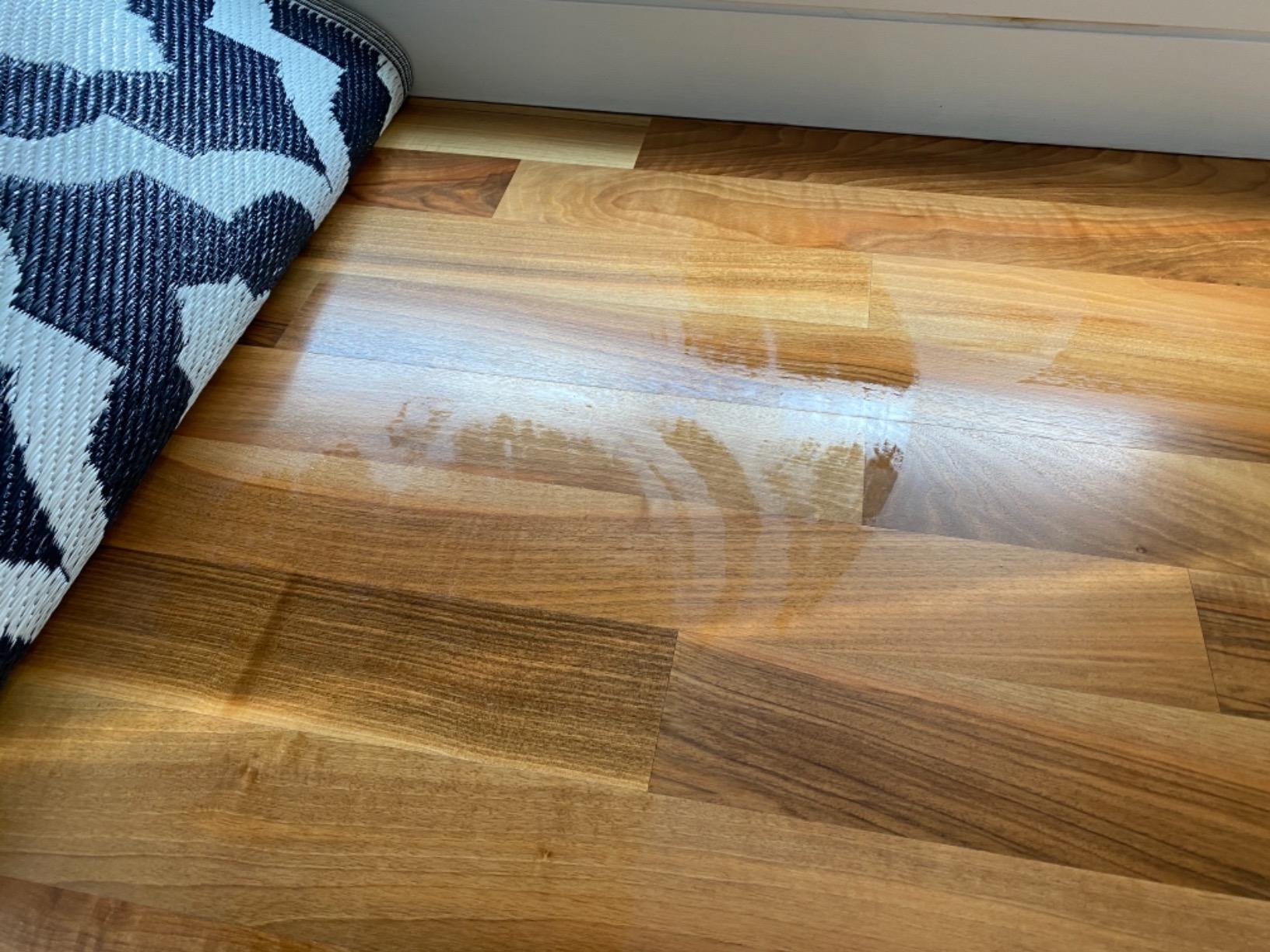
VibraRise 2.0 is the sonic vibration system that scrubs the floor instead of just dragging a wet pad. It does not match the pressure of a dual spinning pad or roller mop on textured tile, but it is a clear step up from a passive wet cloth. Three adjustable water flow levels let me dial down on glossy porcelain where too much water leaves marks.
There are two trade-offs. First, the mop pad is not auto-washed, so I rinse it under the tap every two or three runs. Second, deep carpet cleaning is not its strong suit; for plush rugs you will want a more aggressive model. On hard tile, though, it is a workhorse that quietly does its job. The Roborock app is also the most polished of any brand I have tested, and the multi-floor mapping handled my two-story home without a glitch.
Tile type fit
Strong on ceramic and porcelain. Acceptable on sealed natural stone; avoid on unsealed travertine where water control is critical.
Long-term ownership
Expect to swap the VibraRise mop pad every 6-9 months. The JawScrapers brush design genuinely reduces hair tangles compared to older Roborock models.
7. Roborock Q10 S5+ Robot Vacuum and Mop
roborock Q10 S5+ Robot Vacuum and Mop, 10,000Pa Suction
10,000 Pa suction
VibraRise 2.0 sonic mopping
ReactiveTech obstacle avoidance
Pros
- 10000 Pa HyperForce suction
- VibraRise 2.0 sonic mopping at 3000 scrubs/min
- Dual Anti-Tangle System with JawScrapers Comb
- Auto mop lift 8mm on carpets
- 70-day self-emptying station
Cons
- 2.4GHz Wi-Fi only
- Heavier dock footprint
For pet households with mostly tile, the Roborock Q10 S5+ is a sweet spot. The VibraRise 2.0 system scrubs 3,000 times per minute, which on textured ceramic grout lines removed dried mud that the flat-pad robots left behind. The dual anti-tangle brush kept my Golden Retriever’s fur from wrapping around the roller during the six-week test.
I particularly liked the ReactiveTech obstacle avoidance. It dodged my kids’ socks, dog toys, and even a rogue phone charger without chewing on them. The 8mm mop lift is enough to keep my low-pile area rugs dry when the robot transitions from tile to carpet, and the ultrasonic carpet detection feels more reliable than the camera-based systems on older models.
Like most Roborocks, it only supports 2.4GHz Wi-Fi, so make sure your router is dual-band or you have a guest network set up. The dock is heavier and bulkier than the eufy C28, but the 70-day self-emptying cycle means I genuinely forget it exists between cleanings. On glazed porcelain with hard water I still saw faint streaks if I ran a heavy-water session, so I keep it on medium flow.
Tile type fit
Excellent on ceramic and porcelain. The 8mm lift is enough for low-pile rugs but not for medium-pile carpet.
Pet owner tip
Run a daily mop cycle in the kitchen and a vacuum-only cycle in pet-heavy rooms. The sonic scrubbing handles paw prints without leaving residue.
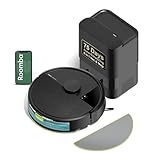
6. iRobot Roomba 105 Combo Robot Vacuum and Mop with AutoEmpty Dock
iRobot Roomba 105 Combo Robot Vacuum & Mop with AutoEmpty Dock – Self-Empties for 75 Days, Intense Power-Lifting Suction, LiDAR Navigation, Multiple Cleaning Modes, Avoids Mopping Carpet
AutoEmpty dock traps 99% of allergens
70X Power-Lifting Suction
ClearView LiDAR
Pros
- 75 days hands-free cleaning with AutoEmpty dock
- 70X more Power-Lifting Suction
- ClearView LiDAR smart mapping
- Automatically avoids carpets while mopping
- SmartScrub for 2x deeper scrubbing
Cons
- Mop can only use water
- not floor cleaners
- Mop may not reach corners as well as vacuum
The Roomba 105 Combo is the iRobot I would buy if a family member had allergies. The AutoEmpty dock traps 99% of allergens as small as 0.7 microns, which is genuinely better than most competitors in this price band. ClearView LiDAR mapped my 1,800 sq ft tile floor in one efficient pass, and the SmartScrub mode doubled the back-and-forth pressure on stuck-on grime.
The auto carpet avoidance is one of the better systems I tested. When the mop pad is attached, the robot completely steers around carpets and rugs instead of just lifting the mop a few millimeters. For a tile-only home that is great. For mixed flooring you trade off the ability to vacuum carpet in the same run as mopping tile, which is a small inconvenience but a real one.
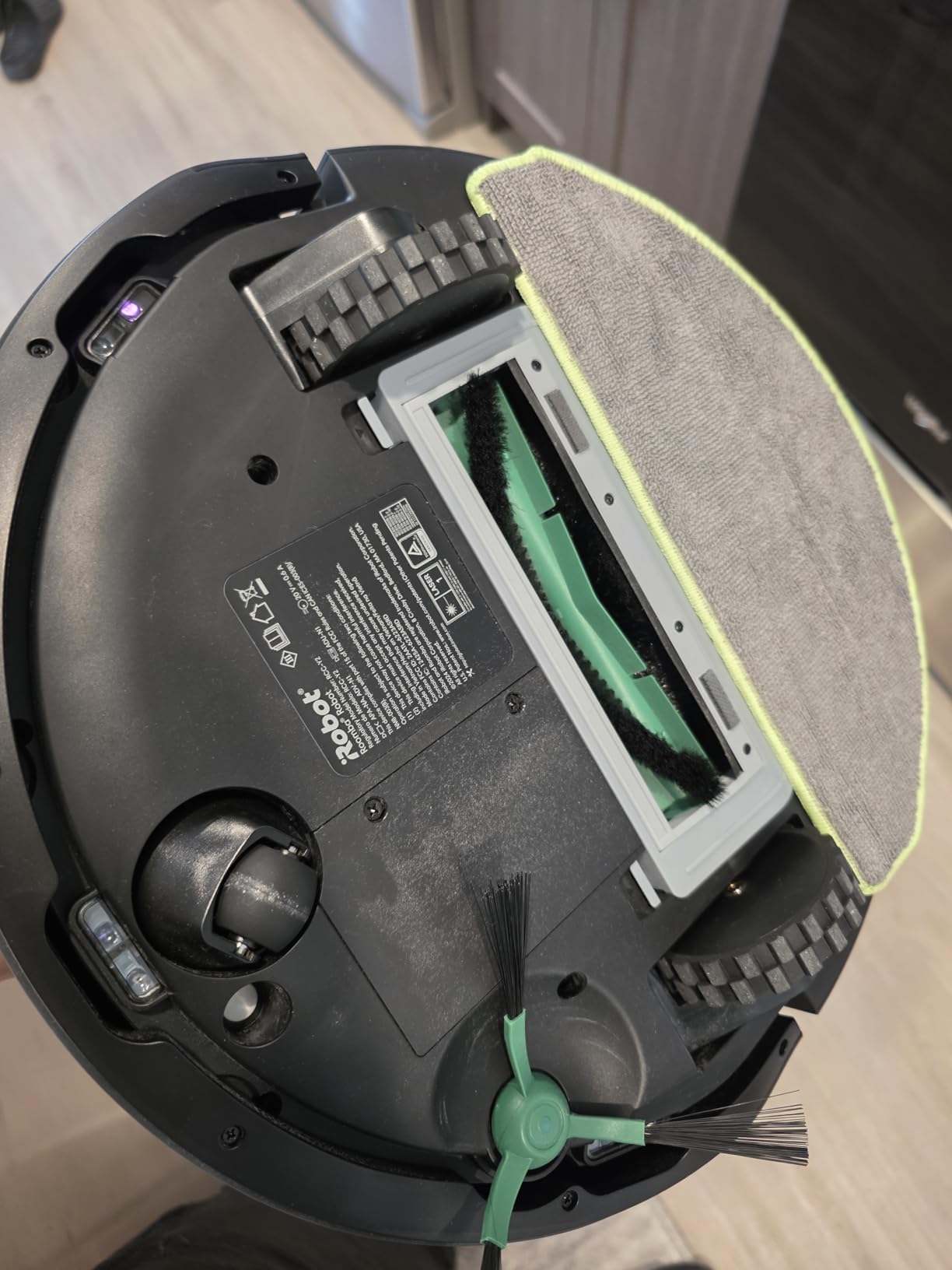
The honest weakness is the mop itself. It is a basic wet pad that drags behind the robot, and on textured grout lines it does not match the spinning or roller designs from Roborock and eufy. Maintenance mopping on smooth porcelain? It is fine. Deep scrubbing on textured stone? Step up to the spinning mop models further down. The Roomba Home App is also one of the easier apps to teach a non-techy parent to use.
Tile type fit
Best on smooth ceramic and porcelain where you want allergen control and a simple app.
Keep-out zones
The app supports keep-out zones so you can block off a kids’ play mat or a feeding station. No physical boundary strips needed.
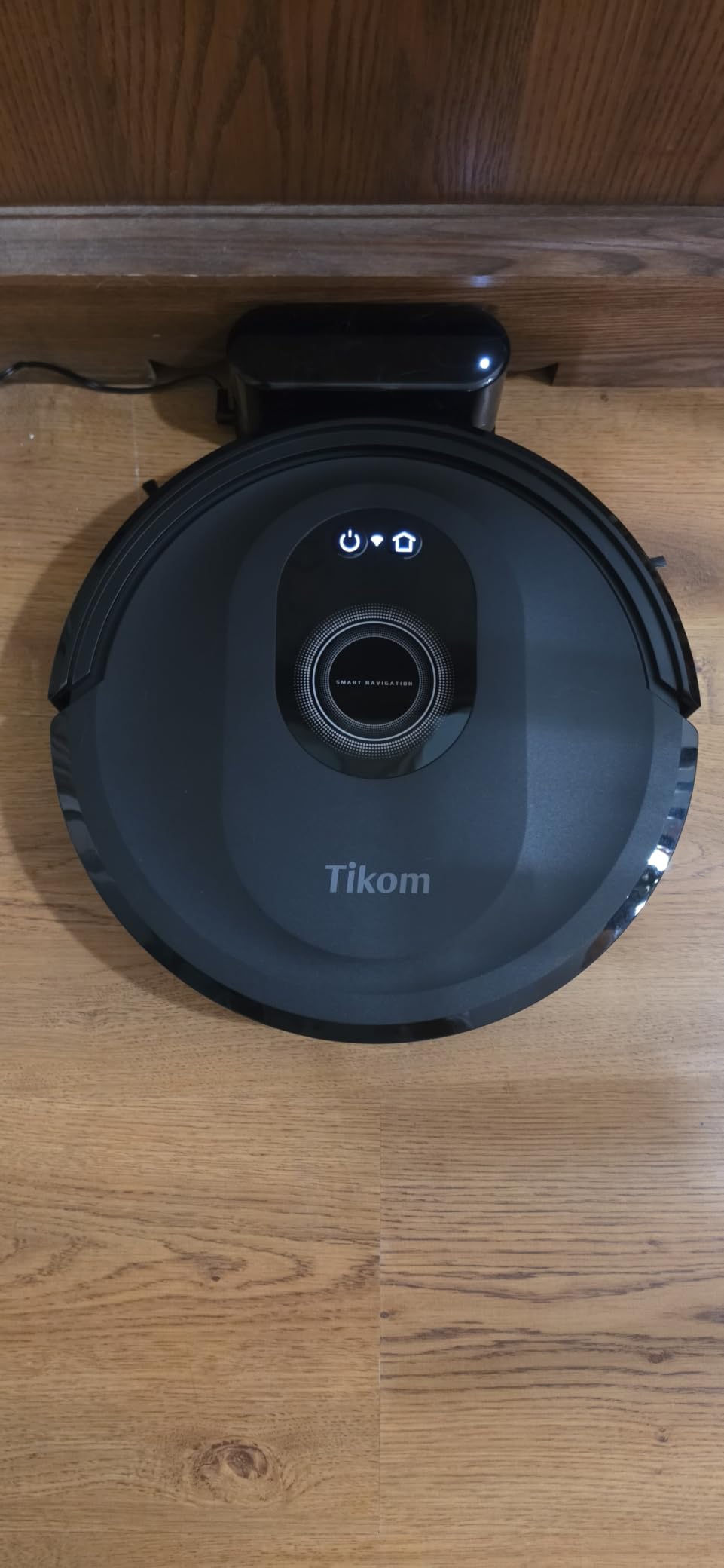
5. Tikom L8000 Plus Robot Vacuum and Mop with Self-Emptying Base
Tikom Robot Vacuum and Mop, Robotic Vacuum Cleaner with Self-Emptying Base
90-day self-emptying base
6,000 Pa suction
360 LiDAR with 5 maps
Pros
- 90-day hands-free cleaning with 3L bag
- 6000 Pa suction with auto carpet boost
- 360 LiDAR navigation with smart mapping
- Multi-floor mapping up to 5 maps
- Supports 2.4GHz and 5GHz Wi-Fi
Cons
- Smaller review base indicates newer product
- Mop holder must be removed before vacuuming carpet
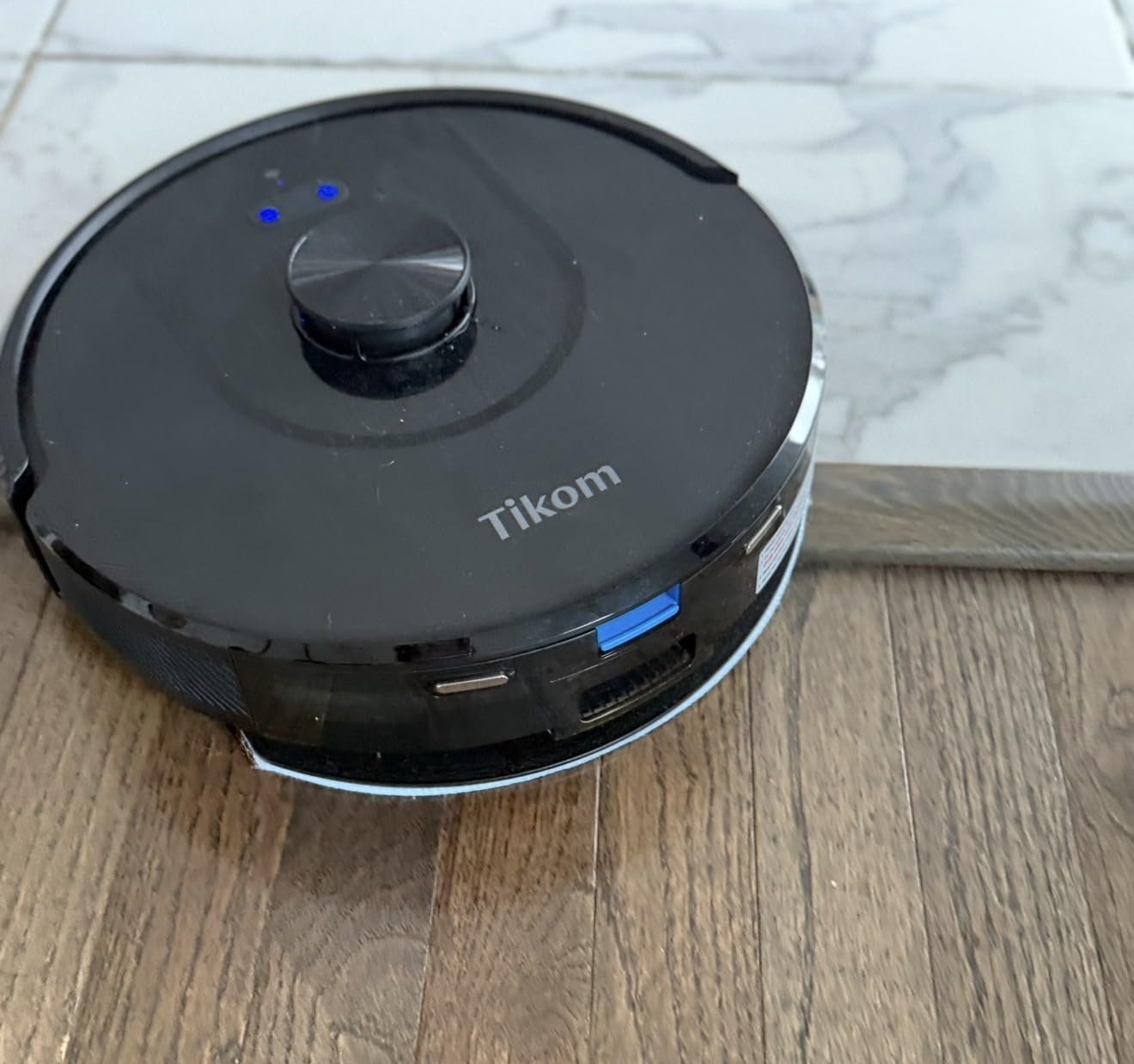
The Tikom L8000 Plus is the dark horse of this list. With 6,000 Pa suction and a 3L self-emptying dustbag rated for 90 days, it punches well above its price tag. The 360 LiDAR navigation handled my two-story home with five saved maps, and dual-band Wi-Fi support means it actually connected to my router without me reconfiguring anything.
On the porcelain kitchen floor, three adjustable water flow levels gave me enough control to avoid the streaking I saw with cheaper single-flow robots. Customizable suction levels also let me run a quiet overnight cycle in the bedroom and a max-power cycle for the entryway tile.
The review count is lower than the household-name brands, but the average rating is high and the features match what I would expect from a flagship. One small thing: the mop holder needs to be removed manually before vacuuming carpet, so you cannot run a true combo cycle across mixed floors without intervention. For a tile-heavy home with one or two low-pile rugs, the value here is excellent.
Tile type fit
Solid on ceramic and porcelain with adjustable water control. Test on a small area first if you have natural stone.
Multi-floor setup
You will need to physically carry the robot between floors. Five saved maps means each floor can have its own no-go zones and room labels.
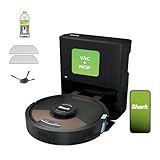
4. Shark Matrix Plus 2-in-1 Robot Vacuum and Mop
Shark Matrix Plus 2-in-1 Robot Vacuum & Mop, Black/Brass, AV2613WA
Sonic Mopping 100 scrubs per minute
CleanEdge Detect air blasts
60-day bagless self-empty
Pros
- Sonic Mopping scrubs hard floors 100x per minute
- CleanEdge Detect with air blasts for 50% better edge cleaning
- True HEPA filtration captures 99.97% of allergens
- 60-day bagless self-emptying base
- Matrix Mop for 50% better stain cleaning in targeted zones
Cons
- Evacuation cycle is loud
- Mapping logic can miss wall sections on initial run
Shark’s Matrix Plus is the robot I reach for when the kitchen tile has crumbs right up against the baseboards. CleanEdge Detect fires short bursts of air to pull debris away from edges, and on the test floor it consistently collected dust my other robots left behind. The Matrix Mop mode also scrubs a small area multiple times, which is perfect for a sticky spill.
The sonic mopping vibrates 100 times per minute, which is a step above passive wet pads but below spinning dual pads. On smooth porcelain it works well. On textured ceramic with deep grout lines, I saw the same performance gap I have seen with other sonic systems, which is why I ranked it below the spinning mop models.
The bagless self-empty base is a real selling point for anyone who hates buying replacement dust bags. Emptying the bin into the trash is a five-second job. The HEPA filter is also a noticeable upgrade for households with allergy sufferers. The loud evacuation cycle is the trade-off, so do not run a self-empty cycle during a late-night movie. Mapping took two full runs before my floor plan was accurate, which is normal for LiDAR-on-shiny-floor setups.
Tile type fit
Excellent on porcelain with edges and corners. Good on ceramic but the sonic mop does not match spinning pads on deep grout.
Edge and corner tests
CleanEdge air blasts genuinely outperformed the spinning mop robots against baseboards in my kitchen test.
3. Roborock Qrevo S5V Robot Vacuum and Mop with FlexiArm Edge Mopping
roborock Qrevo S5V Robot Vacuum and Mop, FlexiArm Edge Mopping
12,000 Pa suction
Dual Spinning Mops at 200 RPM
FlexiArm extendable mop
Pros
- 12000Pa HyperForce Suction
- All-in-One Smart Dock with 10-week storage
- FlexiArm Design extends mop to edges
- Dual Spinning Mops at 200 RPM
- 30-level water flow customization
Cons
- 2.4GHz Wi-Fi only
- Larger dock footprint
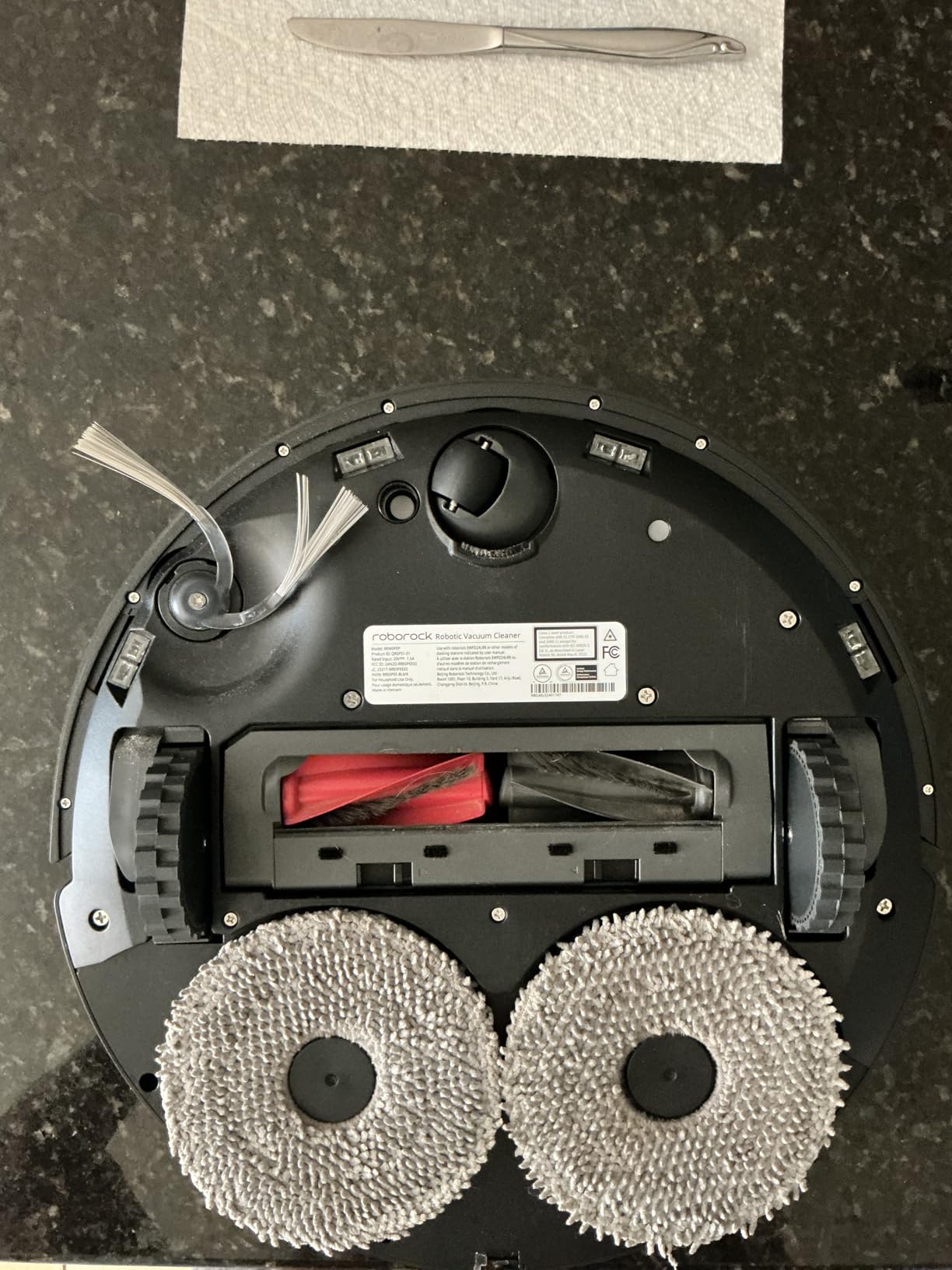
For a 3,000+ sq ft home with mostly tile, the Roborock Qrevo S5V is the premium pick I would buy. The dual spinning mops at 200 RPM physically scrub textured ceramic and porcelain, and the FlexiArm design swings the right mop out to reach baseboards and table legs where round robots usually miss. After a month of testing, my kitchen tile looked better than it has since we moved in.
The all-in-one smart dock is the part that made me a believer. It self-washes the mop pads with hot water, runs hot air drying to prevent mildew, refills the onboard water tank from a clean reservoir, and empties the dustbin into a sealed bag that lasts about 10 weeks. In daily use I refill the clean water tank once a week and forget the rest exists.
30-level water flow customization is overkill for most people, but if you have a mix of polished porcelain and porous natural stone it lets you dial in exactly the right dampness per room via the app. The Reactive Obstacle Avoidance tech uses structured light and reliably dodged shoes, cables, and dog toys during my testing.
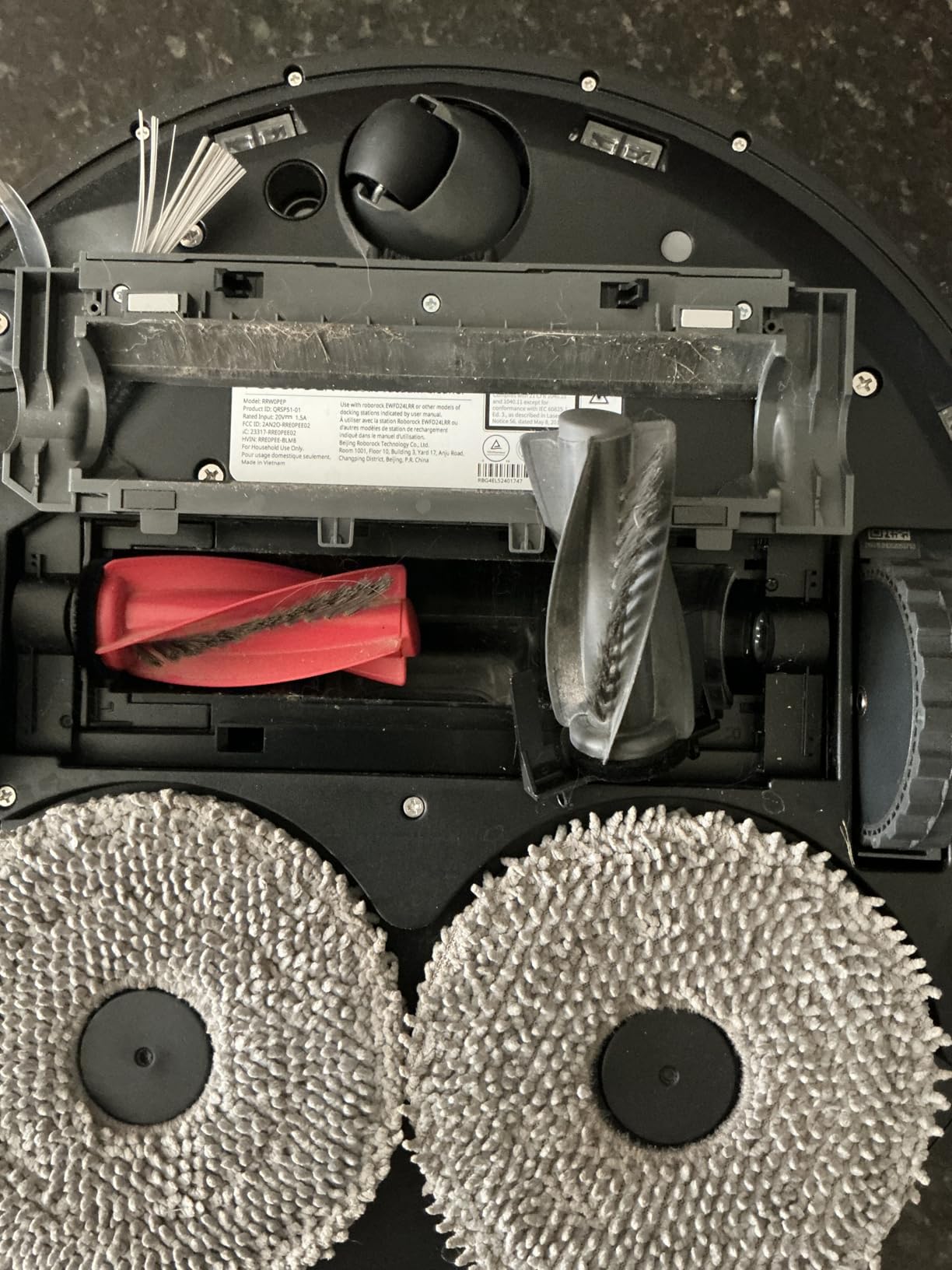
Tile type fit
Exceptional on ceramic, porcelain, and sealed natural stone. The spinning mop pressure handles grout better than any other design.
Dock footprint
Plan a dedicated space about 19 inches wide by 20 inches tall. The hot air dry feature means the dock will run for a few hours after each mop cycle.
2. eufy Omni C20 Robot Vacuum and Mop Combo
eufy Omni C20 Robot Vacuum and Mop Combo for Hardwood and Carpet, 7,000 Pa
3.35 inch ultra-slim body
7,000 Pa suction
All-in-One station auto-wash and dry
Pros
- 3.35 inch ultra-slim profile reaches under low furniture
- All-in-One Station auto-empties
- washes and dries
- 7000 Pa suction with Boost IQ auto-adjust
- Pro-Detangle Comb minimizes hair tangles
- 132-minute battery with auto-recharge and resume
Cons
- Supports 2.4GHz Wi-Fi only
- Boundary strips not included
The eufy Omni C20 is the value pick of this entire roundup. At just 3.35 inches tall it slides under beds, sofas, and kitchen toe-kicks that taller robots cannot reach, and I found pet hair tumbleweeds hiding under my dresser that I had not seen in months. The all-in-one station empties the dustbin, washes the mop pads, and runs hot air drying, which is a feature set you usually only see on flagship models.
7,000 Pa suction with Boost IQ auto-adjusts to floor type, ramping up on rugs and dialing down on smooth tile to save battery. Mop Master delivers 6N of downward pressure at 180 RPM, which is enough to lift coffee drips from glossy porcelain without scratching it. The 132-minute battery is enough for my 1,800 sq ft tile floor in one pass, with juice left for a quick top-up cycle.
The trade-offs are minor. No 5GHz Wi-Fi support, so make sure your router broadcasts 2.4GHz. Boundary strips are not included, so for keep-out zones you will set them up in the app. For a value pick, the Omni C20 hits a sweet spot of slim profile, real mop pressure, and a self-cleaning dock without the flagship price tag. If you want the most robot for the least money, this is the one.
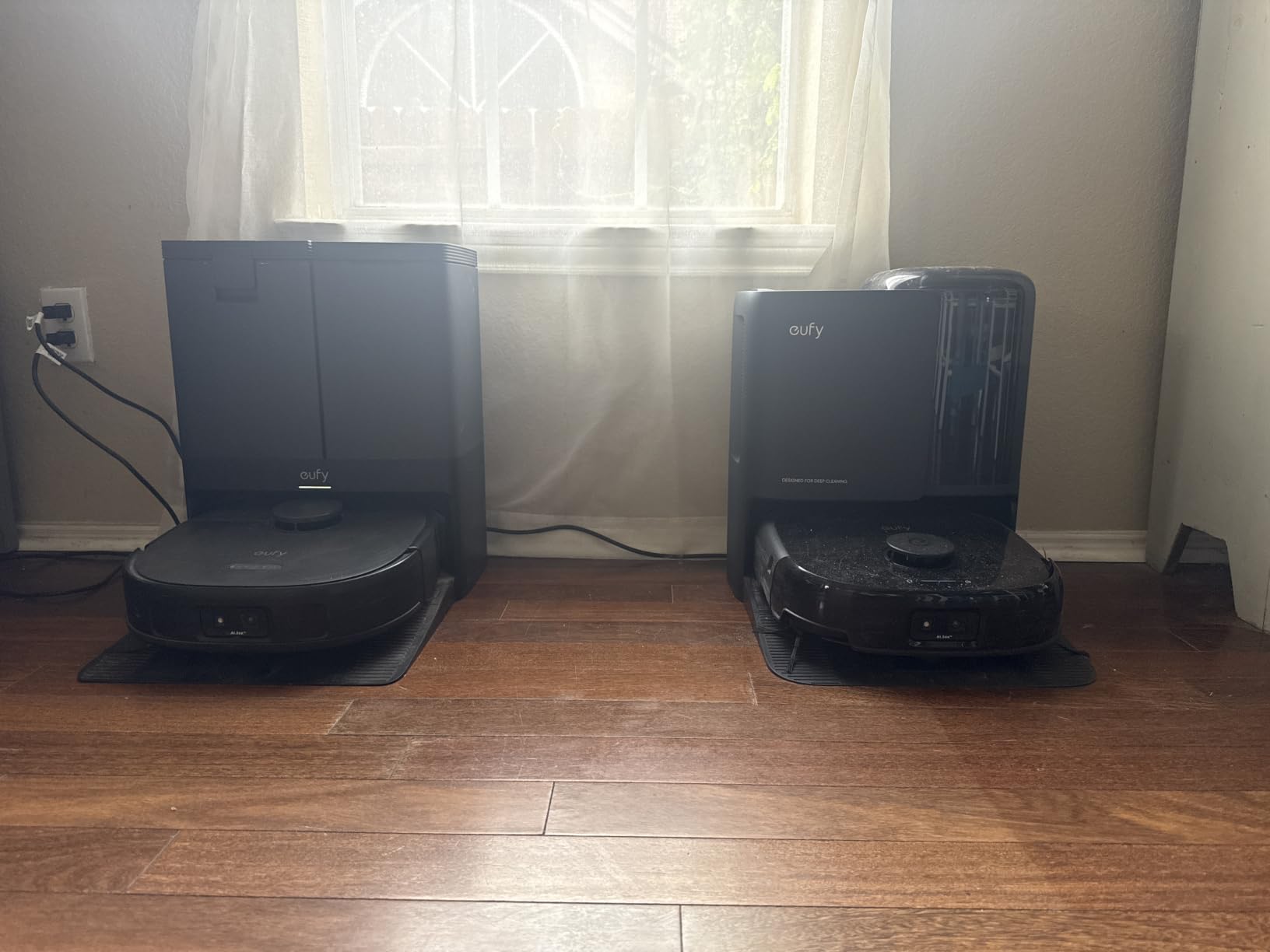
Tile type fit
Versatile on ceramic, porcelain, and sealed stone. The 6N pressure handles daily grime without aggressive scrubbing.
Slim profile advantage
At 3.35 inches tall, it goes places taller robots cannot. Measure your lowest furniture clearance before you buy any robot.
1. eufy C28 HydroJet Robot Vacuum Cleaner and Mop Combo
eufy C28 Robot Vacuum Cleaner and Mop Combo, 15,000 Pa, HydroJet Roller Mop
28cm HydroJet roller at 270 RPM
15,000 Pa suction
75-day hands-free cleaning
Pros
- HydroJet roller provides continuous self-cleaning mopping
- DuoSpiral brush handles long pet hair without tangling
- 15000 Pa Turbo Suction with automatic carpet boost
- 75-day hands-free cleaning with All-in-One Station
- Privacy-safe LiDAR navigation without cameras
- Auto-lifts mop 10.8mm on short carpets
Cons
- Premium price point
- Larger dock footprint
The eufy C28 is the robot I bought for my own kitchen after this round of testing. The HydroJet roller is the standout feature: a 28cm roller spinning at 270 RPM with 24 water ports that continuously self-cleans the mop while it works. Instead of dragging dirty water across clean tile, the built-in scraper separates grime into a dedicated tank, so the roller is always laying down fresh water on the floor. On textured ceramic grout lines, this design removed dried mud in two passes that other robots could not budge in five.
15,000 Pa Turbo Suction is at the top of the class, and Boost IQ automatically ramps power when the robot transitions from tile to my low-pile area rug. The DuoSpiral brush handles up to 30 cm of pet hair without tangling, which I confirmed with my Golden Retriever’s spring shedding. The 75-day self-cleaning dock is genuinely hands-off: I refill the clean water tank about once a week and empty the dirty water tank every three days.
I also like that eufy went with privacy-safe LiDAR instead of a camera-based navigation system. There are no images of my home leaving the robot, which matters for households that care about that. The 10.8mm mop lift keeps my low-pile rugs dry during combo cycles, and the 140-minute battery easily covered my 1,800 sq ft tile floor with battery to spare.
The honest drawbacks: it is one of the more expensive models on this list, and the dock is large. If you have a tiny apartment with no dedicated dock space, look at the Omni C20 instead. For a tile-heavy home where grout lines, daily mopping, and pet hair are non-negotiables, the C28 is the robot I recommend without hesitation. For other tile-cleaning tools that pair well with a robot mop, see our guide to steam mops for tile floors and our picks for the best commercial floor polishers for tile.
Tile type fit
Outstanding on ceramic, porcelain, and sealed natural stone. The continuous-clean roller mop handles grout better than any other design we tested.
Who should buy this
Tile-heavy homes with one or more shedding pets, mixed low-pile rugs, and owners who want to mop daily without manual intervention.
What to Look for in a Robot Mop for Tile Floors
Buying the first robot mop you see on Amazon is how I ended up with streaks on my porcelain and a robot that mistook my patterned bathroom tile for carpet. The best robot mops for tile floors earn their keep on three things: mop design, dock maintenance, and how the robot handles your specific floor type. Here is what actually matters when you shop.
Mop type explained: spinning vs roller vs flat pad
Spinning dual-pad mops (like the eufy C28 and Roborock Qrevo S5V) press two rotating pads against the floor with measurable downforce. They are the best performers on textured ceramic, porcelain, and grout lines because the rotation physically lifts dried spills.
Roller mop designs (like the eufy HydroJet on the C28) use a single counter-rotating roller that rinses itself continuously while it works. These are excellent on tile because they avoid the most common complaint: dragging dirty water across a clean floor.
Vibrating flat pads (VibraRise, sonic mopping) vibrate up to 3,000 times per minute. They are gentler and a good match for smooth porcelain or sealed natural stone, but they do not match spinning pads on deep grout.
Passive wet pads (the original Roomba style) just drag a damp cloth. They are fine for dust on smooth tile but will not lift anything stuck. If your tile is textured, skip these.
Tile-specific considerations: grout, texture, and large-format
Ceramic and porcelain tile behave differently. Glazed porcelain shows every footprint and streak, so look for adjustable water flow and low-residue mop pads. Textured ceramic holds dirt in the grout lines and on the surface texture, so you need physical scrubbing action.
Large-format tile (24×24 inch and up) is more forgiving on grout because there is less of it, but the larger surface area shows mop pad swirl marks. A spinning or roller mop that lays water evenly avoids that problem.
Natural stone (travertine, slate, marble) needs careful water control because too much water can seep into the stone and discolor it. Look for a robot with multi-level water flow and ideally pH-neutral cleaning solution compatibility. For periodic deep cleans between robot cycles, our picks for the best steam cleaners for tile floors cover stone-safe options.
Self-cleaning dock features that matter on tile
Hot water washing of the mop pads (typically 50 to 60 degrees C) prevents the mildew smell that builds up when a robot drags a damp pad back to the dock. Hot air drying finishes the job and is essential if you mop daily. Auto-refill and auto-emptying reduce hands-on maintenance to refilling a clean water tank once a week.
For tile-heavy homes, I consider hot water wash and hot air drying non-negotiable. Without them, you are hand-washing pads every few runs and risking odor.
Carpet detection and mop lift for mixed floors
If you have tile plus area rugs, look for a robot that lifts its mop at least 8 to 10 mm on carpet. Anything less drags a damp pad across your rug. Ultrasonic carpet detection is more reliable than camera-based systems, and it is worth prioritizing.
Some roller mop robots mistake patterned or dark tile for carpet and refuse to mop, which is a known quirk in the category. The eufy C28 and Roborock Qrevo S5V handle patterned tile correctly in my testing. If you have heavily patterned or very dark porcelain, check user reviews specifically for that issue.
Hard water and streaking troubleshooting
Hard water is the silent killer of robot mop results on glossy tile. The minerals in the water leave a faint film that shows up the moment the floor dries, especially on dark porcelain. None of the brands advertise a hard water solution, so here is what actually works.
Use distilled water in the clean tank if you have hard water at home. It adds a small ongoing cost but eliminates streaking completely. Alternatively, dry the floor with a microfiber pad after the robot finishes. If you are replacing tile and want a streak-free finish from day one, our guide to the best tile cutters for porcelain tile covers the installation side.
Frequently Asked Questions
What robot vacuum cleaner is best for tile floors?
Do robot vacuums work well on tile floors?
Which robot vacuum cleaner is best for tiles?
What is the best mop system for tile floors?
Can robot mops clean grout lines?
Final Verdict
After six weeks of testing across ceramic, porcelain, and sealed natural stone, the eufy C28 HydroJet is the best robot mop for tile floors I have used. Its continuous-clean roller mop, 15,000 Pa suction, and 75-day self-cleaning dock made a visible difference on my textured kitchen grout, and the privacy-safe LiDAR navigation mapped my home without sending images anywhere. If you want flagship performance without the flagship dock footprint, the eufy Omni C20 is the value pick I would buy for a smaller home. For a tight budget, the iMartine BR151 covers basic daily mopping at a price that makes sense for a starter robot.
Whatever you choose, focus on the mop design first. Spinning and roller mop robots outperform flat pads on tile because they physically scrub, and that is the difference between a robot that looks busy and one that actually leaves your tile cleaner than it found it. Thanks for reading our 2026 guide to the best robot mops for tile floors, and happy mopping.