
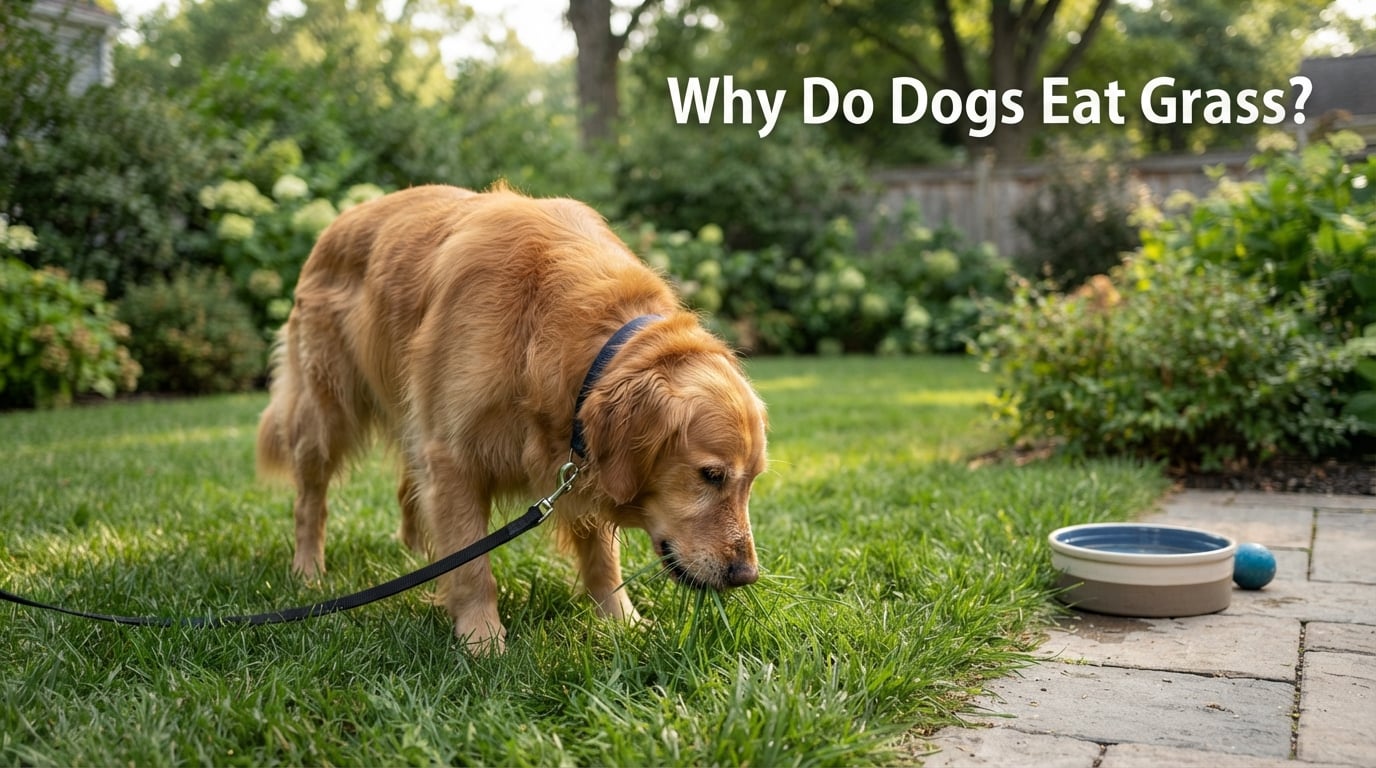
Why do dogs eat grass? Most dogs do it because grass is interesting, available, and part of a normal scavenging and foraging pattern—not because they are automatically sick. A dog may also be drawn to the taste or texture, seek roughage, fill an idle moment, or react to mild digestive discomfort.
The important distinction is the pattern. A calm dog that takes a few blades from an untreated lawn and carries on normally is different from a dog that suddenly lunges for grass, cannot stop, vomits repeatedly, or has other signs of illness.
Below, we separate likely explanations from popular myths, explain the research around dog vomiting grass, and give practical steps for walks and home lawns. If the behavior feels new or out of character, your veterinarian is the right person to help put it in context with your dog’s diet and health history.
Table of Contents
Dogs eat grass for several reasons: why do dogs eat grass?
There is no single answer that fits every dog or every walk. These seven explanations cover the reasons veterinarians and behavior sources most often discuss.
1. Instinct makes plant-eating a normal part of canine behavior
Dogs descended from opportunistic canids that ate more than meat alone. Wild canine ancestors consumed plant material directly and indirectly with prey, so a little grazing does not conflict with a dog’s carnivorous roots.
Research discussed by veterinary sources has found plant material in 11% to 47% of examined wolf stool samples. That range does not prove that a family dog eats grass for the same reason, but it does show that plant intake is not an odd behavior for canids.
2. Taste and texture can make fresh grass appealing
Some dogs prefer tender, newly growing blades and pass over dry or coarse grass. The cool moisture, crisp texture, and smell may simply be rewarding, much like sniffing is rewarding on a walk.
This helps explain why a dog may have a favorite patch of grass or graze more when fresh growth appears. A preference alone is not a diagnosis.
3. Roughage may interest dogs that want more fiber
Grass provides roughage, which is indigestible plant material that can add bulk to the digestive tract. People often call this a dog fiber deficiency, but grass eating by itself cannot tell you that a complete diet is lacking anything.
Dogs fed a nutritionally complete diet can still eat grass. If stool consistency changes, constipation develops, or grass eating becomes frequent, ask a veterinarian whether the diet and daily feeding routine merit a review.
4. Mild nausea may come before some episodes of grazing
A dog with a dog upset stomach may seek grass shortly before vomiting, but the sequence does not prove that grass caused vomiting or that the dog was trying to vomit. Nausea, reflux, dietary indiscretion, and other gastrointestinal discomfort can all change a dog’s behavior before the obvious symptoms arrive.
Watch the full picture: lip licking, drooling, swallowing repeatedly, restlessness, reduced appetite, diarrhea, or a hunched posture carry more meaning than a single mouthful of grass. Grass eating followed by one brief vomit in an otherwise bright dog is different from repeated vomiting or ongoing distress.
5. Boredom can turn grazing into a walk-time habit
Dog boredom is a reasonable explanation when grazing happens during slow, predictable walks or when the dog spends long periods without activity. Eating grass can become something to do, especially if the dog has discovered that each stop extends the outing.
More sniffing opportunities, training games, movement, and safe chew or food puzzles at home can reduce the need to make grass the main event. The goal is not to make every blade forbidden; it is to give the dog better things to do.
6. Anxiety can increase repetitive grass seeking
Dog anxiety can show up as repetitive behaviors, including intense sniffing or chewing at grass. In this setting, the question is less “Why does my dog eat grass?” and more “What changed around the behavior?”
Note the setting, people, dogs, noises, and timing around each episode. If grass eating appears alongside pacing, panting when warm conditions do not explain it, hiding, or difficulty settling, discuss the pattern with a veterinarian or qualified behavior professional.
7. Attention can accidentally teach a dog to keep grazing
Dogs learn from outcomes. If every bite of grass reliably produces excited talking, a tug on the leash, or a longer negotiation, some dogs will repeat the behavior because it gets a response.
That does not mean the dog is being difficult. It means a calm cue, a brief redirect, and praise for moving on will work better than a dramatic reaction.
Research suggests grass is not a reliable way to make dogs vomit
The familiar claim is that dogs eat grass specifically to make themselves throw up. The available survey findings make that claim less certain: fewer than 25% of grass-eating dogs vomited afterward, and only about 10% appeared ill before eating grass.
Those numbers support a more careful conclusion. Some dogs may graze when they feel nauseated, and some may vomit after grazing, but most dog grass eating behavior is not a dependable self-treatment method.
A dog may also vomit because long blades irritate the throat or stomach, because it gulped rather than chewed, or because the underlying problem was already present. Treat vomiting as a symptom to observe, not evidence that grass fixed anything.
Occasional untreated grass is usually low risk, but contamination changes the answer
Grass itself is not automatically toxic to dogs, but the place where it grows matters a great deal. The larger concern is dog pesticides exposure, herbicides, fertilizers, bait products, contaminated water, and nearby ornamental plants.
- Skip treated lawns. Do not let your dog graze where you do not know what has been applied, including public spaces, apartment grounds, and neighbors’ yards.
- Avoid feces-contaminated patches. Animal fecal material can expose a dog to parasites and other infectious organisms.
- Prevent gulping. Long grass or a frantic eating episode can lead to choking, vomiting, or—rarely—an intestinal obstruction.
- Know the surrounding plants. A dog reaching for grass can also bite a toxic plant growing beside it.
On walks, use a short, comfortable leash near unknown lawns and guide your dog onward without punishment. At home, check with your lawn-care provider about products and follow all label directions and re-entry guidance before your dog has access.
A sudden or compulsive change in grass eating deserves a veterinary call
Most grass eating dogs are not having an emergency. Still, a new, intense, or repeated pattern can be part of gastrointestinal distress, intestinal parasites, pain, diet trouble, or anxiety, especially when other symptoms appear.
Contact your veterinarian promptly if grass eating comes with any of the following:
- Repeated vomiting, retching, diarrhea, or constipation
- Blood in vomit or stool, a swollen belly, or signs of pain
- Loss of appetite, marked thirst changes, weakness, or unusual sleepiness
- Frantic grazing, repeated attempts to eat non-food objects, or a sudden obsession with grass
- Possible access to chemicals, toxic plants, or an area with animal feces
Do not try to induce vomiting at home unless a veterinary professional specifically directs you to do so. If you think your dog ate a toxic substance, contact your veterinarian or a pet poison resource right away and have the product information ready.
You can reduce grass eating with supervision, enrichment, and a dietary review
You do not need to punish an occasional grazer. These steps focus on lowering risk and reducing the behavior when it is frequent, frantic, or happening in unsafe places.
- Step 1: Track the pattern for several days. Write down the time, place, amount eaten, meals, stool, vomiting, and anything stressful that happened. This record gives your veterinarian more useful information than a general impression.
- Step 2: Remove access to questionable grass. Cross the street, choose a cleaner route, or keep the dog moving past lawns with unknown treatments.
- Step 3: Teach a calm “leave it” and redirect. Reward the dog for looking away, walking with you, or choosing a sniff spot that is not grass. Practice first when the temptation is low.
- Step 4: Add appropriate daily activity. Vary walks, allow safe sniffing, and include short training sessions or food-based enrichment that suits your dog’s age and health.
- Step 5: Review food with the veterinarian if the pattern persists. Bring the food label, feeding amounts, treats, stool changes, and your notes. Do not make abrupt diet changes or add fiber supplements solely because the dog has eaten grass.
Many owners in dog discussion groups describe healthy dogs that take a few bites with no problem, while frantic grass eating followed by vomiting is what worries them. The practical response is the same: observe the dog, prevent access to treated grass, and get veterinary help when the pattern or symptoms point beyond normal grazing.
Puppies and seasonal grazers often need observation rather than alarm
Puppies explore with their mouths, so a puppy eating grass can be common during outdoor discovery. Close supervision matters because puppies are also more likely to sample soil, mulch, feces, and plants that do carry a risk.
For an adult dog, a seasonal increase near fresh spring-like growth may reflect taste and texture rather than illness. That observation is useful, but it does not override warning signs such as vomiting, diarrhea, pain, or a sudden behavior change.
Keep notes long enough to see whether the behavior is tied to one route, one lawn, meal timing, or a stressful event. A simple pattern log makes it easier to decide whether changing the walk routine helps.
The stomach-upset explanation is only one part of the picture
Myth: Every dog that eats grass is deficient in nutrients. Dogs with a balanced diet may graze, and grass eating alone cannot diagnose a nutrient shortage.
Myth: Dogs always eat grass to vomit. Most do not vomit after eating it, so vomiting is not the main explanation for every episode.
Myth: If grass is natural, every lawn is safe. Chemicals, fecal contamination, parasites, and nearby toxic plants can make an ordinary patch unsafe.
Myth: The only answer is to stop the behavior. The better first question is whether the behavior is occasional and low-risk or frequent, compulsive, and paired with symptoms.
These answers cover the common grass-eating questions
What does it mean if a dog eats grass?
Should I stop my dog from eating grass?
What should I give my dog if he is eating grass?
Why is my dog obsessed with eating grass all of a sudden?
What do vets say about dogs eating grass?
Most dogs eat grass occasionally without a medical problem
Why do dogs eat grass? Usually, it is a mix of ordinary canine instinct, sensory interest, and circumstance rather than a clear sign of disease. Keep your dog away from treated or contaminated lawns, respond calmly to casual grazing, and pay attention when the behavior suddenly changes.
If grass eating is frequent or arrives with vomiting, diarrhea, pain, appetite changes, or low energy, call your veterinarian. That combination deserves a health check rather than another guess about what the grass means.