
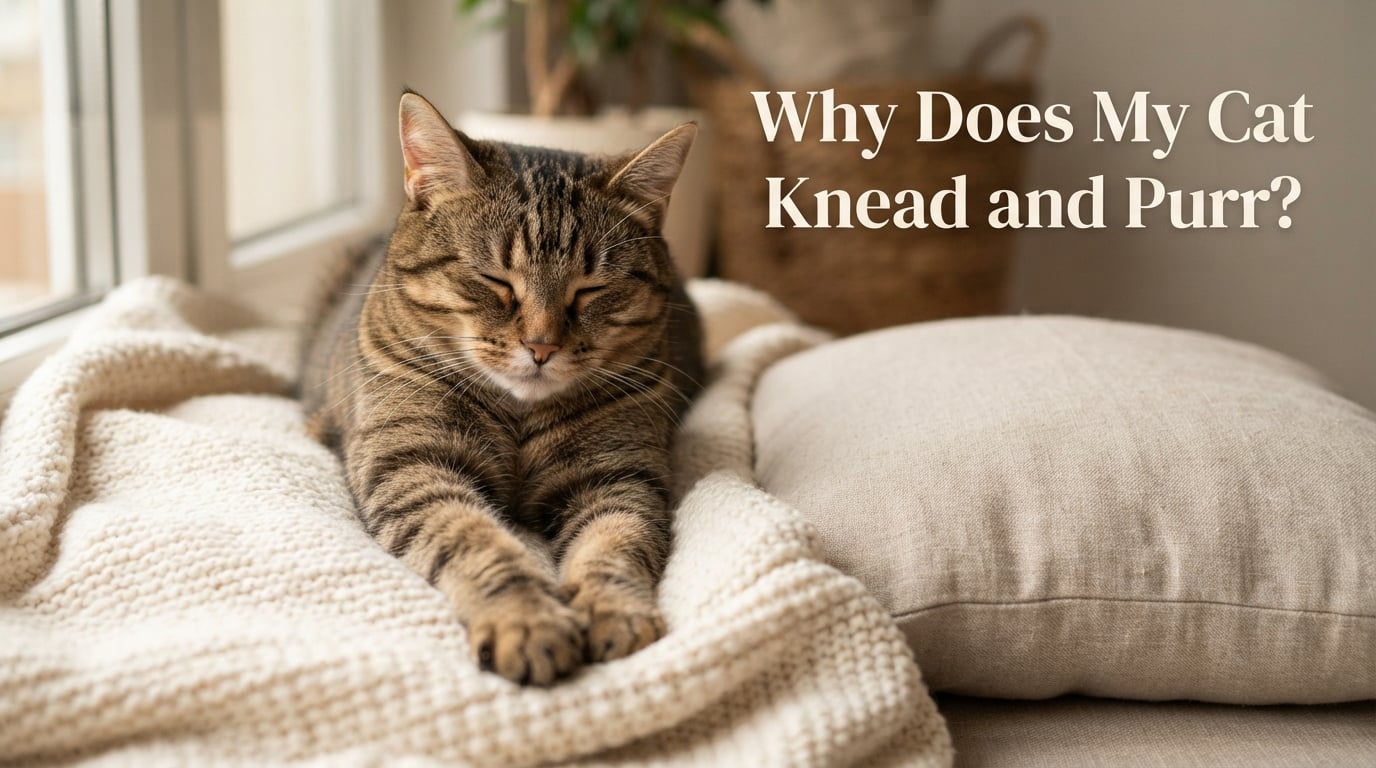
Why does my cat knead and purr? In most relaxed moments, it means your cat is drawing on a kittenhood comfort habit while feeling safe enough to settle in. The alternating paw presses are often called making biscuits, and the purr commonly accompanies comfort, affection, or self-soothing.
That said, a purr is not a stand-alone happiness meter. Read the whole picture: where your cat is, what their body looks like, and whether this behavior is normal for them.
Table of Contents
Comfort explains why your cat kneads and purrs
A cat kneading and purring on your lap, bed, or favorite blanket is usually having a peaceful, familiar moment. The combination is especially common just before sleep, while being petted, or when a cat has claimed a soft spot.
Contentment is the most common meaning of kneading and purring together
- Your cat feels secure in the place, with you, or both.
- The rhythmic paw motion helps them settle before resting.
- The purr and relaxed posture can be part of friendly social contact.
- Your cat may be repeating a comforting behavior that began during nursing.
Purring can express more than one feeling
- Relaxation: a soft purr during a nap, petting session, or quiet cuddle often fits contentment.
- Communication: some cats purr around people when they want closeness, food, or attention.
- Self-soothing: a cat may purr when nervous, startled, or uncomfortable as a way of calming itself.
- Mother-kitten contact: purring starts early in life and helps keep close contact quiet while kittens nurse.
Kneading can combine comfort, scent, and preparation
- Kittenhood memory: kittens press around their mother’s mammary area while nursing, which helps stimulate milk flow.
- Affection: an adult cat may knead a trusted person because that person feels safe and familiar.
- Territory marking: scent glands in the paws can leave a personal scent on a favored surface.
- Resting behavior: pressing at bedding may be an inherited way to prepare a comfortable place to lie down.
Purring can mean contentment, communication, or self-soothing
Most people hear a purr and think “happy cat,” and that is often reasonable when the cat’s eyes are soft, muscles are loose, and they are choosing to stay nearby. A purr can also occur during veterinary visits, recovery, fear, or pain, so the surrounding signals matter.
Research discussions often place cat purr vibrations in roughly the 25 to 150 Hertz range. It is interesting to consider whether those vibrations have soothing or healing effects, but purring should not be treated as proof that a cat is healing or feels fine.
Relaxed body language supports the happy interpretation
Look for slow blinks, a loose tail, ears in a neutral position, gentle paw pressure, and a cat that remains by choice. A cat who is tense, hiding, crouching, breathing differently, or withdrawing from touch needs a more cautious read, even if you can hear a loud purr.
Kneading begins with nursing and can continue as an adult comfort habit
Cat kneading is a rhythmic pressing motion, usually with alternating front paws. Many cats keep this instinct well into adulthood because the sequence is tied to warmth, milk, safety, and closeness from kittenhood.
That early association helps explain why a fleece blanket, a plush bed, or a soft shirt can trigger making biscuits. Some cats also purr, drool, or gently hold the blanket in their mouths while kneading; these can be signs that the material has become a powerful comfort cue.
Your lap can become a trusted kneading surface
When your cat kneads you specifically, it is usually not an attempt to dominate you. Your warmth, scent, and stillness make you a natural resting place, and the paw glands add another layer of familiar scent marking.
Personality and history affect how often cats knead
Some cats almost never knead, while others do it every evening for years. Temperament, preferred textures, routine, and early experiences all may play a part, so frequency by itself is less useful than a change from your cat’s usual pattern.
People in cat-owner discussions often describe a fluffy blanket as an immediate calming cue, and they are not alone in seeing a long-lived habit. If the behavior is gentle and your cat otherwise looks comfortable, a lifelong kneading ritual is generally a normal part of cat behavior.
Context tells you whether the behavior is relaxed or stressed
Kneading at night can simply be part of a bedtime routine: the house is quiet, the blanket is available, and your cat is preparing to sleep. A cat kneading your blanket and purring is therefore usually a comfort story, not a problem to solve.
Sometimes, though, the same behavior increases after a move, a new pet, schedule changes, or other disruptions. Cats can repeat familiar, self-soothing actions when anxious, and a more intense kneading session may be one way they handle that feeling.
Blanket mouthing and drooling need context rather than panic
Holding a blanket in the mouth while kneading can occur alongside comfort behavior, especially with a soft preferred fabric. Mild drooling can happen when a cat is very relaxed, but frequent drooling, mouth pain, reduced eating, or a sudden new habit deserves a veterinary call.
Early weaning is a possible clue, not a home diagnosis
People sometimes connect strong adult suckling or kneading habits with early weaning. That history may be relevant, but it cannot explain every cat or replace an assessment when the behavior becomes compulsive, disruptive, or appears with distress.
Gentle redirection protects your lap without punishing your cat
If your cat’s claws hurt during kneading, do not scold or push them away mid-ritual. Sudden punishment can make a comforting interaction confusing and may increase tension.
- Place a thick blanket or folded towel on your lap before cuddle time.
- Keep regular claw care as part of routine handling, using a calm approach your cat tolerates.
- Move your cat slowly onto a designated soft blanket if they begin kneading bare skin.
- For nighttime kneading that wakes you, put that preferred blanket near their sleeping spot and make the bedtime routine predictable.
Pet your cat while they are kneading only if they invite it with relaxed body language. If the ears turn back, the tail flicks, the skin ripples, or the kneading speeds up sharply, pause and give them room.
A sudden change or signs of discomfort call for veterinary advice
Kneading and purring are normal behaviors, but new behavior should be assessed in context. Contact a veterinarian promptly if purring or kneading comes with signs that your cat may be unwell.
- A sudden, major increase in kneading or agitation.
- Hiding, limping, crying, unusual aggression, or reluctance to be touched.
- Changes in appetite, drinking, litter-box habits, sleep, or grooming.
- Persistent drooling, mouth pawing, or trouble eating.
- Rapid or labored breathing, or a crouched and tense posture.
Trust the change you know best. A cat that has always kneaded a blanket before bed is different from a cat who suddenly purrs, kneads frantically, and acts unlike themselves.
These answers clarify the most common kneading and purring questions
What does it mean if a cat is kneading and purring?
Are cats happy when they purr and knead?
Should I pet my cat while kneading?
Is cat kneading a comfort behavior?
Why does my cat knead me with claws?
How do you say I love you in cat language?
Comfort and context explain why your cat kneads and purrs
Why does my cat knead and purr? Usually because the moment feels safe, soft, and familiar, with an instinct from kittenhood adding to the comfort. It can be a lovely sign of connection, especially when relaxed body language supports it.
Give your cat a soft place to make biscuits, protect your lap with a blanket when needed, and notice what is normal for them. If the behavior changes suddenly or arrives with discomfort, a veterinarian can help you separate a harmless ritual from a health concern.