
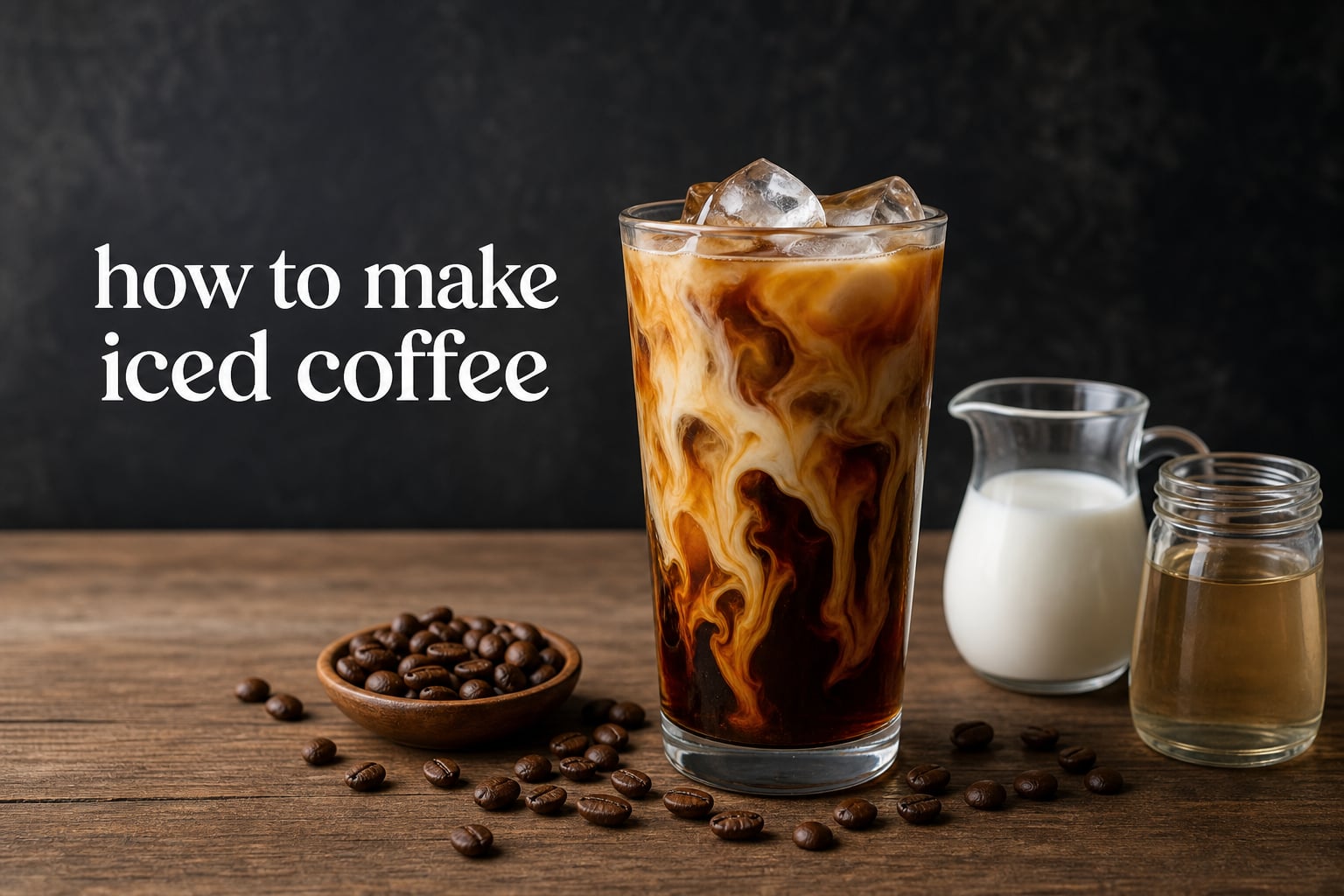
Learning how to make iced coffee at home changed my mornings completely. Instead of spending five dollars a day at a coffee shop, I now have a cold, refreshing cup ready in minutes, tailored exactly to how I like it.
This guide covers five proven methods for making iced coffee, from a quick 3-minute instant version to a smooth overnight cold brew. Whether you have zero equipment or a full coffee setup, you will find a method that fits your kitchen and your schedule.
I have tested each technique multiple times at home, drawing on tips from coffee communities like r/Coffee and r/IcedCoffee where real home brewers share what actually works. Let us get into it.
Table of Contents
What Is Iced Coffee?
Iced coffee is any coffee served cold over ice, but the term covers two very different approaches. The first is hot-brewed coffee that is cooled down and poured over ice. The second is cold brew, which steeps coffee grounds in cold water for 12 to 24 hours without ever touching heat.
These methods produce noticeably different drinks. Hot-brewed iced coffee has a brighter, more acidic flavor because hot water extracts different compounds from the beans. Cold brew is smoother, sweeter, and about 60 percent less acidic, making it easier on the stomach.
So no, iced coffee is not just regular coffee with ice thrown in. The way you brew the coffee base determines the entire flavor profile. I will cover both approaches below so you can pick the one that matches your taste.
How to Make Iced Coffee: 5 Methods Compared
Here are five methods I have tested extensively at home, ranked from fastest to most hands-off. Each one produces a genuinely good glass of iced coffee, so the best method is the one that fits your available time and equipment.
Method 1: Classic Hot-Brewed Iced Coffee (5 minutes)
This is the fastest way to learn how to make iced coffee if you already have a coffee maker. You brew a strong batch of hot coffee, let it cool briefly, and pour it over ice.
The trick is doubling your coffee-to-water ratio. Since ice will dilute the drink, you need a stronger base to keep the flavor intact after melting.
Ingredients and equipment:
3 tablespoons ground coffee (medium grind) per 6 ounces of water, a coffee maker or pour-over setup, ice cubes, and milk or sweetener to taste.
Step 1: Brew your coffee using your normal method, but use double the amount of grounds. If you usually use 2 tablespoons per cup, use 4 tablespoons instead.
Step 2: Let the hot coffee sit for about 5 minutes to cool slightly. This prevents the ice from melting too fast when you pour.
Step 3: Fill a tall glass to the top with ice cubes.
Step 4: Pour the coffee over the ice, leaving room at the top for milk.
Step 5: Add your preferred milk and sweetener, stir, and enjoy.
Total time: about 5 minutes active, plus 5 minutes cooling. This method gives you a bright, full-flavored iced coffee that tastes like a coffee shop pour-over.
Method 2: Overnight Cold Brew in a Mason Jar (12 to 24 hours)
Cold brew is the most popular method on Reddit coffee communities, and for good reason. It produces a smooth, low-acid concentrate that lasts up to two weeks in the fridge. The trade-off is patience, since it needs 12 to 24 hours to steep.
A Mason jar is all you need. No special cold brew system required.
Ingredients and equipment:
1 cup coarsely ground coffee, 4 cups cold filtered water, a large Mason jar or pitcher, a fine mesh strainer or cheesecloth, and a second container for storing the concentrate.
Step 1: Add the coffee grounds to your Mason jar.
Step 2: Pour in the cold water slowly, making sure all the grounds are saturated. Stir gently to combine.
Step 3: Cover the jar and let it steep at room temperature for 12 to 24 hours. I find 16 hours gives the best balance of strength and smoothness.
Step 4: Strain the mixture through a fine mesh sieve lined with cheesecloth or a paper coffee filter into your storage container.
Step 5: To serve, fill a glass with ice, pour the concentrate until the glass is half full, then top with water or milk. The concentrate is strong, so dilute it to your taste.
One batch makes about 4 servings of concentrate. Store it covered in the fridge and you have iced coffee ready to go for days.
Method 3: Japanese Pour Over Iced Coffee (4 minutes)
This method is the highest-rated technique among coffee enthusiasts, scoring a perfect 10 out of 10 in The Kitchn’s method comparison. It brews hot coffee directly onto ice, locking in aroma and flavor instantly.
The Japanese pour over produces the freshest-tasting iced coffee possible because the coffee never sits around losing flavor. It is ready to drink the moment brewing finishes.
Ingredients and equipment:
22 grams of coffee ground for pour over (medium-fine), a pour-over dripper (like a V60) with filter, 150 grams of hot water (200 degrees Fahrenheit), and 130 grams of ice cubes in a serving glass.
Step 1: Place the ice cubes in your serving glass and set the dripper on top with a rinsed filter inside.
Step 2: Add the coffee grounds to the filter and tap to level the bed.
Step 3: Pour just enough hot water to wet the grounds, about 30 grams. Wait 30 seconds for the bloom to release carbon dioxide.
Step 4: Slowly pour the remaining water in a circular motion, keeping the water level steady. This should take about 2 minutes total.
Step 5: Once the water drains through, remove the dripper. The hot coffee has melted the ice to the perfect drinking temperature.
Step 6: Stir gently and drink immediately, or add a splash of milk if desired.
This method takes some practice to get the pour speed right, but the result is a clean, aromatic iced coffee that beats anything from a shop.
Method 4: Quick Instant Coffee Method (2 minutes)
This is the method most guides skip, but it has some of the highest search volume according to related queries. Instant coffee is fast, cheap, and requires zero equipment beyond a glass and a spoon.
I was skeptical until I tried it with a decent instant coffee brand. The result is not as complex as cold brew, but it is genuinely refreshing and costs about 15 cents per cup.
Ingredients and equipment:
1 to 2 teaspoons instant coffee granules (Nescafe or similar), 1 tablespoon hot water, cold water or milk, ice cubes, and sugar or syrup to taste.
Step 1: Put the instant coffee granules in a glass and add 1 tablespoon of hot water.
Step 2: Stir vigorously until the coffee dissolves completely and forms a concentrated liquid.
Step 3: Add sugar or sweetener now while the mixture is still warm, so it dissolves easily.
Step 4: Fill the glass with ice cubes.
Step 5: Pour in cold water or milk to fill the glass, stir well, and serve.
For a creamier drink, use milk instead of water, or try half milk and half water. You can also blend everything with a handful of ice for a frappe-style drink.
Method 5: French Press Cold Brew (12 to 24 hours)
If you already own a French press, this is the easiest cold brew method. The built-in plunger acts as a filter, so you skip the messy straining step required with a Mason jar.
This method produces the same smooth, low-acid flavor as Mason jar cold brew but with easier cleanup. Reddit users on r/Coffee consistently recommend it as the most accessible cold brew technique for home kitchens.
Ingredients and equipment:
3/4 cup coarsely ground coffee, 3 cups cold filtered water, and a French press.
Step 1: Add the coffee grounds to the French press.
Step 2: Pour in the cold water and stir to ensure all grounds are wet.
Step 3: Place the plunger lid on top but do not press down. Let it steep at room temperature for 12 to 24 hours.
Step 4: Slowly press the plunger down to separate the grounds from the liquid.
Step 5: Pour the concentrate into a glass with ice and dilute with water or milk to taste.
Store any leftover concentrate in a sealed container in the fridge for up to 14 days.
Choosing the Right Coffee and Grind
The coffee you use matters more than the method in many cases. Here is what I recommend based on months of testing.
For cold brew, use a coarse grind. Fine grounds over-extract in the long steep time and create a bitter, muddy flavor. A coarse grind gives you that signature smooth, chocolatey cold brew taste.
For hot-brewed and pour-over methods, use a medium or medium-fine grind. Too fine and the coffee tastes harsh. Too coarse and it comes out weak and watery.
For instant coffee, the grind question is irrelevant since it is already processed. Just pick a brand you enjoy hot, and it will work fine cold.
Bean roast also affects flavor. Dark roasts give you a bold, rich iced coffee that stands up well to milk and ice. Medium roasts offer a balanced cup with caramel and nutty notes. Light roasts are brighter and more acidic, which some people love but others find too sharp when cold.
My personal preference is a medium-dark roast for cold brew and a medium roast for Japanese pour over. Experiment with what you have on hand first before buying anything new.
How to Sweeten Iced Coffee
Sweetening iced coffee is trickier than hot coffee because regular sugar does not dissolve well in cold liquid. You end up with a pile of undissolved granules at the bottom of your glass.
The solution is simple syrup. Mix equal parts sugar and hot water, stir until dissolved, and let it cool. Store it in a bottle in the fridge for up to a month. One tablespoon sweetens a full glass of iced coffee perfectly.
Other sweetener options that work well cold include maple syrup, agave nectar, honey (thinned with warm water first), and flavored syrups like vanilla or caramel. Liquid sweeteners blend instantly into cold coffee with no grittiness.
If you prefer zero-calorie options, stevia and monk fruit sweetener both dissolve fine in cold liquid. Start with a small amount since they are much sweeter than sugar.
For flavored iced coffee, add half a teaspoon of vanilla extract, a tablespoon of chocolate syrup for mocha, or a pump of caramel sauce. These small additions transform a basic iced coffee into something that rivals a coffee shop specialty drink.
Milk and Creamer Options
Your choice of milk changes the texture and flavor of iced coffee significantly. Whole milk gives the creamiest, most traditional result. Half and half creates a rich, dessert-like drink.
For non-dairy options, oat milk is the current favorite among baristas because it has a naturally sweet flavor and creamy texture that mimics dairy closely. Almond milk is lighter and adds a nutty note. Soy milk falls somewhere in between.
Coconut milk gives a tropical twist that pairs well with flavored syrups. Cashew milk is subtle and smooth. If you want a thicker, more indulgent drink, try sweetened condensed milk, which is the traditional base for Vietnamese iced coffee.
Start with a splash and add more to taste. You can always add more milk, but you cannot take it out.
Tips for the Best Iced Coffee
These are the techniques that separate a decent iced coffee from a great one. I learned most of these from trial and error plus tips shared by home brewers on coffee forums.
Make coffee ice cubes. This is the single best tip for iced coffee. Pour leftover coffee into an ice cube tray and freeze it. When you use coffee ice cubes instead of regular ice, your drink never gets diluted as the cubes melt. This solves the number one complaint people have about homemade iced coffee.
Brew stronger than you think you need. Ice melts and waters everything down. If you brew at normal strength, the first few sips are fine but the rest gets weak. Using double-strength coffee for hot-brewed methods ensures the flavor holds up.
Use filtered water. Tap water contains chlorine and minerals that affect taste, and this becomes more noticeable in cold coffee where there is no heat to mask off-flavors. Filtered water makes a real difference.
Chill your glass. Put your serving glass in the freezer for 10 minutes before making your drink. A cold glass keeps the ice from melting as fast and makes the whole experience feel more refreshing.
Prep the night before. If mornings are rushed, make cold brew concentrate the evening before. You can also brew hot coffee and store it in the fridge overnight, ready to pour over ice when you wake up.
Common Mistakes to Avoid
I have made every one of these mistakes myself, so you do not have to.
Using regular ice with hot coffee and nothing else. Pouring hot coffee straight over ice melts the ice instantly, leaving you with a lukewarm, watery mess. Always let hot coffee cool for at least 5 minutes first, or use the Japanese pour over method where the dilution is calculated.
Using too fine a grind for cold brew. Fine grounds seep through most filters and create a gritty, bitter drink. Stick with coarse grind for any cold brew method.
Not using enough coffee. People often use their normal ratio and then complain the iced coffee tastes weak. You need more coffee per cup because ice adds volume and dilutes strength.
Adding sugar directly to cold coffee. Granulated sugar sits at the bottom of cold coffee and never dissolves. Use simple syrup or another liquid sweetener instead.
Steeping cold brew too long. More than 24 hours and the coffee turns bitter and astringent. Set a timer so you do not forget about your batch.
How Much Money You Save Making Iced Coffee at Home
Here is the part most guides skip entirely, even though saving money is the main reason people search for how to make iced coffee at home.
A typical coffee shop iced coffee costs between four and six dollars per cup. If you buy one every weekday, that adds up to roughly 1,300 dollars per year. Over a decade, you are looking at 13,000 dollars on iced coffee alone.
Making iced coffee at home costs about 40 to 60 cents per cup for hot-brewed methods using decent beans. Cold brew is even cheaper at about 30 to 50 cents per serving since you buy beans in bulk and use only water.
Instant coffee iced drinks cost roughly 15 cents per cup. If you switch entirely from coffee shop visits to homemade, you save over 1,000 dollars per year. That is real money that could go toward a vacation, savings, or literally anything else.
The upfront cost is minimal. A Mason jar costs about 3 dollars. A basic pour-over dripper runs 15 to 20 dollars. A French press is around 25 dollars. Even the most expensive setup pays for itself within the first month of skipping coffee shop visits.
FAQ
Is iced coffee just regular coffee with ice?
Can you make iced coffee in a regular coffee maker?
What is the best coffee to make iced coffee at home?
How to make cold coffee at home without a machine?
How long does iced coffee last in the fridge?
How to make iced coffee with instant coffee?
Conclusion
Now you know exactly how to make iced coffee five different ways at home. From a 2-minute instant coffee to a 24-hour cold brew, there is a method for every schedule and every budget.
Start with whichever method matches your time and equipment today. Try the classic hot-brewed method if you have a coffee maker, or go straight to Mason jar cold brew if you want the smoothest result with minimal effort.
Once you nail your preferred method, experiment with coffee ice cubes, simple syrups, and different milks to build your perfect cup. Making iced coffee at home saves you over a thousand dollars a year while giving you complete control over strength, sweetness, and flavor. That is a win worth waking up for.