
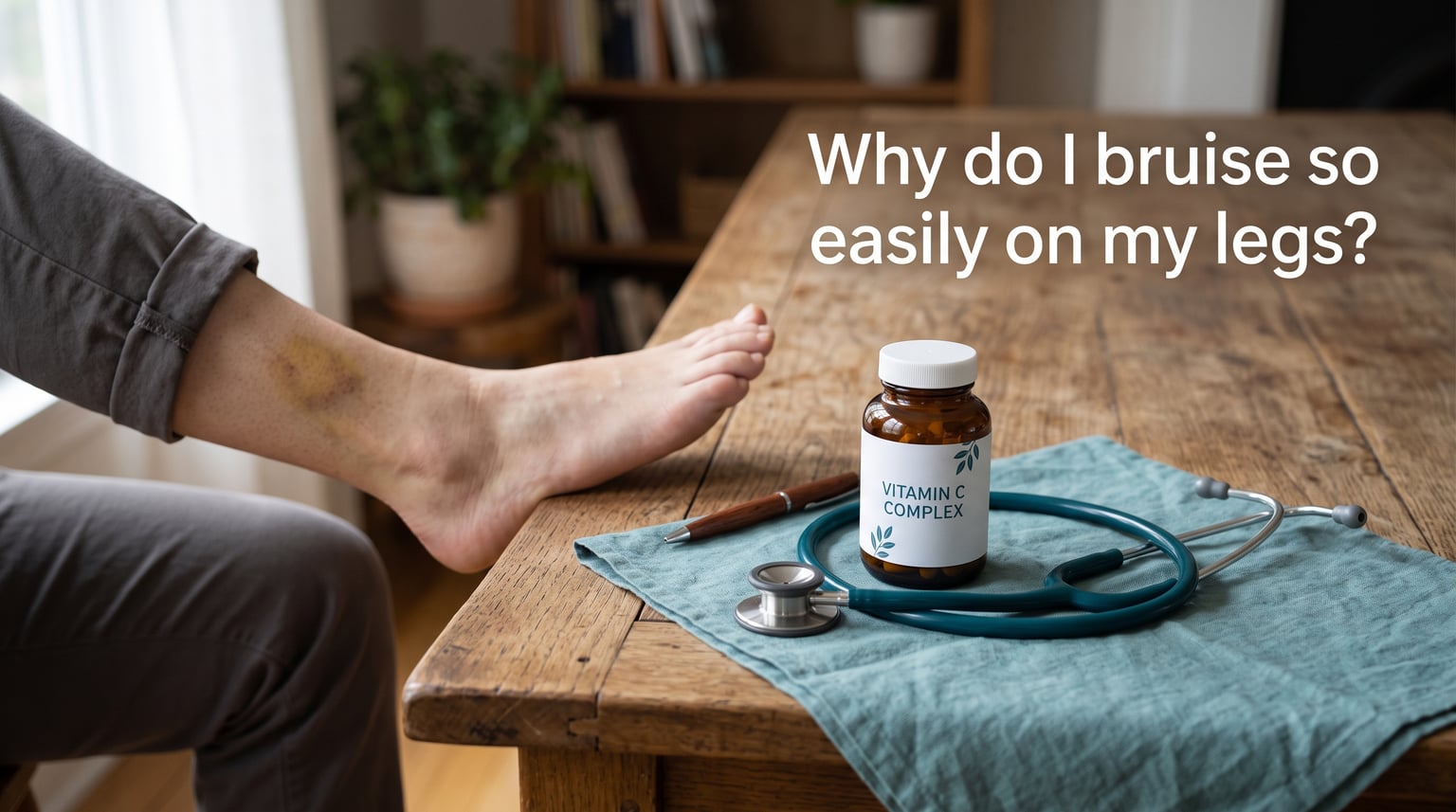
You look down and spot another dark purple mark on your shin. You do not remember bumping into anything. If you keep asking yourself “why do I bruise so easily on my legs,” you are far from alone. It is one of the most common concerns people bring to their doctors, and in most cases, the answer is reassuring rather than alarming.
Our team has dug into the medical research, community discussions, and expert guidance from trusted sources like Mayo Clinic and Cleveland Clinic to break this down for you. Easy bruising on your legs can stem from something as simple as a vitamin gap or as complex as an underlying medical condition. The key is knowing what is normal and what deserves a closer look.
This guide walks you through what bruising actually is, the most common reasons your legs bruise easily, and the warning signs that mean it is time to call your doctor. We also cover practical prevention tips you can start using today.
Here is the short answer up front. Easy bruising on your legs is most often caused by thin skin, vitamin deficiencies (especially vitamin C and K), medications like blood thinners, or age-related changes. Less commonly, it can signal a bleeding disorder, liver disease, or a platelet problem. If your bruises are large, painful, appearing without any injury, or accompanied by other symptoms like fatigue or bleeding gums, schedule a visit with your healthcare provider.
Let us break it all down so you can understand what your body is telling you.
Table of Contents
What Is Bruising and Why Does It Happen?
A bruise, medically called an ecchymosis, forms when small blood vessels called capillaries break or leak beneath your skin. Blood pools into the surrounding tissue, creating that familiar discoloration that shifts from red to purple, blue, green, and finally yellow as your body reabsorbs the blood.
The bruising process is actually a sign that your body is doing its job. When a capillary breaks, platelets rush to the area and form a plug. Clotting factors then create a protein mesh that seals the break. If any part of this system, whether your blood vessels, your platelets, or your clotting proteins, is not working properly, you will bruise more easily and more often.
Why legs specifically? Your legs are farther from your heart, which means blood vessels there operate under different pressure conditions. The skin on your shins and lower legs is also thinner than on most other body parts, with less protective fat underneath. That combination makes capillaries in your legs more vulnerable to breaking, even from minor contact with a coffee table or doorframe.
Gravity plays a role too. Blood that leaks from a damaged vessel on your leg tends to pool downward, making bruises appear larger and more noticeable than they would on your arm or torso.
Why Do I Bruise So Easily on My Legs? Common Causes Explained
There are several possible answers when you are wondering why you bruise so easily. Some causes are harmless and easy to address. Others need medical attention. Here is a breakdown of the most common culprits, starting with the ones people encounter most often.
Vitamin Deficiencies (C and K)
Vitamin C is essential for producing collagen, the protein that keeps your blood vessel walls strong and flexible. When you do not get enough vitamin C over time, your capillaries become fragile and break easily, even from light contact. Severe vitamin C deficiency causes scurvy, a condition historically known for widespread bruising, bleeding gums, and joint pain.
Most people with mild vitamin C deficiency will not develop full-blown scurvy. But they may still notice more frequent bruising, especially on their legs. If you rarely eat citrus fruits, bell peppers, strawberries, or broccoli, you might be running low without realizing it.
Vitamin K is directly involved in the clotting process. Without enough of it, your blood cannot form clots efficiently, which means even tiny capillary breaks bleed longer and produce larger bruises. Vitamin K is found in leafy greens like kale, spinach, and Brussels sprouts, as well as in broccoli and vegetable oils.
A simple blood test can check both vitamin levels. If you are deficient, dietary changes or a short-term supplement recommended by your doctor can often resolve the bruising within a few weeks.
Other nutrients that matter for blood vessel health include vitamin B12, folate, and zinc. Low levels of any of these can affect blood cell production and capillary integrity.
Medications That Cause Easy Bruising
Many common medications interfere with blood clotting, making you more susceptible to bruising. If you have started a new medication and noticed more bruises on your legs, this is one of the first things to consider.
Blood thinners are the biggest culprits. Prescription anticoagulants like warfarin, Eliquis (apixaban), and Xarelto (rivaroxaban) deliberately slow your blood’s clotting ability to prevent dangerous blood clots. Aspirin and other NSAIDs like ibuprofen and naproxen also reduce platelet function, making capillaries more likely to leak after minor bumps.
Corticosteroids, often prescribed for inflammation, asthma, or autoimmune conditions, thin the skin over time and weaken blood vessel walls. People on long-term steroids frequently report easy bruising on their arms and legs.
SSRIs, a common class of antidepressants including fluoxetine (Prozac) and sertraline (Zoloft), can also interfere with platelet function. Many people are surprised to learn that their mental health medication is contributing to bruising.
Even over-the-counter supplements can be a factor. Fish oil, ginkgo biloba, garlic supplements, and vitamin E all have mild blood-thinning effects. If you take several of these together, the combined effect can noticeably increase how often you bruise.
Never stop a prescription medication without talking to your doctor first. If you suspect a drug is causing your bruising, your provider can adjust your dose or explore alternatives safely.
Age-Related Bruising (Senile Purpura)
As we get older, our skin naturally loses some of the fat layer that cushions and protects blood vessels. The skin also becomes thinner and loses collagen, which means capillaries sit closer to the surface and are more exposed to damage.
This condition has a medical name: senile purpura. It affects many adults over 60 and typically appears on the forearms, hands, shins, and lower legs. The bruises from senile purpura tend to be flat, dark purple, and can appear after almost no trauma at all, even lightly brushing against furniture.
Age-related bruising is not dangerous on its own, but it can be distressing. If you or an older family member is experiencing this, it helps to be aware of fall risks and to protect thin skin from minor impacts. Wearing long pants and using padded covers on sharp furniture edges can reduce how often these bruises appear.
Why Your Legs Specifically Are Prone to Bruising
You might wonder why your legs bruise more than any other part of your body. There are several anatomical reasons for this.
First, the skin on your lower legs and shins is among the thinnest on your body. There is very little subcutaneous fat there to cushion blood vessels. That means even a minor bump that you would not feel can break a capillary.
Second, your legs bear the brunt of daily physical activity. Walking, exercising, climbing stairs, and moving through tight spaces all increase the chances of incidental contact with objects. People who are active or who walk a lot simply have more opportunities to bump their legs without noticing.
Third, blood vessels in your lower legs experience higher hydrostatic pressure from gravity. When you stand or sit for long periods, blood pools in your legs, putting extra pressure on capillary walls and making them more likely to leak.
If you have recently lost weight, you may notice more bruising too. Less fat means less padding between your skin and the fragile blood vessels underneath. Many people in community forums report that weight loss made their leg bruising more frequent and visible.
Liver Disease and Bruising
Your liver produces most of the clotting factors your body uses to stop bleeding. When the liver is damaged by conditions like cirrhosis, hepatitis, or fatty liver disease, it cannot produce enough of these proteins. The result is blood that does not clot properly and bruises that form easily and take longer to heal.
Liver-related bruising often appears alongside other symptoms like yellowing of the skin or eyes (jaundice), abdominal swelling, persistent fatigue, and dark urine. If you notice these symptoms together with easy bruising, seek medical evaluation promptly.
Heavy alcohol use can damage the liver over time and also directly impair platelet production, compounding the effect on bruising. If you drink regularly and have noticed a spike in unexplained leg bruises, this connection is worth discussing with your doctor.
Platelet Disorders (Thrombocytopenia)
Platelets are the tiny cell fragments that form the first plug at the site of a broken blood vessel. If your platelet count drops too low, a condition called thrombocytopenia, your blood cannot form clots efficiently and you will bruise and bleed more easily.
Thrombocytopenia can be caused by viral infections, certain medications, autoimmune conditions, pregnancy, or bone marrow disorders. Symptoms often include frequent nosebleeds, bleeding gums, prolonged bleeding from small cuts, and pinpoint red spots on the skin called petechiae.
A standard complete blood count (CBC) test can measure your platelet levels. If your doctor suspects a platelet problem, this is usually one of the first tests they will order. In many cases, the results are reassuring and rule out serious causes.
Bleeding Disorders
Some people are born with inherited bleeding disorders that make them prone to bruising throughout life. The most common is von Willebrand disease, which affects up to 1% of the population and often goes undiagnosed. It occurs when your body does not produce enough of a protein called von Willebrand factor, which helps platelets stick together and form clots.
Hemophilia is a rarer but more severe bleeding disorder that primarily affects males. People with hemophilia lack specific clotting factors and can experience deep bruising and prolonged bleeding from minor injuries.
Connective tissue disorders like Ehlers-Danlos syndrome also cause easy bruising. People with these conditions have fragile blood vessels and hypermobile joints, and many report frequent unexplained bruises on their legs. In online communities, people with Ehlers-Danlos often describe bruising as one of the first symptoms that led them to seek a diagnosis.
Autoimmune Conditions
Some autoimmune conditions attack blood vessels directly, causing inflammation that makes vessel walls fragile and prone to leaking. Vasculitis is one example. It inflames the blood vessel walls and can cause bruise-like spots, particularly on the lower legs.
Other autoimmune conditions, including lupus and rheumatoid arthritis, can affect platelet counts or interfere with clotting. The medications used to treat these conditions, especially corticosteroids and immunosuppressants, often contribute to bruising as well.
If you have an autoimmune diagnosis and are experiencing new or worsening bruising, talk to your rheumatologist or primary care provider. They can determine whether the bruising is related to your condition, your medication, or something else entirely.
Gender and Hormonal Factors
Women report easy bruising on their legs far more often than men do, and there is a physiological reason for that difference. Estrogen affects blood vessel wall integrity and can make capillaries more fragile. Hormonal fluctuations during the menstrual cycle, pregnancy, or menopause can all influence how easily you bruise.
Women also tend to have thinner skin and less subcutaneous fat than men, especially on their lower legs. Combined with hormonal effects, this means minor contact that a man might not even notice can leave a visible mark on a woman’s leg.
Some women notice that bruising worsens in the week before their period. Others find that bruising increases during perimenopause and menopause as estrogen levels drop. These patterns are common and usually not a cause for alarm on their own.
Waking Up With Unexplained Bruises
One of the most common and unsettling experiences people describe is waking up with a fresh bruise and having no memory of any injury. Forum discussions across Reddit and other platforms are full of people asking the exact same question.
The explanation is often simple. During sleep, you can bump your legs against a bed frame, nightstand, or even a sleeping partner without fully waking up. If your skin is thin or you bruise easily for any of the reasons above, even this unconscious contact can produce a visible bruise by morning.
If morning bruises are frequent, check your sleeping environment for hard edges. Consider padding sharp furniture corners near your bed. A body pillow can also help keep your legs away from the bed frame during restless nights.
When to Be Concerned About Easy Bruising
Most bruises are harmless and fade within about two weeks. But certain patterns should prompt you to schedule a visit with your doctor. Knowing the difference between a typical bruise and one that needs medical attention can give you peace of mind.
Call your doctor if you notice any of the following:
Bruises that appear without any injury or trauma at all
Bruises that are unusually large, bigger than the size of your palm
Bruises that are painful, raised, or firm rather than flat
Bruises that take longer than two weeks to begin fading
A sudden increase in how often or how easily you bruise
Bruises accompanied by bleeding from other areas, such as nosebleeds, bleeding gums, blood in your urine, or blood in your stool
Seek immediate medical attention if you experience any of these:
A bruise that keeps growing or spreading over hours or days
Bruising after a head injury or significant fall
Bruising along with a high fever, dizziness, or severe fatigue
Very large bruises that cover a wide area of your body for no apparent reason
Uncontrolled bleeding from a small cut that will not stop
Many people worry about serious conditions when they notice frequent bruising. Here are answers to two of the most common fears.
What is leukemia bruising like? This is a frequent concern, and it is worth addressing directly. Leukemia-related bruising tends to be severe and widespread. Small pinpoint spots called petechiae appear on the skin, along with larger bruises that occur from minimal or no trauma. It is almost always accompanied by other symptoms like persistent fatigue, frequent infections, unexplained weight loss, and swollen lymph nodes. If you are experiencing these symptoms together, see a doctor right away.
Does easy bruising mean diabetes? Not directly. However, diabetes can affect circulation and skin health over time, and some diabetes medications may contribute to bruising. If you have diabetes and notice new bruising patterns, mention it to your healthcare provider at your next visit.
Your doctor will likely order a blood test, specifically a complete blood count (CBC), to check your platelet levels, red and white blood cells, and overall blood health. They may also test your liver function and specific vitamin levels. In the vast majority of cases, the results provide clear answers and reassurance.
How to Prevent Easy Bruising on Your Legs
If your doctor has ruled out serious conditions, there are several practical steps you can take to reduce how often you bruise. These strategies address the most common underlying causes.
Eat a nutrient-rich diet. Focus on foods that support blood vessel health and clotting. Citrus fruits, bell peppers, and berries provide vitamin C. Leafy greens like spinach, kale, and Swiss chard are rich in vitamin K. Eggs, dairy, and lean meats provide vitamin B12. A varied, whole-food diet is your best defense against nutritional gaps that lead to easy bruising.
Review your medications and supplements. If you take aspirin, ibuprofen, fish oil, or ginkgo biloba regularly, these may be contributing to your bruising. Do not stop any prescription medication on your own. Instead, bring it up with your doctor so they can adjust your dosage or timing.
Protect your skin. Wear long pants when doing activities that put your legs at risk of bumps and scrapes. If you have thin skin due to age or long-term steroid use, consider padded leg sleeves or protective covers on furniture edges at home.
Stay active. Regular, gentle exercise improves circulation, which helps your body maintain healthy blood vessels. Walking, swimming, and cycling are all excellent options that will not put excessive stress on your legs.
Manage underlying conditions. If you have a diagnosed condition like liver disease, an autoimmune disorder, or a platelet deficiency, following your treatment plan is the most effective way to reduce bruising over time.
Be mindful of sleep positioning. If you frequently wake up with unexplained bruises, pad your bed frame and check for hard edges on nearby furniture. Using a body pillow can help keep your legs away from solid surfaces during the night.
FAQ
What am I deficient in if I bruise very easily?
What is leukemia bruising like?
Does easy bruising mean diabetes?
When should I be concerned about bruising easily?
Why do I bruise easily but only on my legs?
What is the body lacking when you bruise easily?
The Bottom Line
Understanding why you bruise so easily on your legs starts with knowing the basics. Your skin, blood vessels, platelets, and clotting factors all work together to keep you from bruising. When any part of that system is off, whether from vitamin deficiencies, medications, age, or an underlying condition, bruising is often the first visible sign.
The good news is that most causes are manageable. Talk to your doctor, get a blood test if needed, and take practical steps at home to protect your legs. Your body is giving you information. All you need to do is listen and act on it.
If you found this guide helpful, keep track of any new bruises and note when they appear. That information will help your doctor give you the most accurate assessment at your next visit.