
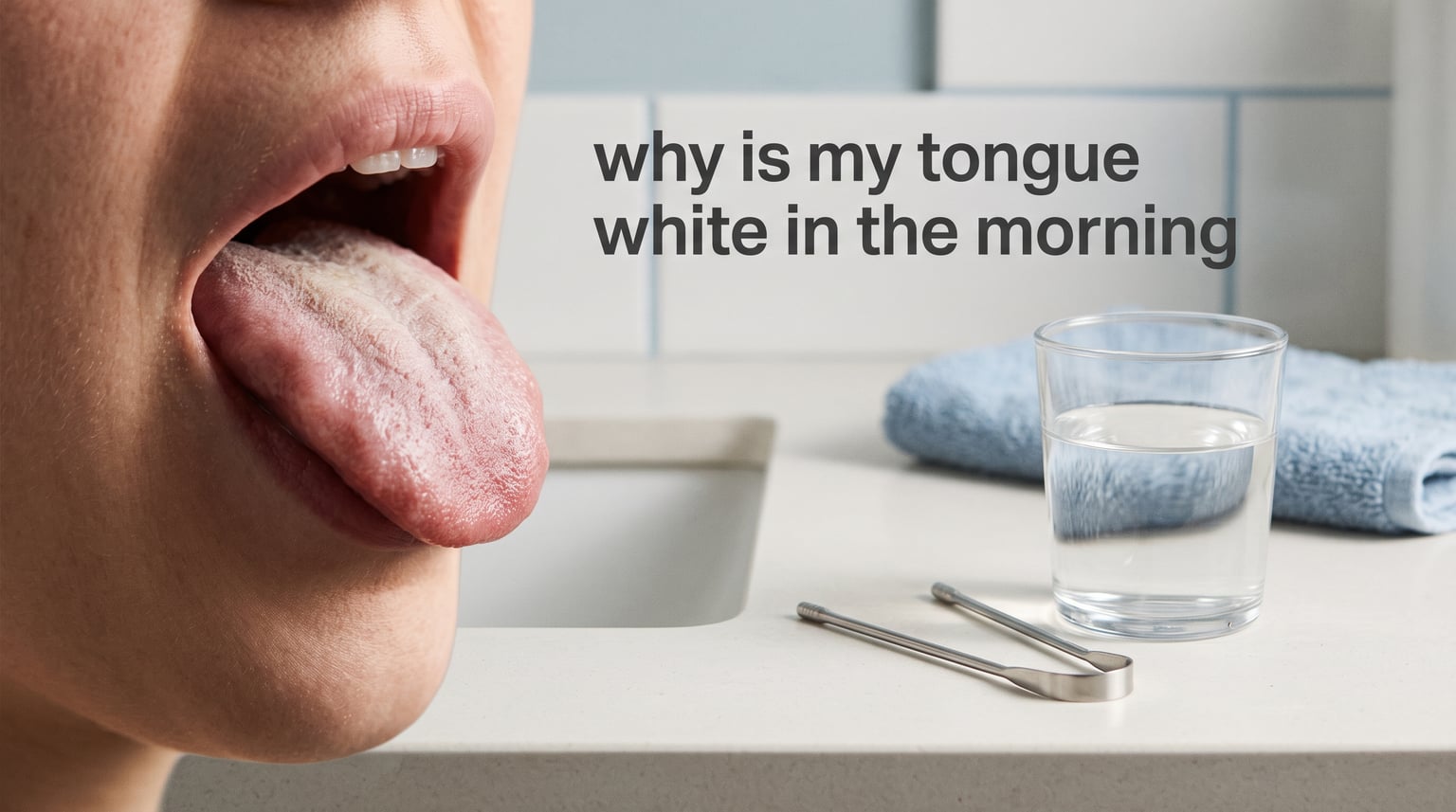
Waking up with a white tongue is something most of us have noticed at some point. You brush your teeth, look in the mirror, and there it is: a pale, fuzzy coating stretched across the surface of your tongue. For many people, the immediate reaction is mild alarm or disgust, but here is the reassuring truth. In the vast majority of cases, a white tongue in the morning is completely normal and temporary.
Your mouth goes through a lot while you sleep. Saliva production drops significantly overnight, which means the natural rinsing action that keeps your mouth clean during the day basically shuts down. Bacteria multiply, dead cells shed, and tiny food particles settle into the grooves of your tongue. The result is that white film you see when you wake up.
In this guide, I will walk you through exactly why your tongue is white in the morning, what causes that overnight buildup, when you should actually be concerned, and how to prevent it with a simple routine. Whether you are dealing with stubborn morning breath, a thick coating that will not budge, or just curiosity about what your tongue is telling you, this article covers it all.
Table of Contents
What Is a White Tongue?
A white tongue is exactly what it sounds like: a white or whitish-yellow coating that develops on the surface of your tongue. It is not a disease itself but rather a sign that something has accumulated on the tongue’s surface. Most often, that something is a mix of bacteria, dead skin cells, and food debris.
To understand why this happens, it helps to know a little about the anatomy of your tongue. The upper surface of your tongue is covered in tiny finger-like projections called papillae. These papillae give your tongue its rough texture and help you taste, move food around, and speak clearly. Between and around these papillae, tiny gaps exist where bacteria, dead epithelial cells, and microscopic food particles can get trapped.
When that trapped material builds up faster than your mouth can clear it away, the papillae become inflamed or enlarged. This makes the gaps even deeper, which traps even more debris. The accumulated material appears white because it forms a thin biofilm over the normally pink tissue of your tongue.
A healthy tongue should look pink and moist, with a thin, barely visible coating. Some coating is actually normal and even healthy. Dental professionals agree that a light, uniform film on the tongue is part of a balanced oral environment. The concern arises when the coating becomes thick, patchy, or persistent.
Why Is My Tongue White in the Morning?
Your tongue is white in the morning because saliva production drops dramatically while you sleep, allowing bacteria, dead cells, and debris to accumulate unchecked on your tongue’s papillae overnight. This is the short answer, but the full picture involves several overlapping factors that work together while you rest.
During the day, your mouth is constantly producing saliva. Saliva is your mouth’s built-in cleaning system. It washes away food particles, neutralizes acids, and helps control bacterial growth. Every time you swallow, talk, or move your tongue, saliva sweeps across the surface and clears away debris.
At night, everything changes. Here are the main reasons your tongue turns white by morning.
Dry Mouth and Reduced Saliva Production
Dry mouth, also known as xerostomia, is the single biggest reason your tongue develops that white coating overnight. When you fall asleep, your salivary glands slow down dramatically. Some estimates suggest that nighttime saliva flow can drop to just a fraction of what it is during waking hours.
Without that steady flow of saliva, bacteria are free to multiply. Dead epithelial cells that continuously shed from the lining of your mouth are no longer washed away. They settle on your tongue and mix with the growing bacterial population to form a visible biofilm.
This is why your tongue might look pink and clean at night but white and coated by morning. The process happens in a matter of hours. If you breathe through your mouth while sleeping, the drying effect accelerates even further because moving air evaporates what little saliva you do produce.
Mouth Breathing During Sleep
Mouth breathing is a major contributor to a white tongue in the morning. When you breathe through your mouth instead of your nose, you dry out the oral cavity much faster than normal. This creates the perfect environment for bacteria to thrive and for dead cells to accumulate.
Many people mouth-breathe at night without realizing it. Nasal congestion from allergies, a deviated septum, or a cold can force you to breathe through your mouth while you sleep. Even sleeping position plays a role. Sleeping on your back tends to encourage mouth breathing more than sleeping on your side.
The connection between mouth breathing and white tongue is well-documented by dental professionals. If you frequently wake up with a dry, sticky mouth, a sore throat, and a thickly coated tongue, mouth breathing during sleep is a likely culprit.
Bacteria and Dead Cell Buildup on Papillae
Your mouth is home to billions of bacteria. This is completely normal and not inherently harmful. The collection of microorganisms living in your mouth is called the oral microbiome, and it plays a role in everything from digestion to immune defense. But when the balance of that microbiome gets disrupted, problems arise.
During the night, the bacteria on your tongue continue to feed on whatever sugars, proteins, and food particles remain in your mouth. As they metabolize these materials, they produce waste products that contribute to the white film and to morning breath. The bacteria themselves, along with the dead cells they accumulate with, form a visible layer on the papillae.
The rough surface of your tongue, with all those papillae, acts like a carpet that traps particles. The deeper the grooves between your papillae, the more material gets caught. This is why some people seem to accumulate a thicker coating than others, even with similar oral hygiene habits.
Dehydration Plays a Bigger Role Than You Think
Dehydration is one of the most overlooked causes of a white tongue in the morning. When your body is even mildly dehydrated, it produces less saliva. Less saliva means less natural cleaning action in your mouth, which means more bacteria, more dead cells, and a thicker white coating.
Many people go to bed without drinking enough water throughout the day. If you have coffee, tea, or alcohol in the evening, these beverages can further dehydrate you because they act as mild diuretics. By morning, your body is running low on fluids, and your mouth is one of the first places that shows it.
This is also why your white tongue might be worse on some mornings than others. A night of poor hydration, a few alcoholic drinks, or even a salty dinner can all tip the balance and make that morning coating thicker than usual.
The Oral Microbiome Connection
Your mouth hosts a complex ecosystem of bacteria, fungi, and other microorganisms collectively known as the oral microbiome. This is a topic that most competitors gloss over, but it is central to understanding why your tongue is white in the morning and why some people struggle with it more than others.
A healthy oral microbiome is balanced. Good bacteria keep harmful bacteria in check, and the whole system works together to protect your teeth, gums, and tongue. When that balance is disrupted, a condition called dysbiosis occurs. The bacteria that produce sulfur compounds and contribute to biofilm formation can overgrow, leading to a thicker white coating and worse morning breath.
Several things can throw your oral microbiome out of balance. Antibacterial mouthwashes that kill both good and bad bacteria, a diet high in sugar and processed foods, stress, and even certain medications can all contribute. This is why some people find that their white tongue persists even when they scrape and brush religiously. They are removing the coating but not addressing the underlying microbial imbalance.
There is also emerging interest in the gut-mouth connection. Your oral microbiome and your gut microbiome are linked, and imbalances in one can influence the other. Some dental professionals and holistic health practitioners suggest that persistent white tongue, especially when accompanied by digestive issues, may reflect gut health problems like Candida overgrowth or bacterial dysbiosis in the digestive tract. While the research is still developing, this connection is worth keeping in mind if your white tongue refuses to go away despite excellent oral hygiene.
The takeaway here is that your tongue is not just a passive surface that collects gunk. It is an active part of a living ecosystem, and supporting that ecosystem is just as important as mechanically cleaning it.
When a White Tongue Signals Something More
Most of the time, a white tongue is harmless and resolves with brushing, scraping, and hydration. But sometimes, a white coating on the tongue points to a condition that needs medical attention. Knowing the difference between normal morning buildup and a concerning symptom can save you unnecessary worry or prompt you to get help when it matters.
Here are the most common conditions that can cause a white tongue beyond simple overnight buildup.
Oral Thrush (Candidiasis)
Oral thrush is a fungal infection caused by an overgrowth of Candida yeast in the mouth. It produces creamy white patches on the tongue, inner cheeks, and sometimes the throat. Unlike normal morning coating, thrush patches can often be scraped off, but doing so may reveal raw, red, or bleeding tissue underneath.
Oral thrush is more common in infants, older adults, people with weakened immune systems, and those who use inhaled corticosteroids without rinsing afterward. It can also develop after a course of antibiotics disrupts the normal bacterial balance in the mouth. If you notice white patches that are painful, that leave sore spots when scraped, or that keep coming back, oral thrush is a possibility worth discussing with your doctor or dentist.
Leukoplakia
Leukoplakia causes thick, white patches on the tongue or inside the cheeks that cannot be scraped off. Unlike the soft coating of normal morning tongue, leukoplakia patches are firm and slightly raised. This condition is most common in people who use tobacco products, either smoking or chewing.
While leukoplakia itself is usually harmless, it can sometimes be a precursor to oral cancer. For this reason, any persistent white patch on your tongue or mouth that does not go away within two weeks should be evaluated by a dental professional. A biopsy may be needed to rule out abnormal cell changes.
Nutrient Deficiencies and White Tongue
Certain vitamin and mineral deficiencies can contribute to a white or pale tongue. The most commonly associated deficiencies include vitamin B12, iron, and folate (vitamin B9). When your body lacks these nutrients, the cells lining your mouth may not regenerate properly, leading to a sore, pale, or coated-looking tongue.
If your white tongue is accompanied by fatigue, weakness, dizziness, or changes in your skin or nails, a nutritional deficiency could be involved. A simple blood test from your doctor can check your levels and determine whether supplementation is needed.
How to Get Rid of White Tongue in the Morning
Getting rid of a white tongue is usually straightforward. The goal is twofold: remove the accumulated coating and address the underlying causes so it does not come back as quickly. Here are the most effective methods, starting with the single most important one.
Step-by-Step: Tongue Scraping Done Right
Tongue scraping is the most effective way to physically remove the white coating from your tongue. A tongue scraper is a simple, inexpensive tool, usually made of plastic or metal, designed to clean the surface of the tongue more effectively than a toothbrush alone.
Here is how to do it properly:
Step 1. Start at the back of your tongue, as far back as is comfortable. Place the scraper flat against the surface.
Step 2. Apply gentle pressure and pull the scraper forward toward the tip of your tongue. Do not press hard. You are trying to sweep the surface, not scrape it raw.
Step 3. Rinse the scraper under running water to remove the accumulated debris.
Step 4. Repeat this process three to five times, working from back to front, until the coating is significantly reduced.
Step 5. Rinse your mouth with water or mouthwash to flush away any remaining particles.
The best time to scrape your tongue is in the morning, before eating or drinking. This removes the overnight buildup when it is thickest. For some people, adding a second scraping at night before bed can help reduce the amount of debris that accumulates overnight.
One important note: if you scrape your tongue consistently and still have a thick white coating, the issue is likely systemic rather than mechanical. Dehydration, mouth breathing, an imbalanced microbiome, or an underlying condition may be at play.
Other Home Remedies That Work
Beyond tongue scraping, several simple home remedies can help reduce white tongue and keep your mouth healthier overall.
Saltwater rinses. Gargling with warm saltwater helps reduce bacteria and soothe inflamed tissue. Mix half a teaspoon of salt into a glass of warm water and swish for 30 seconds. This is gentle enough to use daily and can be especially soothing if your tongue feels sore.
Baking soda rinse. Baking soda neutralizes acids in the mouth and has mild antibacterial properties. Dissolve half a teaspoon in warm water and use it as a rinse. This can help rebalance the pH of your mouth, making it less hospitable to the bacteria that contribute to white coating.
Oil pulling. This traditional Ayurvedic practice involves swishing a tablespoon of coconut or sesame oil in your mouth for 10 to 15 minutes. While scientific evidence is limited, some people report reduced coating and fresher breath with regular practice.
Probiotics. Since your oral microbiome plays a role in tongue coating, supporting beneficial bacteria may help. Eating probiotic-rich foods like yogurt, kefir, or fermented vegetables can support both your gut and oral microbiome simultaneously.
Drink more water. This cannot be overstated. Staying hydrated throughout the day ensures your body can produce adequate saliva, which is your mouth’s most important natural defense against bacterial overgrowth and debris accumulation.
Your Morning Routine Checklist to Prevent White Tongue
If you want to stop waking up with a white-coated tongue, consistency is more important than any single product. Here is a simple daily checklist you can follow to keep your tongue clean and healthy.
During the day:
Drink plenty of water. Aim for at least eight glasses spread throughout the day. Avoid heavy alcohol consumption, especially in the evening, as it dehydrates you and dries out your mouth overnight.
Limit sugary foods and drinks. Sugar feeds the bacteria that contribute to biofilm formation on your tongue. The more sugar you consume, the more fuel those bacteria have to multiply while you sleep.
Before bed:
Brush your teeth thoroughly for two minutes. Floss between every tooth to remove trapped food particles that bacteria will otherwise feast on overnight.
Scrape your tongue gently to remove the day’s accumulation. This reduces the starting amount of bacteria and debris that will grow overnight.
Rinse with water or a non-alcoholic mouthwash. Avoid alcohol-based mouthwashes at night because they can dry out your mouth further.
Consider using a humidifier in your bedroom. This adds moisture to the air and can help prevent your mouth from drying out, especially if you mouth-breathe.
First thing in the morning:
Scrape your tongue from back to front, three to five passes. This is when the coating is thickest and easiest to remove.
Brush your teeth and tongue with a soft-bristled brush. Use fluoride toothpaste for cavity protection.
Rinse with water, saltwater, or a gentle mouthwash to flush away loosened debris.
Drink a full glass of water immediately after waking up. This rehydrates your body and jump-starts saliva production for the day.
When Should You See a Doctor or Dentist?
Knowing when a white tongue is normal and when it warrants professional attention is one of the most common questions people have. The general rule is this: a thin, uniform white coating that appears in the morning and resolves with cleaning is almost always harmless.
You should make an appointment with your dentist or doctor if you notice any of the following:
Your white tongue persists for more than two weeks despite good oral hygiene and regular scraping. A coating that never goes away, even briefly, may indicate an underlying condition.
You see white patches that cannot be scraped off or that leave raw, bleeding tissue when you try. This could be a sign of oral thrush, leukoplakia, or another condition requiring diagnosis.
You experience pain, burning, or soreness on your tongue. Healthy morning coating should be painless. Discomfort suggests inflammation or infection.
You have difficulty swallowing, a persistent sore throat, or a feeling that something is stuck in your throat. These symptoms, combined with white patches, may indicate oral thrush extending into the throat.
You notice red or white lesions, lumps, or numbness in your mouth. These could be early signs of oral cancer, especially if you use tobacco or drink heavily.
You develop white tongue along with other symptoms like fatigue, unexplained weight loss, digestive problems, or frequent infections. This combination could point to a systemic issue like a nutritional deficiency, immune problem, or gut health concern.
Regular dental checkups every six months are also important. Your dentist can identify early signs of conditions you might miss and can assess your oral hygiene routine for areas of improvement.
FAQ
What color should your tongue be in the morning?
How to stop waking up with a white tongue?
What deficiency causes a white tongue?
Does a white tongue mean you’re unhealthy?
Why is my tongue completely white when I wake up?
What gut problems cause white tongue?
Does a white tongue mean liver problems?
Is a white tongue in the morning contagious?
Final Thoughts on Why Your Tongue Is White in the Morning
Waking up with a white tongue is one of those things that looks worse than it actually is. In the overwhelming majority of cases, that morning coating is simply the result of reduced saliva flow overnight combined with natural bacteria and dead cell accumulation on your tongue’s papillae. It is a normal biological process, not a sign that something is wrong with you.
The most effective approach combines mechanical cleaning with supporting your body’s natural defenses. Scrape your tongue daily, brush and floss before bed, drink plenty of water, and pay attention to factors like mouth breathing and dehydration that make the problem worse. A simple morning routine takes less than two minutes and can make a noticeable difference within days.
At the same time, listen to what your tongue is telling you. If the coating is thick, painful, patchy, or persistent despite good hygiene, do not ignore it. Conditions like oral thrush, leukoplakia, and nutritional deficiencies are treatable, especially when caught early. Your dentist is your best resource for evaluating anything that seems off.
Understanding why your tongue is white in the morning puts you in control. You know what is normal, what causes it, and exactly what to do about it. That knowledge is the difference between unnecessary worry and confident, proactive oral care.