
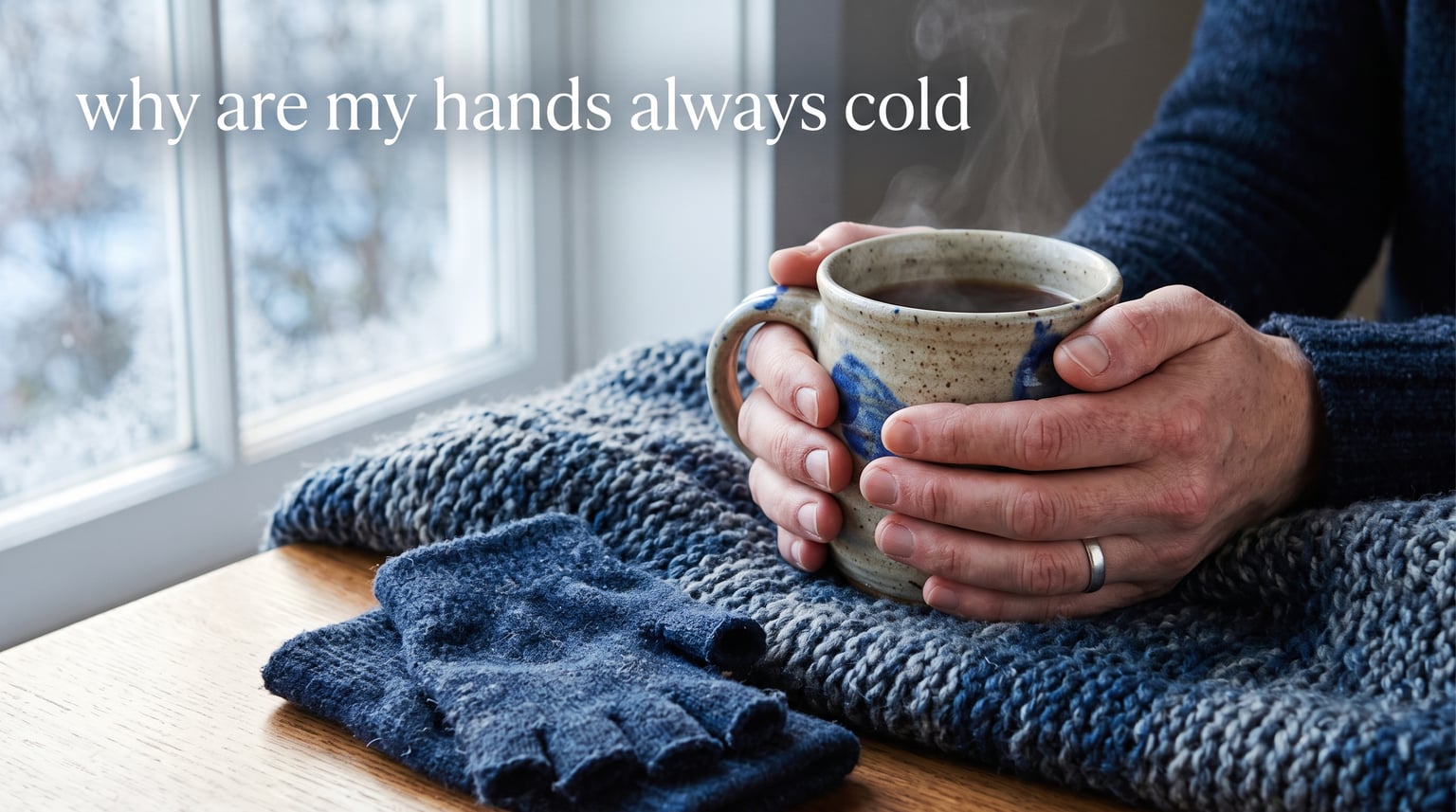
If you find yourself rubbing your hands together for warmth while everyone else seems perfectly comfortable, you have probably wondered why your hands are always cold. Cold hands are your body’s natural way of conserving heat by restricting blood flow to your extremities. This process, called vasoconstriction, narrows the blood vessels in your hands and fingers so warm blood stays closer to your core organs.
In most cases, cold hands are harmless and simply reflect how your body regulates temperature. But when your hands stay cold even in a warm room, or you notice color changes and numbness, something deeper may be going on. In this guide, we break down the medical causes, vitamin deficiencies, lifestyle triggers, and practical solutions so you can understand what your body is telling you.
Our team reviewed insights from Cleveland Clinic, Mayo Clinic, and Columbia Doctors along with real experiences shared by people who deal with this every day. Here is everything you need to know about cold hands in 2026 and when you should actually be concerned.
Table of Contents
Common Causes of Cold Hands
Cold hands can stem from a wide range of causes, from completely benign temperature sensitivity to underlying medical conditions. Understanding which category you fall into starts with knowing the most common culprits.
Raynaud’s Phenomenon: This is one of the most common medical reasons for persistently cold hands. With Raynaud’s, the blood vessels in your fingers and toes overreact to cold or stress, going into sudden spasms that cut off blood supply. Your fingers may turn white, then blue, and finally red as blood flow returns. According to Mayo Clinic, this color sequence is the hallmark sign that separates Raynaud’s from ordinary cold sensitivity.
Poor Circulation: Reduced blood flow to your hands can come from peripheral artery disease, narrowed arteries, or simply low resting circulation. When less warm blood reaches your fingers, they feel cold to the touch and may take longer to warm up. Columbia Doctors notes that poor circulation is often related to lifestyle factors like inactivity or smoking.
Anemia: When your body does not have enough healthy red blood cells to carry oxygen efficiently, your extremities suffer first. Iron-deficiency anemia is especially common and frequently causes cold hands and feet. Without sufficient iron, your blood simply cannot deliver warmth effectively to the outer reaches of your body.
Hypothyroidism: An underactive thyroid slows your metabolism, which means your body generates less heat overall. The thyroid hormone regulates how fast your cells burn energy, and when levels drop, your hands and feet often feel cold even when the rest of you seems fine. Cleveland Clinic lists cold intolerance as one of the classic early symptoms of hypothyroidism.
Vitamin Deficiencies That Cause Cold Hands
One of the most overlooked causes of cold hands is a nutritional gap. Many people search for answers for years before discovering a simple vitamin deficiency was behind the problem. If you are asking what vitamin you might be lacking, here are the three most likely suspects.
Vitamin B12 Deficiency: B12 plays a central role in red blood cell production and nerve health. When levels drop too low, your body produces oversized, inefficient red blood cells that cannot transport oxygen properly. This leads to poor circulation and cold hands, along with tingling and numbness in your fingers. B12 deficiency is especially common in vegetarians, vegans, and older adults whose absorption naturally declines with age.
Iron Deficiency: Iron is the mineral your body uses to make hemoglobin, the protein in red blood cells that carries oxygen. Without enough iron, your tissues receive less oxygen and generate less heat. Cold hands are one of the earliest warning signs of iron deficiency, often appearing before fatigue or pale skin become noticeable. Women are at higher risk due to menstrual blood loss, and pregnant women need even more iron than usual.
Magnesium Deficiency: Magnesium helps regulate blood vessel function and muscle relaxation. Low magnesium levels can cause blood vessels to stay partially constricted, reducing blood flow to your hands. This mineral also supports healthy nerve signaling, and a shortage can contribute to the tingling and numbness that often accompany cold fingers.
Addressing these deficiencies usually starts with a simple blood test. Your doctor can check your B12, iron, and magnesium levels and recommend dietary changes or supplements if needed. Foods rich in these nutrients include lean red meat, leafy greens, nuts, seeds, eggs, and fortified cereals.
Stress, Anxiety, and Cold Hands
If you have ever noticed your hands turning cold right before a big presentation or during an argument, you have experienced the stress-cold hands connection firsthand. This is not in your head. It is a measurable physiological response.
When you feel stressed or anxious, your body releases adrenaline as part of the fight-or-flight response. Adrenaline causes blood vessels in your hands and feet to constrict sharply, redirecting blood to your heart, lungs, and major muscles. This was useful when humans needed to outrun danger, but in modern life it means your hands go cold every time your stress spikes.
The real problem is chronic stress. If you live in a state of near-constant anxiety, your body never fully switches off this survival response. Your blood vessels stay partially constricted throughout the day, leaving your hands perpetually cold. Many people with generalized anxiety disorder report cold hands as one of their most persistent physical symptoms.
Breaking this cycle requires active stress management. Deep breathing exercises, progressive muscle relaxation, regular physical activity, and mindfulness practices can all help calm your nervous system and restore normal blood flow to your extremities.
Why Women Get Colder Hands
If you are a woman wondering why your hands are always cold while your partner seems unfazed, there is a real biological explanation. Research consistently shows that women tend to have colder hands and feet than men, even at the same core body temperature.
One key factor is estrogen. This hormone influences how blood vessels dilate and constrict, and fluctuations in estrogen levels throughout the menstrual cycle can make your hands feel colder at certain times of the month. This is also why many women experience worse cold sensitivity during perimenopause and menopause.
Body composition plays a role too. Women typically have a higher ratio of body fat to muscle mass compared to men, and muscle generates more heat than fat. With less metabolically active tissue generating warmth in the extremities, women’s hands cool down faster. Women also tend to have a slightly lower resting metabolic rate, which means less overall heat production.
None of this means something is wrong. For most women, cold hands are simply a normal variation in how the body manages temperature. The strategies in this article work just as well regardless of gender.
Lifestyle Factors That Make Hands Cold
Sometimes the answer is not medical at all. Several everyday habits can keep your hands colder than they need to be, and identifying these triggers can make an immediate difference.
Smoking: Nicotine is a powerful vasoconstrictor, meaning it narrows blood vessels every time you smoke. Over time, smoking damages the lining of your blood vessels and permanently reduces circulation to your hands. Quitting smoking is one of the single most effective changes you can make for warmer hands.
Caffeine: That morning coffee might be contributing to your cold hands. Caffeine triggers a mild stress response that narrows blood vessels temporarily. If you drink several cups throughout the day, the effect adds up. Try cutting back or switching to decaf for a week and see if your hands feel warmer.
Dehydration: When you are not drinking enough water, your blood volume drops slightly, which reduces circulation to your extremities. Staying well hydrated helps your cardiovascular system maintain healthy blood flow to your hands.
Lack of Movement: A sedentary lifestyle means your heart is not pumping blood vigorously enough to reach your fingertips efficiently. Regular movement throughout the day, even short walks or hand exercises, keeps blood flowing to your hands.
How to Warm Up Cold Hands Fast
When your hands are cold right now and you need relief quickly, these proven techniques work within minutes. Reddit users in communities like TheGirlSurvivalGuide and AskMen have tested these extensively and confirm they actually help.
1. Warm Water Soak: Fill a bowl with comfortably warm water, not hot, and soak your hands for 5 to 10 minutes. The external heat dilates blood vessels and restores circulation fast. Avoid water that is too hot because extreme temperature swings can trigger a Raynaud’s attack in sensitive people.
2. Hand Exercises: Rapidly open and close your fists 20 to 30 times. This pumps blood into your hands by engaging the muscles in your forearms. You can also try rubbing your palms together briskly to generate friction heat.
3. Layer Up Smart: Wearing gloves helps, but the real secret from forum users is wrist warmers. The blood vessels passing through your wrists are close to the skin, and keeping that area warm prevents blood from cooling before it reaches your fingers.
4. Hold Something Warm: A warm mug of tea or a hand warmer packet gives your hands a direct heat source. This is especially helpful in office environments where you cannot control the room temperature.
5. Move Your Whole Body: A brisk two-minute walk or a set of jumping jacks raises your heart rate and pushes warm blood to your extremities. Full-body movement works faster than hand-only techniques because it warms your core, which then allows blood vessels in your hands to relax.
Long-Term Strategies to Improve Circulation
Quick fixes are great for immediate relief, but if your hands are always cold you probably want a more permanent solution. These long-term strategies address the root causes rather than just the symptoms.
Cardiovascular Exercise: Regular cardio, whether it is walking, swimming, cycling, or dancing, strengthens your heart and improves overall circulation. Aim for at least 150 minutes of moderate activity per week. As your cardiovascular fitness improves, your body becomes more efficient at delivering warm blood to your hands.
Circulation-Friendly Diet: Foods that support blood vessel health include those rich in omega-3 fatty acids, such as salmon and walnuts, which reduce inflammation and improve blood flow. Dark chocolate, citrus fruits, and leafy greens also support healthy circulation. If you suspect a deficiency, ask your doctor about testing before starting supplements.
Stress Reduction Practices: Since chronic stress keeps your blood vessels constricted, daily stress management is one of the best long-term investments for warmer hands. Yoga, meditation, journaling, and even regular social connection all help calm your nervous system over time.
Dress for Warmth Year-Round: Many people dress too lightly indoors, especially in air-conditioned spaces. Wearing layers and keeping a light sweater or fingerless gloves at your desk prevents your body from triggering its cold-response mechanism in the first place.
When to See a Doctor About Cold Hands
Most of the time, cold hands are nothing to worry about. But there are specific warning signs that warrant a conversation with your healthcare provider. Columbia Doctors and Cleveland Clinic both emphasize that early evaluation can prevent serious complications.
Make an appointment if you notice any of the following:
- Your hands change color, turning white, blue, or red in sequence
- You experience numbness, tingling, or pain that persists after warming up
- Sores or ulcers develop on your fingers or fingertips
- Your hands are cold even in warm environments and never fully warm up
- Only one hand is affected, especially if it happens suddenly
- You also have symptoms like unexplained fatigue, weight changes, or hair loss that could suggest thyroid issues
Seek emergency care immediately if you experience sudden severe coldness in one hand accompanied by pain, weakness, or loss of function. This could indicate a blood clot or acute arterial blockage that requires urgent treatment.
Your doctor may order blood tests to check for anemia, thyroid function, vitamin levels, and autoimmune markers. In some cases they may refer you to a vascular specialist or rheumatologist for further evaluation.
Frequently Asked Questions
What vitamin am I lacking if my hands are always cold?
How do I stop my hands from being so cold all the time?
What does it mean when your hands are cold but your body is warm?
How to fix poor circulation in hands?
Final Thoughts on Cold Hands
Cold hands are incredibly common and usually nothing to fear. Most of the time the answer to why your hands are always cold comes down to how your body manages temperature, your stress levels, or a fixable vitamin gap.
The key is paying attention to patterns. If your hands have always run cold and you feel fine, simple lifestyle changes like regular exercise, stress management, and a nutrient-rich diet may be all you need. But if cold hands are new, worsening, or accompanied by color changes and numbness, a conversation with your doctor is worth the peace of mind.
Start with the quick fixes and long-term strategies in this guide, and give them a few weeks to work. Your hands deserve to feel warm and comfortable, and with the right approach they can.